Malaysia B738 at Singapore on May 19th 2025, runway incursion
Last Update: April 6, 2026 / 14:22:50 GMT/Zulu time
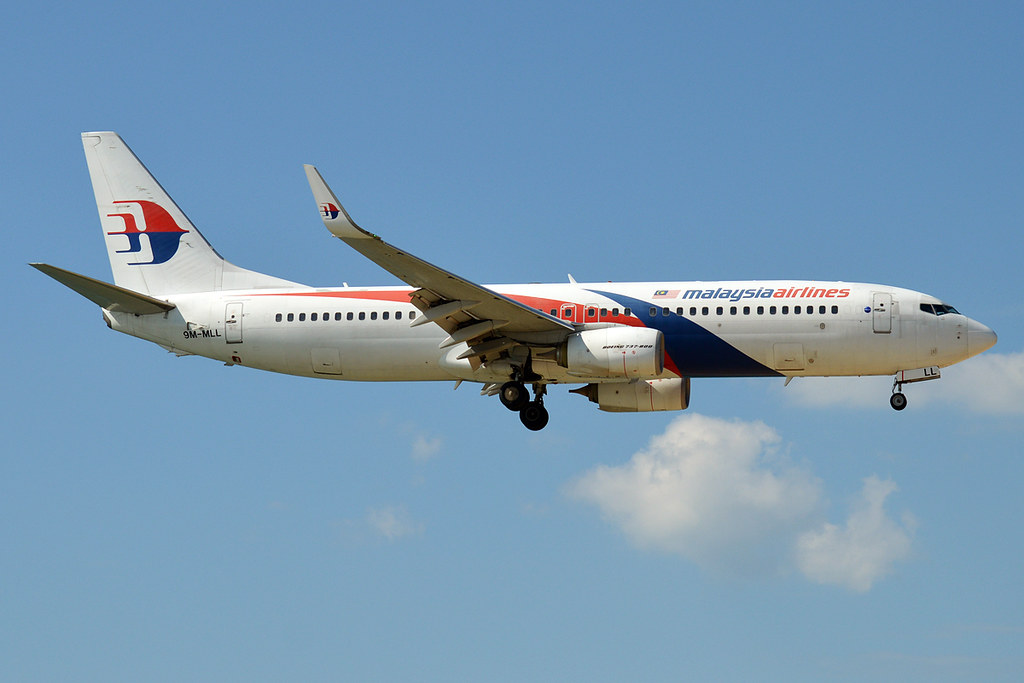
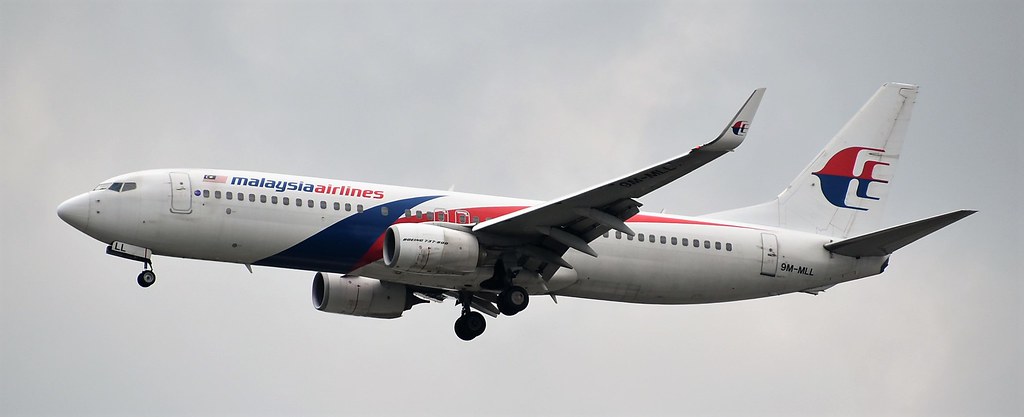
Incident Facts
Date of incident
May 19, 2025
Classification
Report
Cause
Runway incursion
Airline
Malaysia Airlines
Flight number
MH-620
Departure
Singapore, Singapore
Destination
Kuala Lumpur, Malaysia
Aircraft Registration
9M-MLL
Aircraft Type
Boeing 737-800
ICAO Type Designator
B738
Singapore's TSIB released their final report concluding the probable cause of the incident were:
- The RWC cleared Aircraft A to line up on Runway 20C and switched OFF the red stop bar lights at Holding Point T2 when Aircraft A reported ready for departure.
- After the flight crew of Aircraft A informed the RWC that they would need another two minutes to prepare the aircraft for departure, the RWC cancelled the line-up clearance and switched the red stop bar lights back ON. The PIC read back incorrectly the RWC’s instruction and continued to move towards the runway.
- The RWC instructed Aircraft A to hold position but the instruction was truncated during the transmission. The flight crew read back that they were lining up to wait on the runway.
- The RWC determined that there was no need to ask Aircraft A to hold at its current position, given that it would not remedy the runway incursion situation and her plan was to have Aircraft A line up on the runway anyway.
- The RWC then instructed an arriving aircraft that had landed earlier to turn right onto Taxiway T, so that the aircraft would vacate RET T7 quickly.
- A direct imperative sentence structure for the RWC’s instruction would be less prone to misinterpretation.
- The RWC was unlikely to be suffering from any drowsiness effect of the medication she had taken some 18 hours before the occurrence.
The TSIB analysed:
PIC’s readback
There were two instances where the PIC read back instructions that were different from the instructions given by the RWC.
(a) As mentioned in paragraph 1.1.6, upon hearing from the PIC that Aircraft A would need another two minutes before being ready for departure, the RWC issued to the flight crew an instruction “line-up clearance cancelled and report when ready”. The PIC read back “cleared line-up and wait…” (b) As mentioned in paragraph 1.1.8, the RWC noticed the PIC’s incorrect readback in (a) above and immediately instructed the PIC to “hold at Holding Point T2”. The flight crew replied to the RWC with the transmission “we are … ready, lining up and wait Runway 20C”.
As regards (a), a direct imperative sentence structure could have been used.
As regards (b), as evidenced from the audio recording of the ATSP, only the portion “Holding Point T2” was transmitted to Aircraft A. This was likely due to a simultaneous transmission by two or more parties on the frequency. After the truncated transmission, the PIC read back incorrectly again. The RWC did not address immediately the PIC’s incorrect readback and the aircraft continued taxiing towards the runway.
During the post-occurrence interview, the PIC stated that he could not recall the exact words of the RWC’s instructions. As the cockpit voice recorder was not available to the investigation team, it could not be established what ATC transmission was received in the cockpit at that time, i.e. whether the transmission was clear or was truncated. The flight crew did not indicate to the investigation team that there was any issue with the transmission quality. The recordings obtained from the ATSP did not suggest any issue with the frequency that the RWC and flight crew were using at the time of the incident.
At that time of the incident, the PIC was simultaneously controlling the aircraft and communicating with the RWC. Without cockpit video or audio recording, the investigation team was unable to assess whether the PIC had misheard the RWC’s instruction due to increased workload and divided attention.
In both instances of incorrect readback, the PIC had interpreted the RWC’s instructions as a clearance to line up on the runway. The initial line-up clearance issued earlier (see paragraph 1.1.4) may have primed the PIC to expect a line-up clearance once the cabin was ready. Thus, when the cabin crew confirmed that the cabin was ready (see paragraph 1.1.5), the PIC’s frame of mind could be that the next instruction from the RWC was to line up on the runway. This expectation bias could have led the PIC to interpret the RWC’s truncated instructions as a clearance to line up on the runway.
Radiotelephony phraseology for cancellation of line-up clearance
As mentioned in paragraph 1.1.6, the RWC informed the PIC “line-up clearance cancelled”. The PIC could not recall the exact instruction from the RWC during the occurrence. According to the PIC, he was more accustomed to instructions in a direct imperative sentence structure phraseology, such as “cancel line-up clearance”.
ICAO guidance documents do not contain specific phraseology examples on cancellation of line-up clearance. However, other examples given in ICAO guidance documents on clearance cancellation use a direct imperative sentence structure phraseology, for example, “cancel take-off clearance”.
In July 2025, about two months after the incident, the ATSP published a Radiotelephony Handbook containing recommended standard and commonly used phraseologies. According to the ATSP, the handbook was developed with reference to ICAO documents. The recommended phraseology for cancelling a line-up clearance was “Hold position. Line-up clearance cancelled.
Hold position.” The ATSP explained that there was no need to align the phrase “Line-up clearance cancelled” to a direct imperative structure sentence phraseology like “Cancel line-up clearance” as the emphasis of the instruction was on “Hold position” – to convey immediately the action required of the flight crew. Further, the ATSP opined that there was no significant difference between their existing phraseology “Hold position. Line-up clearance cancelled. Hold position” and the direct form, i.e. “Hold position. Cancel lineup. Hold position.”
The investigation team noted that the phrase “Hold position” follows a direct imperative sentence structure that is consistent with the principle in ICAO guidance documents.
As stated in ICAO guidance documents, the phraseologies provided …are not intended to be exhaustive, and when circumstances differ, pilots, ATS personnel and other ground personnel will be expected to use plain language, which should be as clear and concise as possible… Since in ICAO documents, clearances typically adopt a direct imperative sentence structure phraseology to reduce ambiguity and minimise risk of misinterpretation, it would be desirable for ATCOs to be made aware that direct imperative sentence structure formulations represent the preferred structural phraseology form and to adopt such structures as far as practicable when issuing instructions in plain language for scenarios not covered in ICAO guidance documents.
RWC’s assessment in not correcting the PIC’s incorrect readback
As mentioned in paragraph 1.1.8, the RWC did not address the PIC’s second incorrect readback. Hence the aircraft continued to taxi towards the runway.
The RWC reasoned that it was not necessary to instruct Aircraft A to hold position after noticing the “STOPBAR” visual alert on the ASMGCS, given that a runway incursion had already occurred. Further, she had intended to clear Aircraft A to line up on the runway anyway.
Yet at the same time, the RWC was concerned that Aircraft A might initiate take-off while the arrival aircraft had not exited the runway strip. While this concern is a valid one, it was incongruent with her decision of not instructing Aircraft A to hold position. If she was concerned that Aircraft A might initiate a take-off, then all the more she should focus on communicating with Aircraft A to ensure that Aircraft A would hold its position after crossing the red stop bar lights. It appears that the RWC had determined that her focus should be on clearing the arrival aircraft off the runway. Had the RWC communicated to the flight crew of Aircraft A at the first instance that they had read back incorrectly and held Aircraft A at its current position, the risk of Aircraft A taking off without clearance would have been eliminated even if the arrival aircraft had stopped on RET T7.
The RWC did not correct the PIC’s second incorrect readback, and did not instruct Aircraft A to stop and hold at its current position.
The investigation team opines that it is paramount for air traffic controllers to always maintain positive control and to ensure that their instructions are clearly understood and complied with by flight crews.
RWC’s medical examination
As mentioned in paragraph 4, remnants of Dextromethorphan, Promethazine and Pseudoephedrine/Ephedrine were detected in the urine sample submitted for the toxicological examination. These remnants were consistent with the medication that the RWC had been taking to treat her cough and inflammation of her throat. Although Dhasedyl Dextromethorphan may cause drowsiness, given that the RWC had consumed Dhasedyl Dextromethorphan about 18 hours before the occurrence, the investigation team opines that it was unlikely that the RWC was suffering from any drowsiness effect at the time of the occurrence.
Incident Facts
Date of incident
May 19, 2025
Classification
Report
Cause
Runway incursion
Airline
Malaysia Airlines
Flight number
MH-620
Departure
Singapore, Singapore
Destination
Kuala Lumpur, Malaysia
Aircraft Registration
9M-MLL
Aircraft Type
Boeing 737-800
ICAO Type Designator
B738
This article is published under license from Avherald.com. © of text by Avherald.com.
Article source
You can read 2 more free articles without a subscription.
Subscribe now and continue reading without any limits!
Read unlimited articles and receive our daily update briefing. Gain better insights into what is happening in commercial aviation safety.
Send tip
Support AeroInside by sending a small tip amount.
Related articles
Malaysia B738 at Hong Kong on May 11th 2026, rejected takeoff due to burst tyre
A Malaysia Airlines Boeing 737-800, registration 9M-MXK performing flight MH-79 from Hong Kong (China) to Kuala Lumpur (Malaysia), was accelerating…
 Fleet type match
Malaysia B772 over Gulf of Thailand on Mar 8th 2014, aircraft missing, data indicate flight MH-370 ended west of Australia, first MH-370 debris identified, search resumes
On Mar 8th 2026 Ocean Infinity reported, that the new search has concluded without finding the aircraft. The CEO wrote: "It was important for us to…
 Fleet type match
Malaysia B738 at Alor Setar on Dec 30th 2025, burst tyre on departure
A Malaysia Airlines Boeing 737-800, registration 9M-MXH performing flight MH-1209 from Alor Setar to Kuala Lumpur (Malaysia), was backtracking runway…
 Fleet type match
Malaysia A333 at Tokyo on Dec 18th 2025, interrupted takeoff due to skidding
A Malaysia Airlines Airbus A330-300, registration 9M-MTI performing flight MH-71 from Tokyo Narita (Japan) to Kuala Lumpur (Malaysia), was cleared…
 Fleet type match
Malaysian A333 at Melbourne on Sep 7th 2023, overran runway on takeoff
A Malaysia Airlines Airbus A330-300, registration 9M-MTL performing flight MH-128 from Melbourne,VI (Australia) to Kuala Lumpur (Malaysia), was…
Newest articles
 Fleet type match
Edelweiss A320 near Geneva on Jun 1st 2026, engine vibrations
An Edelweiss Airbus A320-200, registration HB-IHX performing flight WK-220 from Zurich (Switzerland) to Seville,SP (Spain) with 147 passengers and 6…
 Fleet type match
Canadian North B734 at Winnipeg on May 23rd 2026, bird strikes into both engines
A Canadian North Boeing 737-400, registration C-FFNE performing flight 5T-150 from Winnipeg,MB to Rankin Inlet,NU (Canada) with 55 people on board,…
Subscribe today
Are you researching aviation incidents? Get access to AeroInside Insights, unlimited read access and receive the daily newsletter.
Pick your plan and subscribePartner

ELITE Simulation Solutions is a leading global provider of Flight Simulation Training Devices, IFR training software as well as flight controls and related services. Find out more.
SafetyScan Pro provides streamlined access to thousands of aviation accident reports. Tailored for your safety management efforts. Book your demo today
AeroInside Blog
Popular aircraft
Airbus A320Boeing 737-800
Boeing 737-800 MAX
Popular airlines
American AirlinesUnited
Delta
Air Canada
Lufthansa
British Airways