Jazz CRJ9 at New York on Mar 22nd 2026, collision with fire truck on runway
Last Update: April 24, 2026 / 11:36:24 GMT/Zulu time

Incident Facts
Date of incident
Mar 22, 2026
Classification
Accident
Airline
Jazz Aviation
Flight number
AC-8646
Departure
Montreal, Canada
Destination
New York La Guardia, United States
Aircraft Registration
C-GNJZ
Aircraft Type
Canadair CL-600 Regional Jet CRJ-705
ICAO Type Designator
CRJ9
Airport
La Guardia Airport, New York
Airport ICAO Code
KLGA
Another incident, an approaching United aircraft having declared emergency due to an odour on board, required the attention of emergency services, fire truck #1 requested to cross runway 04 at taxiway D and was cleared to cross, a few seconds later tower shouted "Stop! Stop! #1 Stop! Fire #1 Stop!", but could not avoid the collision between the CRJ9 rolling out and the fire truck at 23:36L (03:36Z Mar 23rd). The aircraft skidded onto high speed turn off F/turn off E, about 130 meters/430 feet further down the runway, before coming to a stop on turn off E.
The captain and first officer died in the accident, two fire fighters on board of the truck received serious injuries, 9 passengers received serious injuries, 32 passengers received minor injuries.
The airport was closed and is estimated to reopen at the earliest at 14:00L (18:00Z) while the investigation is ongoing.
The NTSB has deployed investigators on site.
In the evening of Mar 23rd 2026 the NTSB reported in a press conference, that the FDR and CVR have been recovered from the aircraft, the work to read out the recorders will commence on Mar 24th 2026.
In a second media briefing on Mar 24th 2026 the NTSB reported, that the FDR and CVR were taken to the labs in Washington, the devices were read out. The CVR contained more than 25 hours of good audio data across 4 channels, the FDR contained about 80 hours of good data with more than 400 parameters. The CVR was read out, the last 3 minutes before end of the preliminary recording show, that 3:07 minutes before end of recording (all times referenced to end of recording) the aircraft was handed off to tower, at 2:45 the crew lowered the landing gear, at 2:22 minutes the crew checked in with La Guardia tower, at 2:17 tower cleared the aircraft to land advising they were number two for landing, at 1:52 minutes the crew set the flaps to 30 degrees, at 1:33 the flaps were set to 45 degrees, at 1:26 the GPWS called "1000 feet", at 1:12 the crew confirmed the landing checklist was completed. At 1:03 an airport vehicle made a radio transmission to tower, but that transmission was stepped on by another radio transmission (the source of this transmission has yet to be identified). At 54 seconds the crew acknowledged they were 500 feet AGL and on a stable approach. At 44 seconds tower queried which vehicle needed to cross the runway, at 28 seconds truck #1 made a radio transmission to tower, at 26 seconds tower acknowledged that transmission, at 25 seconds truck #1 requested to cross runway 04 at taxiway D, at 20 seconds tower cleared the vehicle #1 and company to cross the runway, at 19 seconds GPWS called "100 feet", at 17 seconds the truck read back the clearance, at 14 seconds the GPWS called "50 feet", at 12 seconds the GPWS sounded "30 feet" and at the same time tower instructed a Frontier Aircraft to hold position, at 11 seconds GPWS called "20 feet", at 10 seconds "10 feet", at 9 seconds tower called "STOP", at 8 seconds a sound consistent with touch down occurred, 6 seconds prior to end of recording one pilot transfered control to the other, at 4 seconds tower again instructed truck #1 to stop.
The first officer had been pilot flying and transferred control to the captain 6 seconds prior to end of recording.
The other incident involved a United flight 2384 at the gate that had rejected takeoff two times and reported fumes or smoke or some sort of smell on board.
Truck #1 was followed by a number of other vehicles, the number is not yet known. Truck #1 did not have a transponder and was manned by two fire fighters. The NTSB does not have information whether there were transponders on any of the fire trucks responding to the United incident.
It is not yet clear how many certified professional controllers were in the facility. There were two people in the tower cab, the local controller and the controller in charge. The controller in charge provided clearance delivery duties, there are conflicting informations who was doing ground control duties. At the time all control duties for La Guardia were done by two controllers, which was standard operating procedure for the midnight shift at La Guardia.
The ASDE-X ground movement replay does not show any target go before the aircraft, however two targets were on taxiway D. The ASDE-X did not issue any alert. The runway status lights were operating.
The NTSB does not yet know whether another controller was available to relieve the tower controller on duty after the accident.
On Apr 24th 2026 the NTSB released their preliminary report summarizing the sequence of events:
A review of preliminary airplane and ARFF vehicle tracking data, ATC and airplane CVR audio recordings, airplane flight data recorder information, and surveillance video revealed that prior to the accident, six ARFF response vehicles (four ARFF trucks, a tool truck, and an airstair truck) and one Port Authority police vehicle were responding to an emergency that was declared at 2331:42 near terminal B.
At 2335:07, the ATC local controller (LC, also referred to as ‘tower’) cleared Jazz flight 646 to land on runway 4. At the time the flight was on a 5-mile final at an altitude of about 1,900 ft.
At 2335:28, the accident ARFF vehicle (R35) left the fire station area along with the other six vehicles. Jazz flight 646 was about 4.6 nautical miles from taxiway D at an altitude of about 1,500 ft. The vehicles initially gathered near the intersection of taxiways BB and D. The intended path was to continue on taxiway D, cross runway 4, and then proceed to the destination.
At 2335:47, the tool truck (call sign Truck 7), which was planned to be the lead vehicle, crew attempted to call the LGA ATC tower, however a simultaneous radio transmission on the same frequency obscured Truck 7’s radio call. R35 entered taxiway BB, another airplane that had landed on runway 4 crossed taxiway D, and Jazz flight 646 was about 3.7 nautical miles from taxiway D and at 1,180 ft altitude.
At 2336:21, Truck 7 tried again to contact the tower. Before ATC responded, Truck 7 coordinated with R35 (call sign Truck 1) to contact the tower. Jazz flight 646 was about 2.3 nautical miles from taxiway D and about 650 ft altitude.
At 2336:44, the LC asked which vehicle needed to cross a runway. At the same time, Truck 1 moved to the front of the waiting response vehicles at the intersection taxiway BB and D. Jazz flight 646 was about 1.5 nautical miles from taxiway D and at 400 ft altitude.
At 2336:51, the red runway entrance lights (RELs, discussed later) illuminated for the intersection of runway 4 and taxiway D. Jazz flight 646 was about 1.2 nautical miles from taxiway D and at 287 ft altitude. Truck 1 was stopped on taxiway D about 460 feet from edge of runway 4.
At 2336:56, Truck 1’s crew replied to ATC with “Truck 1 and company”, and the LC acknowledged. Truck 1 then requested “Truck 1 and company” to cross runway 4 at taxiway D, and the LC instructed them to cross. At that time, 2337:04, the airplane was at an altitude of about 130 ft above ground and about ¼ mile on final approach, which was about 4,400 ft away from taxiway D.
At 2337:07, Truck 1’s crew read back the clearance and began moving along taxiway D towards runway 4. Jazz flight 646 was about 3,700 feet from taxiway D and at 87 ft altitude.
At 2337:11, Jazz flight 646 crossed runway 4’s threshold, and Truck 1 was traveling at a speed of 10 kts (11.5 mph) and about 410 ft from the edge of runway 4.
At 2337:12, the LC gave a taxiing instruction to another airplane, and immediately afterward instructed Truck 1 to stop, as the truck was crossing taxiway AA. Truck 1’s speed continued to increase. Jazz flight 646 was about 2,550 ft from taxiway D and at 30 ft altitude and 133 kts ground speed.
At 2337:17, the airplane’s main landing gear touched down about 1,450 ft from taxiway D at a groundspeed of 128 kts and there was a transfer of control from the first officer to the captain. At that time, Truck 1 had crossed the hold short line at a speed of about 24 mph.
At 2337:20, the LC again instructed Truck 1 to stop. At this time the airplane’s brake application began and the thrust reversers were deployed. Truck 1 was just over 100 ft from entering runway 4 and travelling at about 29 mph.
At 2337:21, the RELs extinguish.
At 2337:22, roughly 2 seconds before the collision, the airplane’s nose landing gear touched down while the airplane was about 400 ft from taxiway D and at a groundspeed of 106 kts. Truck 1 was travelling at a speed of 30 mph and just entering runway 4.
Truck 1 turned toward the left just prior to the collision. The airplane’s rudder deflected about 6° to the left just prior to the end of the flight recorder data. The collision occurred at the intersection of taxiway D and runway 4 denoted by the red star in figure 1. The airplane’s last recorded ground speed before the collision was 90 knots (104 mph).
With respect to ATC the NTSB reported:
ATC Controllers Schedule and Experience
There were two controllers on duty in the ATC tower at the time of the accident, consistent with the mid-shift basic watch schedule. Both were qualified and current on all control positions at LGA.
The LC, who had about 18 years of experience, was responsible, in part, for the arrival and departure of aircraft on assigned runways, aircraft operating within assigned airspace, and all runway surfaces. The LC had been on position for about 42 minutes at the time of the accident.
The ground controller (GC) was also the controller-in-charge (CIC), had about 19 years of experience, and was responsible, in part, to taxi aircraft on a first come first serve basis. As circumstances permitted, the GC/CIC ensured that the instrument landing system critical areas were protected, sequenced departure aircraft, provided guidance and goals for the shift, monitored and managed traffic volume and flow. The GC/CIC was on position for about 51 minutes at the time of the accident.
Prior to the accident, the GC/CIC had been coordinating ground operations with an airplane that had performed two rejected takeoffs, followed by a ground emergency at terminal B, which included communicating with the airplane that declared the emergency, ramp operations, and ARFF. As the GC/CIC continued to coordinate the emergency, the LC took over transmitting ATC instructions on both the GC and LC radio frequencies.
The NTSB further wrote:
Without transponder-equipped vehicles, the ASDE-X system could not uniquely identify each of the seven responding vehicles or reliably determine their positions, or tracks. As a result, the system was unable to correlate the track of the airplane with the track of Truck 1 (or any of the other vehicles in the group) and did not predict a potential conflict with the landing airplane.
Related NOTAMs:
!LGA 03/325 LGA AD AP CLSD 2603230350-2603231800
!LGA 03/330 LGA AD AP CLSD 2603230643-2604011000
!LGA 03/331 LGA AD AP CLSD 2603230654-2603241000
Metars:
KLGA 230451Z 07005KT 4SM BR BKN024 OVC095 08/07 A2970 RMK AO2 RAE39 SLP056 P0001 T00780072 401500050 $=
KLGA 230432Z 07008KT 4SM -RA BR BKN024 OVC100 08/08 A2969 RMK AO2 P0001 T00830078 $=
KLGA 230351Z 05007KT 4SM -RA BR FEW045 BKN090 OVC110 08/08 A2970 RMK AO2 SLP058 P0007 T00830078 $=
KLGA 230251Z 06007KT 7SM -RA SCT060 OVC095 09/08 A2973 RMK AO2 SLP067 P0003 60007 T00940078 50022 $=
KLGA 230151Z 09007KT 7SM -RA FEW055 SCT085 OVC100 09/08 A2974 RMK AO2 SLP070 P0003 T00890078 $=
KLGA 230051Z 06008KT 10SM -RA FEW060 SCT080 OVC100 11/08 A2975 RMK AO2 RAB10 SLP073 P0001 T01060083 $=
KLGA 222351Z 01006KT 10SM FEW030 BKN100 BKN150 BKN250 11/08 A2966 RMK AO2 RAB2253E08 SLP045 P0000 60000 T01060078 10150 20100 58002 $=
KLGA 222251Z 04011KT 10SM FEW030 BKN090 BKN150 BKN250 11/08 A2972 RMK AO2 SLP064 T01060078 $=
Second Media Briefing by NTSB of Mar 24th 2026:
B-Roll of NTSB documenting the accident scene released Mar 26th 2026:
The aircraft after coming to a stop:
Aerodrome Chart (Graphics: FAA):
Aircraft Registration Data
Aircraft registration data reproduced and distributed with the permission of the Government of Canada.
Incident Facts
Date of incident
Mar 22, 2026
Classification
Accident
Airline
Jazz Aviation
Flight number
AC-8646
Departure
Montreal, Canada
Destination
New York La Guardia, United States
Aircraft Registration
C-GNJZ
Aircraft Type
Canadair CL-600 Regional Jet CRJ-705
ICAO Type Designator
CRJ9
Airport
La Guardia Airport, New York
Airport ICAO Code
KLGA
This article is published under license from Avherald.com. © of text by Avherald.com.
Article source
You can read 2 more free articles without a subscription.
Subscribe now and continue reading without any limits!
Read unlimited articles and receive our daily update briefing. Gain better insights into what is happening in commercial aviation safety.
Send tip
Support AeroInside by sending a small tip amount.
Related articles
 Fleet type match
Jazz CRJ9 near Little Rock on Sep 24th 2016, two hydraulic systems overheated
A Jazz Canadair CRJ-705, registration C-GNJZ performing flight QK-8110 from Houston Intercontinental,TX (USA) to Toronto,ON (Canada) with 73 people…
Fleet type match
Jazz CRJ9 at Toronto on Nov 19th 2014, rejected takeoff due to nose wheel vibrations
A Jazz Aviation Canadair CRJ-705 operating as Air Canada Express, registration C-GNJZ performing flight QK-8902/AC-8902 from Toronto,ON (Canada) to…
 Fleet type match
Jazz CRJ9 and Westjet B737 at Toronto on May 3rd 2012, loss of separation
A Jazz Canadair CRJ-705, registration C-GNJZ performing flight QK-8619 from Toronto,ON (Canada) to Atlanta,GA (USA), was climbing out of Toronto's…
 Fleet type match
Jazz CRJ9 at Fredericton on Apr 28th 2026, wing tip strike on go around
A Jazz Aviation Canadair CRJ-900, registration C-FKJZ performing flight AC-8226 from Toronto,ON to Fredericton,NB (Canada) with 80 people on board,…
 Fleet type match
Serbia A319 at Helsinki on Mar 28th 2026, rejected takeoff due to engine trouble
An Air Serbia Airbus A319-100, registration YU-APD performing flight JU-4125 from Helsinki (Finland) to Belgrade (Serbia), was accelerating for…
 Fleet type match
Jazz DH8D at Calgary on Oct 6th 2023, departed over tugs on runway
A Jazz de Havilland Dash 8-400, registration C-GGNZ performing flight QK-7124 from Calgary,AB to Winnipeg,MB (Canada), was cleared for takeoff from…
Fleet type match
Jazz DH8D at Vancouver on Feb 3rd 2025, tyre damage on departure
A Jazz de Havilland Dash 8-400, registration C-GGNZ performing flight QK-8441 from Vancouver,BC to Terrace,BC (Canada) with 72 passengers and 4 crew,…
Jazz CRJ9 at Chicago on Feb 1st 2025, lavatory fire indication on final approach
A Jazz Canadair CRJ-900, registration C-FJZN performing flight QK-901/AC-8901 from Toronto,ON (Canada) to Chicago O'Hare,IL (USA), was on final…
Newest articles
 Fleet type match
India A20N enroute on Aug 4th 2026, upset injures 17 people
An Air India Airbus A320-200N, registration VT-EXO performing flight AI-2379 from Phuket (Thailand) to Delhi (India) with 137 passengers and 8 crew,…
 Fleet type match
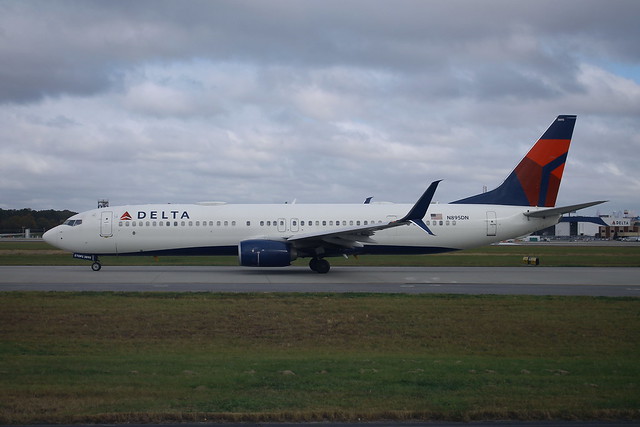
Delta B739 at Pensacola on Aug 9th 2026, flap detached on departure
A Delta Airlines Boeing 737-900, registration N895DN performing flight DL-3067 from Pensacola,FL to Atlanta,GA (USA), departed Pensacola's runway 35,…
Subscribe today
Are you researching aviation incidents? Get access to AeroInside Insights, unlimited read access and receive the daily newsletter.
Pick your plan and subscribePartner

ELITE Simulation Solutions is a leading global provider of Flight Simulation Training Devices, IFR training software as well as flight controls and related services. Find out more.
SafetyScan Pro provides streamlined access to thousands of aviation accident reports. Tailored for your safety management efforts. Book your demo today
AeroInside Blog
Popular aircraft
Airbus A320Boeing 737-800
Boeing 737-800 MAX
Popular airlines
American AirlinesUnited
Delta
Air Canada
Lufthansa
British Airways