Southwest B737 at Nashville on May 2nd 2025, hail strike causes substantial damage
Last Update: February 28, 2026 / 18:56:14 GMT/Zulu time
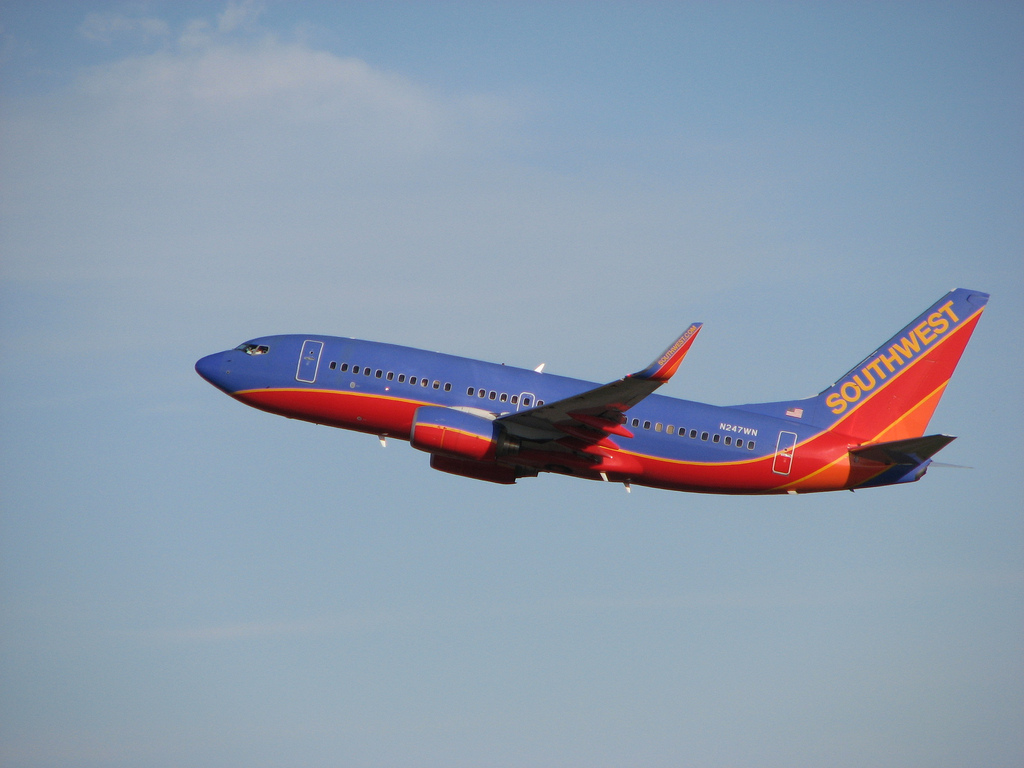
Incident Facts
Date of incident
May 2, 2025
Classification
Report
Airline
Southwest Airlines
Flight number
WN-2231
Departure
Austin, United States
Destination
Nashville, United States
Aircraft Registration
N247WN
Aircraft Type
Boeing 737-700
ICAO Type Designator
B737
The aircraft remained on the ground in Nashville until May 5th 2025, then positioned to Kansas City and remained on the ground in Kansas until Jun 14th 2025 before returning to service.
On Feb 27th 2026 the NTSB released their final report and investigation docket concluding the probable causes of the accident were:
An encounter with hail during descent.
The NTSB analysed:
On May 2, 2025, at 1200 pm central daylight time, Southwest Airlines flight 2231 (SWA2231) encountered turbulence and hail during initial descent into Nashville International airport (BNA), Nashville, Tennessee. The flight was a regularly scheduled passenger flight from AustinBergstrom International airport (AUS) to BNA. As a result of the hail, the airplane sustained substantial damage to the leading edges of the wings and horizontal stabilizer. The flight continued to its destination without further incident.
The flight crew reported that thunderstorm activity was forecast for their arrival at BNA, and they observed weather approaching the airport using a weather application (WSI app) on their electronic flight bag (EFB). They planned and conducted a deviation to the north to avoid the weather. As the airplane passed the Memphis area, the captain asked the flight attendants to be seated early in the event of unforeseen turbulence.
Prior to the encounter, while descending from flight level (FL) 360 toward FL240, the flight had been in clear air and the flight crew could see a cloud build-up at their 1:00 o’clock position. Air Traffic Control (ATC) also advised of “a cell” at their 12:30 to 1:00 o’clock position. However, after reviewing the on-board weather radar and the WSI app on the EFB, those sources did not depict any indications of weather directly ahead of the airplane. As the descent continued, the flight crew noticed below and ahead of the airplane was a flat stratus cloud layer, with no buildups. ATC advised of moderate to extreme precipitation at their 12:30 to 1:00 position, which the crew associated with the buildup they had visually seen at their 1:00 o’clock position.
SWA2231 entered the clouds at about FL320 and initially the ride was smooth, with occasional light chop. While at a speed of 290 knots, at FL280, SWA2231 suddenly encountered precipitation and turbulence. The captain recalled that the rain was very heavy and the excessive noise caused him to suspect hail, but he was unable to verify visually. He retarded the throttles and deployed the speed brake to slow to turbulent air penetration speed. After about 1 minute the heavy precipitation ceased, and the airplane levelled off at FL240, still in instrument meteorological conditions. The flight crew reported the moderate turbulence to ATC and continued to BNA.
A review of weather records revealed that the National Weather Service’s (NWS) Aviation Weather Center had issued Convective SIGMET 99C at 1155 which was extended over the area for an area of severe embedded thunderstorms, moving from 250° at 40 knots, with maximum tops above FL450. Hail to one inch in diameter and wind gusts to 50 knots were possible with the storms. The NWS Storm Prediction Center had issued a severe thunderstorm weather watch at 0956 for a line of severe thunderstorms moving across Tennessee.
Aircraft Registration Data
Incident Facts
Date of incident
May 2, 2025
Classification
Report
Airline
Southwest Airlines
Flight number
WN-2231
Departure
Austin, United States
Destination
Nashville, United States
Aircraft Registration
N247WN
Aircraft Type
Boeing 737-700
ICAO Type Designator
B737
This article is published under license from Avherald.com. © of text by Avherald.com.
Article source
You can read 2 more free articles without a subscription.
Subscribe now and continue reading without any limits!
Read unlimited articles and receive our daily update briefing. Gain better insights into what is happening in commercial aviation safety.
Send tip
Support AeroInside by sending a small tip amount.
Related articles
 Fleet type match
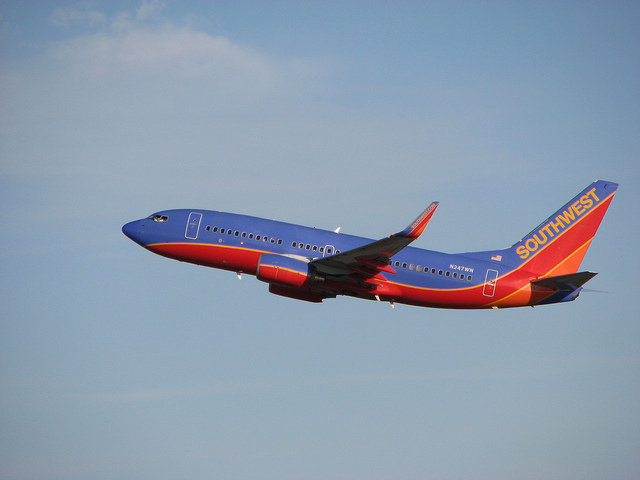
Southwest B737 near Laverne on Mar 20th 2012, moderate turbulence injures flight attendant
A Southwest Airlines Boeing 737-700, registration N247WN performing flight WN-162 from Tampa,FL to Phoenix,AZ (USA) with 137 passengers and 5 crew,…
 Fleet type match
Southwest B738 at Phoenix on Apr 6th 2026, engine surge
A Southwest Airlines Boeing 737-800, registration N8657B performing flight WN-975 from Phoenix,AZ to Saint Louis,MO (USA), was climbing out of…
 Fleet type match
Southwest B737 at Orlando on Mar 26th 2026, cracked windshield
A Southwest Airlines Boeing 737-700, registration N212WN performing flight WN-2414 from Orlando,FL to Austin,TX (USA), had just levelled off at at…
 Fleet type match
Southwest B38M at New Orleans on Dec 20th 2023, bird strike
A Southwest Airlines Boeing 737-8 MAX, registration N8830Q performing flight WN-554 from New Orleans,LA to Tampa,FL (USA) with 164 people on board,…
 Fleet type match
Southwest B738 at San Antonio on Jan 27th 2026, rejected takeoff due to runway incursion
A Southwest Airlines Boeing 737-800, registration N8563Z performing flight WN-4996 from San Antonio,TX to Dallas Love,TX (USA), was accelerating for…
Southwest B737 at Omaha on Jan 6th 2026, bird strike
A Southwest Airlines Boeing 737-700, registration N246LV performing flight WN-1230 from Omaha,NE to Phoenix,AZ (USA), was climbing out of Omaha's…
Newest articles
 Fleet type match
Amerijet B763 at Gander on Mar 1st 2026, smoke in cockpit, cargo fire warnings
An Amerijet Boeing 767-300 freighter, registration N347CM performing flight M6-8620 from Brussels (Belgium) to Gander,NL (Canada) with 3 crew, landed…
 Fleet type match
United A320 at Chicago on Apr 15th 2026, hydraulic failure
A United Airbus A320-200, registration N441UA performing flight UA-1182 from Columbus,OH to Chicago O'Hare,IL (USA) with 65 people on board, was on…
Subscribe today
Are you researching aviation incidents? Get access to AeroInside Insights, unlimited read access and receive the daily newsletter.
Pick your plan and subscribePartner

ELITE Simulation Solutions is a leading global provider of Flight Simulation Training Devices, IFR training software as well as flight controls and related services. Find out more.
SafetyScan Pro provides streamlined access to thousands of aviation accident reports. Tailored for your safety management efforts. Book your demo today
AeroInside Blog
Popular aircraft
Airbus A320Boeing 737-800
Boeing 737-800 MAX
Popular airlines
American AirlinesUnited
Delta
Air Canada
Lufthansa
British Airways