Envoy E170 at Chicago on Sep 25th 2024, landed on wrong runway
Last Update: February 26, 2026 / 17:11:59 GMT/Zulu time
Incident Facts
Date of incident
Sep 25, 2024
Classification
Report
Airline
Envoy Air
Flight number
AA-3936
Departure
Norfolk, United States
Destination
Chicago O'Hare, United States
Aircraft Registration
N772MR
Aircraft Type
Embraer ERJ-170
ICAO Type Designator
E170
The NTSB released their final report and investigation docket concluding the probable cause of the incident was:
The flight crew’s misidentification of the intended landing runway, which resulted in an approach to and landing on the wrong runway due to their planned continuation bias.
Contributing to the incident was the flight crew’s decision to continue the approach without the correct ILS frequency in the FMS. Also contributing was air traffic control’s failure to notify the flight crew that the were lined up with the incorrect runway contrary to FAA directives.
The NTSB analysed:
This incident occurred when the flight crew of Envoy Airlines flight 3936 (ENY3936), an Embraer 170-100 LR, was cleared for a visual approach to land on runway 10C at Chicago O’Hare International Airport (ORD), Chicago, Illinois, however, the flight crew inadvertently landed on runway 10L.
While on descent and upon initial check-in with the ORD approach controller, the flight crew was instructed to expect runway 10C. They were subsequently cleared for the instrument landing system (ILS) to runway 10C. The flight crew acknowledged and correctly read back the approach clearance.
The flight crew stated that the captain, who was the pilot monitoring, briefed the approach, programmed the flight management computer (FMC) with the ILS approach to runway 10C to back up the planned visual approach. However, they were not receiving the ILS identifier. The captain attempted to troubleshoot why the localizer frequency would not autotune by reloading the approach in the FMC and manually tuning the frequency. Unable to resolve the issue they elected to proceed visually.
The captain contacted the air traffic control tower (ATCT) controller stating they were on the visual approach to runway 10C, and the airplane was cleared to land on runway 10C. However, the airplane was aligned with and landed on runway 10L. The flight crew’s decision to continue the approach without the correct ILS frequency was likely affected by their task saturation and planned continuation bias, and their inability to perceive and efficiently integrate available information.
Planned continuation bias is an unconscious cognitive phenomenon to continue with the original plan in spite of changing conditions. Once a plan is made and committed to, it becomes increasingly difficult for stimuli or changing conditions to be recognized as necessitating a change to the plan. In addition, as workload increases conditions that may appear obvious to individuals external to the situation are difficult for people caught up in the plan to recognize.
Recorded data from the flight data recorder revealed that while flying a heading to intercept the ILS 10C, the localizer frequency in the Nav 1 radio was correctly tuned to 108.95 MHz, the frequency for the ILS 10C localizer, for four seconds. Subsequently, the Nav 1 radio was changed to 108.4 MHz and Nav 2 radio was changed to 113.0 MHz for the remainder of the flight. Although the correct ILS frequency (108.95 MHz) was briefly tuned in the Nav 1 radio, it was subsequently changed to an incorrect frequency (108.4 MHz), and Nav 2 was tuned to a non-ILS frequency (113.0 MHz), preventing the crew from confirming alignment with runway 10C.
The FAA mandatory occurrence report (MOR) revealed that the ATCT controller noticed the runway alignment error and coordinated with the runway 10L controller to allow ENY3936 to land on the incorrect runway as no traffic conflicts were noted. The air traffic control (ATC) services provided by the controller were deficient and contrary to FAA directives. Specifically, the controller failed to notify ENY3936 of their alignment error and did not issue control instructions to prevent the wrong surface landing. Had the controller notified the flight crew of the alignment error or provided control instructions it is likely that the wrong surface landing would have been prevented.
Aircraft Registration Data
Incident Facts
Date of incident
Sep 25, 2024
Classification
Report
Airline
Envoy Air
Flight number
AA-3936
Departure
Norfolk, United States
Destination
Chicago O'Hare, United States
Aircraft Registration
N772MR
Aircraft Type
Embraer ERJ-170
ICAO Type Designator
E170
This article is published under license from Avherald.com. © of text by Avherald.com.
Article source
You can read 2 more free articles without a subscription.
Subscribe now and continue reading without any limits!
Read unlimited articles and receive our daily update briefing. Gain better insights into what is happening in commercial aviation safety.
Send tip
Support AeroInside by sending a small tip amount.
Related articles
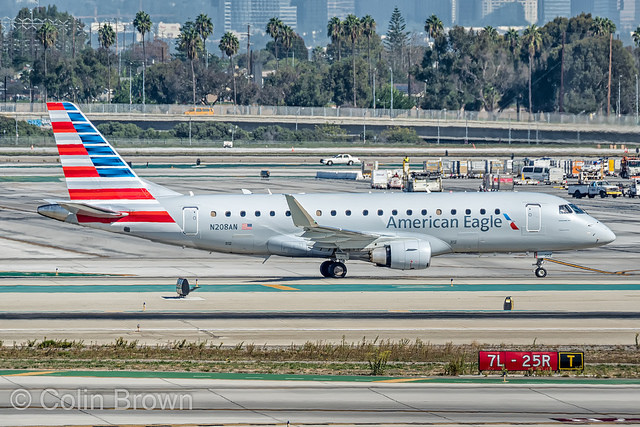 Fleet type match
Envoy E175 near Lubbock on Jan 26th 2026, engine oil problem, engine failure
An Envoy Embraer ERJ-175 on behalf of American Airlines, registration N208AN performing flight AA-3573 from Dallas Ft. Worth,TX to Midland,TX (USA)…
 Fleet type match
Envoy E175 at Dallas on Dec 6th 2025, engine failure
An Envoy Embraer ERJ-175 on behalf of American Airlines, registration N270NN performing flight AA-3939 from Dallas Ft. Worth,TX to Midland,TX (USA)…
Envoy E175 at Montgomery on Dec 31st 2022, ground worker killed
An Envoy Embraer ERJ-175 on behalf of American Airlines, registration N264NN performing flight AA-3408 from Montgomery,AL to Dallas Ft. Worth,TX…
Envoy E175 at Dallas on Nov 1st 2024, loss of nose gear steering
An Envoy Embraer ERJ-175 on behalf of American Airlines, registration N282NN performing flight AA-4174 from Little Rock,AR to Dallas Ft. Worth,TX…
Envoy E170 enroute on Aug 14th 2023, turbulence injures cabin crew
An Envoy Embraer ERJ-170, registration N776MS performing flight AA-3788 from Des Moines,IA to Chicago O'Hare,IL (USA), was enroute when the aircraft…
Newest articles
 Fleet type match
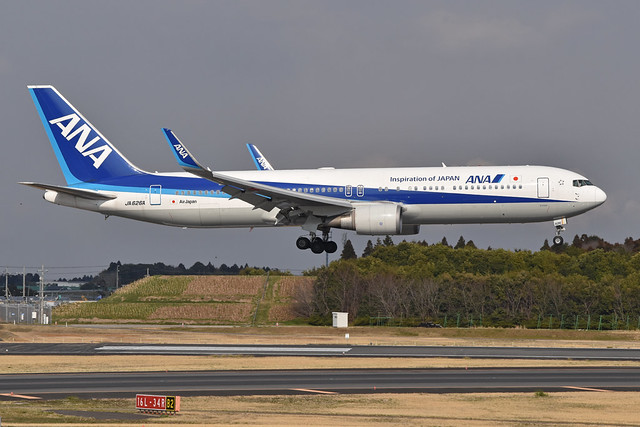
ANA B763 and C525 at Tokyo on Aug 4th 2026, TCAS resolution
An ANA All Nippon Airways Boeing 767-300, registration JA626A performing flight NH-968 from Shanghai Pudong (China) to Tokyo Haneda (Japan) with 197…
 Fleet type match
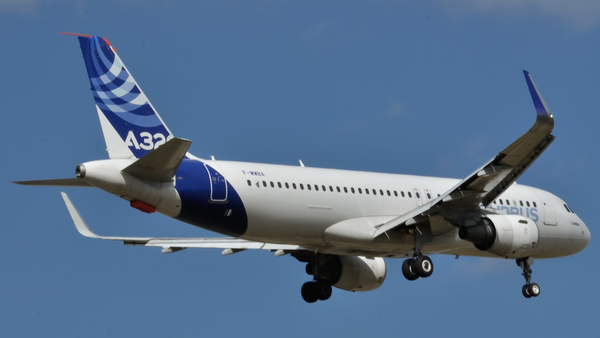
Easyjet Europe A320 at Berlin on Aug 2nd 2026, bird strike
An Easyjet Europe Airbus A320-200, registration OE-IDD performing flight U2-5353 from Berlin (Germany) to Burgas (Bulgaria), was climbing out of…
Subscribe today
Are you researching aviation incidents? Get access to AeroInside Insights, unlimited read access and receive the daily newsletter.
Pick your plan and subscribePartner

ELITE Simulation Solutions is a leading global provider of Flight Simulation Training Devices, IFR training software as well as flight controls and related services. Find out more.
SafetyScan Pro provides streamlined access to thousands of aviation accident reports. Tailored for your safety management efforts. Book your demo today
AeroInside Blog
Popular aircraft
Airbus A320Boeing 737-800
Boeing 737-800 MAX
Popular airlines
American AirlinesUnited
Delta
Air Canada
Lufthansa
British Airways