Gulf B789 near Dubai on Mar 10th 2023, tuning control panel malfunction
Last Update: July 18, 2025 / 11:04:50 GMT/Zulu time
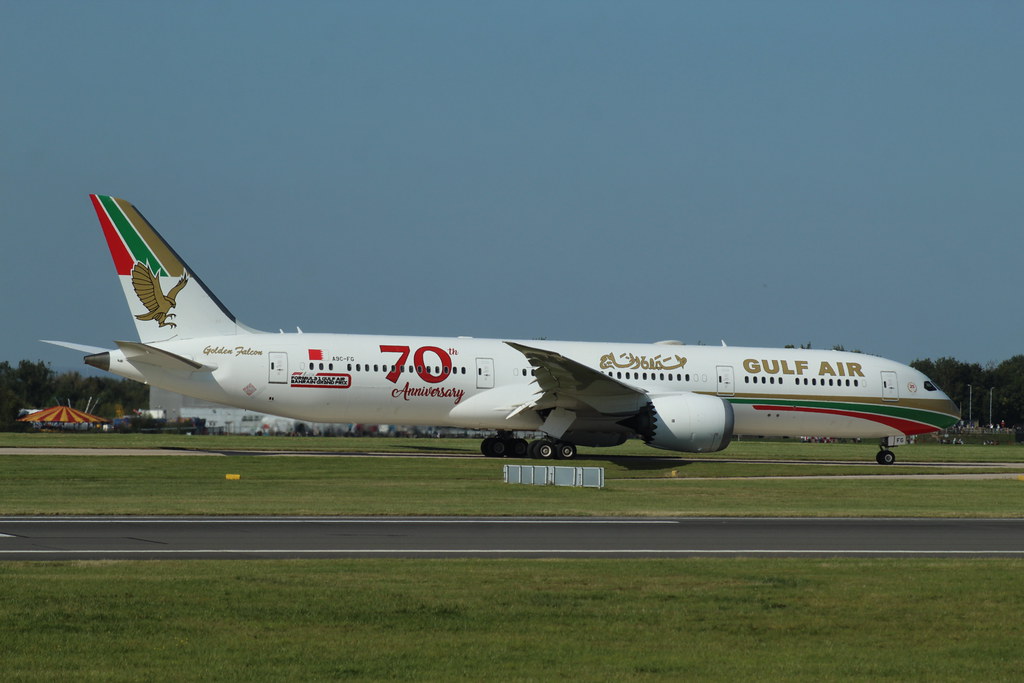
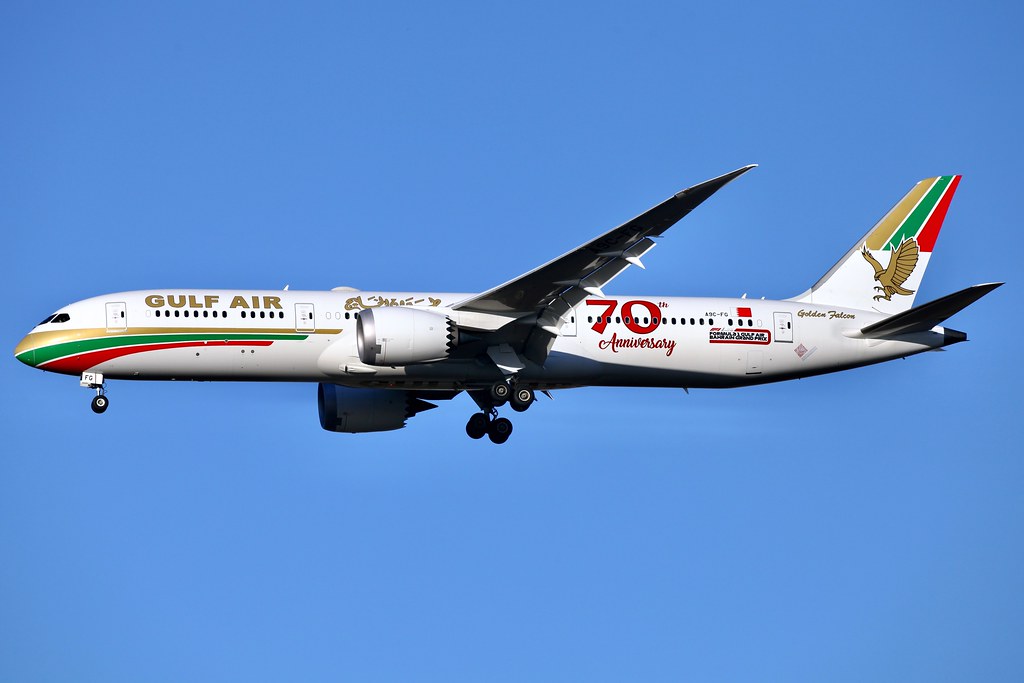
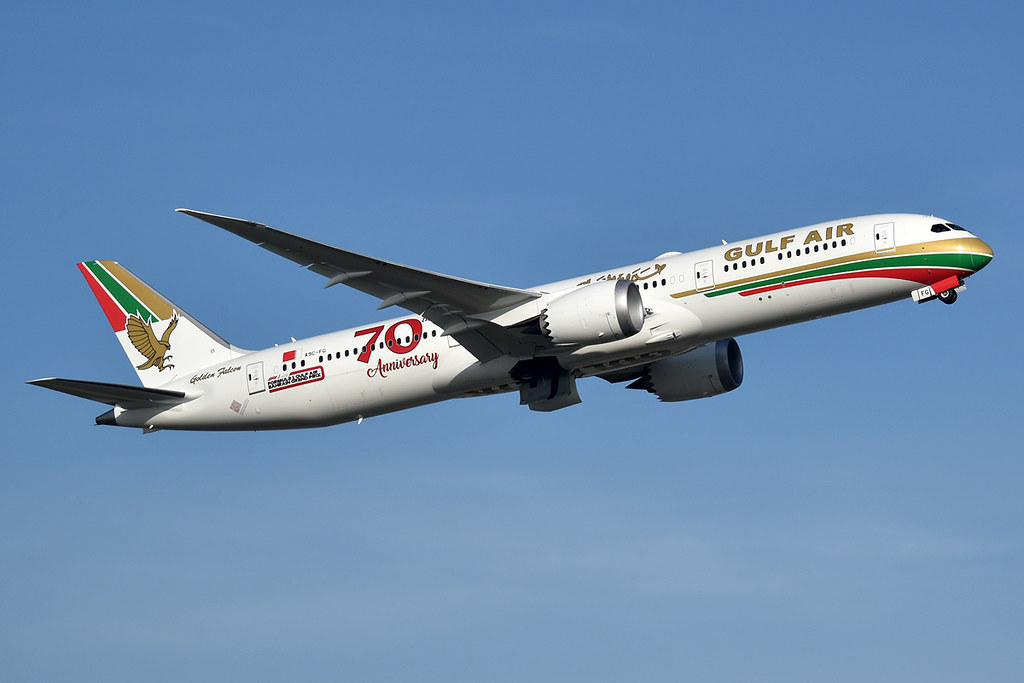
Incident Facts
Date of incident
Mar 10, 2023
Classification
Report
Airline
Gulf Air
Flight number
GF-504
Departure
Bahrain, Bahrain
Destination
Dubai, United Arab Emirates
Aircraft Registration
A9C-FG
Aircraft Type
Boeing 787-9 Dreamliner
ICAO Type Designator
B789
The UAE GCAA released their summary report concluding the probable causes of the serious incident were:
The Air Accident Investigation Sector could not determine the technical reason behind the malfunction of the three TCPs.
The crew was unable to restore the TCPs because the Copilot, acting as the PM, could not locate the information pertinent to resetting the inoperative TCP as outlined in the electronic flight crew operations bulletin stored in the electronic flight bag.
The non-adherence to the applicable take-off briefing procedure to check the current bulletins and NOTAM supplement, and their lack of knowledge in locating the relevant flight crew operations bulletins hindered the crew’s ability to find the necessary information.
The GCAA analysed:
Risk Analysis of Inoperative TCP
On a Boeing 787 aircraft, the inoperative TCP can pose several risks that need to be carefully managed. The TCP is a critical component in the flight communication and navigation systems, and its failure can affect several aspects of the aircraft's operations such are TCAS, Transponder and Weather radar.
If TCP fails, affecting the operation of radio and navigation systems, the potential risk that impact operations as the TCAS, transponder, and weather radar are non-functional:
TCAS:
Potential Risks:
Inability to Tune Frequencies: If the TCP failure affects the ability to tune frequencies, it could hinder communication with ATC, which may impact TCAS operation indirectly if it involves frequency adjustments for alerts or coordination.
Communication Issues: Though TCAS itself is not directly dependent on the TCP for its core functionality, any associated communication issues might affect how effectively the system is used or monitored by the crew. The TCP may also be used to adjust the sensitivity or mode of the TCAS, such as selecting between "Traffic" and "Resolution Advisory" modes.
Transponder:
Potential Risks:
Frequency Tuning Problems: The TCP is used to tune communication frequencies, including those used by the transponder. If the TCP failure affects frequency tuning, the aircraft may face issues with setting or communicating on the correct transponder frequency.
Invisibility to ATC: An inoperative transponder due to TCP failure could lead to loss of radar contact with ATC, increasing collision risk.
Weather Radar:
Potential Risks:
Radar control issues: The TCP controls various aspects of the weather radar system, including tuning and operation. A failure might prevent the crew from adjusting radar settings or viewing weather information accurately.
Reduced Weather Awareness: Without proper radar operation, pilots may struggle to detect and avoid severe weather conditions, increasing the risk of encountering turbulence or storms.
In conclusion, the Investigation affirms the failure of the TCP affects the ability to tune and operate critical communication and navigation systems.
The indirect risks to TCAS, transponder, and weather radar include:
TCAS: Potential communication issues affecting the usage and monitoring of TCAS alerts.
Transponder: Problems with frequency tuning could lead to invisibility to ATC and communication challenges.
Weather Radar: Difficulty in tuning and controlling the weather radar system, which impacts weather detection and avoidance.
Aircraft Airworthiness
The Aircraft maintenance records did not indicate deferred defects related to the serviceability of onboard navigation systems, and the Aircraft was released to the flight without reported defects.
Crew Performance
Both flight crewmembers were qualified and fit for the flight as per the regulatory requirements.
The flight crew contacted Dubai Approach at 1754:10 reporting the TCP failure and they were unable to change the frequency. The crew was able to communicate on standby radio frequency 119.3 MHz. Dubai Approach controller coordinated with crew for the decent clearance to VETUB3A waypoint.
At the same time, the PM initiated the QRH non-normal checklist and attempted to locate the electronic FCOM in the electronic flight bag (EFB).
The PM stated that he was unable to find any pertinent details regarding the inoperative TCP reset procedure in the FCOM, nor could he find the flight crew operations bulletin for the TCP inoperative reset procedure.
At 18:01:02, the Aircraft was holding at waypoint VETUB while the crew coordinated with Dubai Approach for vectoring and a descent to 13,000 feet.
As per the statement of the Commander, who was acting as the PF, he and the Copilot the multipole attempts to reset and restore the TCP were unsuccessful.
The crew declared radio communication emergency at 1822:15 upon which Dubai Approach controller declared emergency and provided landing clearance runway 12L to the crew. The Aircraft landed safely at 1835:33 on runway 12L.
The Investigation concludes that if the crew have followed the take-off briefing and checked that there is an existing relevant flight crew operations bulletin, number GUL-38 R1, that the crew were unable to identify its location in the electronic copy of FCOM installed on iPad that was placed in EFB.
If crew would have located the bulletin and followed the procedures to reset the inoperative TCP they would have recovered the communication to normal. Due to failure in communication system the PF or PM was unable to contact company Maintenance Control Center (MCC) to resolve the TCP issue.
The Investigation concludes that the crew were unable to locate the relevant bulletin to reset the inoperative TCP as they may not have checked the existing bulletins as per the procedures.
The Aircraft Maintenance performed a reset to all three TCPs and the TCPs were functional and ground test was conducted with no further failures reported. The EICAS messages were cleared.
Incident Facts
Date of incident
Mar 10, 2023
Classification
Report
Airline
Gulf Air
Flight number
GF-504
Departure
Bahrain, Bahrain
Destination
Dubai, United Arab Emirates
Aircraft Registration
A9C-FG
Aircraft Type
Boeing 787-9 Dreamliner
ICAO Type Designator
B789
This article is published under license from Avherald.com. © of text by Avherald.com.
Article source
You can read 2 more free articles without a subscription.
Subscribe now and continue reading without any limits!
Read unlimited articles and receive our daily update briefing. Gain better insights into what is happening in commercial aviation safety.
Send tip
Support AeroInside by sending a small tip amount.
Related articles
 Fleet type match
Gulf B789 at Manila on Nov 4th 2025, runway incursion
A Gulf Air Boeing 787-9, registration A9C-FJ performing flight GF-155 from Manila (Philippines) to Bahrain (Bahrain), was taxiing for departure from…
 Fleet type match
Gulf B789 over Iraq on Dec 1st 2024, engine shut down in flight
A Gulf Air Boeing 787-9, registration A9C-FB performing flight GF-5 from Bahrain (Bahrain) to Manchester,EN (UK), was enroute at FL380 in Iraqi…
 Fleet type match
Gulf A320 at Bahrain on Oct 3rd 2023, loss of cabin pressure
A Gulf Air Airbus A320-200, registration A9C-AD performing flight GF-183 from Bahrain (Bahrain) to Jeddah (Saudi Arabia), was climbing through FL320…
 Fleet type match
Gulf A320 at Bahrain on Oct 1st 2023, loss of cabin pressure
A Gulf Air Airbus A320-200, registration A9C-AC performing flight GF-219 from Bahrain (Bahrain) to Kuwait (Kuwait), was climbing through FL240 when…
 Fleet type match
Gulf B789 near Frankfurt on Aug 15th 2023, fuel leak
A Gulf Air Boeing 787-9, registration A9C-FD performing flight GF-2 from London Heathrow,EN (UK) to Bahrain (Bahrain), was enroute at FL350 almost…
Newest articles
 Fleet type match
Porter E295 at Edmonton and Toronto on Feb 22nd 2026, passenger observed tyre separating on departure
A Porter Airlines Embraer ERJ-195-E2, registration C-GZQM performing flight PD-402 from Edmonton,AB to Toronto,ON (Canada) with 94 people on board,…
Calm AT72 at Arviat on Apr 25th 2026, runway excursion
A Calm Air Avions de Transport Regional ATR-72-212A, registration C-GREJ performing freight flight MO-488 from Thompson,MB to Arviat,NU (Canada) with…
Subscribe today
Are you researching aviation incidents? Get access to AeroInside Insights, unlimited read access and receive the daily newsletter.
Pick your plan and subscribePartner

ELITE Simulation Solutions is a leading global provider of Flight Simulation Training Devices, IFR training software as well as flight controls and related services. Find out more.
SafetyScan Pro provides streamlined access to thousands of aviation accident reports. Tailored for your safety management efforts. Book your demo today
AeroInside Blog
Popular aircraft
Airbus A320Boeing 737-800
Boeing 737-800 MAX
Popular airlines
American AirlinesUnited
Delta
Air Canada
Lufthansa
British Airways