Transavia A21N over France on Apr 29th 2025, loss of radar contact, loss of separation
Last Update: July 24, 2025 / 18:39:17 GMT/Zulu time

Incident Facts
Date of incident
Apr 29, 2025
Classification
Incident
Airline
Transavia Airlines
Flight number
HV-6144
Departure
Alicante, Spain
Destination
Amsterdam, Netherlands
Aircraft Registration
PH-YHC
Aircraft Type
Airbus A321-Neo
ICAO Type Designator
A21N
A Norwegian Air Shuttle Boeing 737-8 MAX, registration LN-FGF performing flight D8-5058 from Malaga,SP (Spain) to Gothenburg (Sweden), was enroute at FL360 about 30nm southwest of the last transmitted position of PH-YHC, when the Boeing began to turn left onto a westerly heading and descend to FL350. The aircraft returned onto a northeasterly heading over the coast overflying Dunkirk.
Both aircraft subsequently continued to their destinations without further incident.
The French BEA reported on Jun 5th 2025, that a loss of separation occurred between the aircraft while PH-YHC "performed several 360° delays at the request of CRNA East air traffic control" after Maastricht UAC refused the flight. The occurrence was rated a serious incident and is being investigated by the BEA.
On Jul 23rd 2025 the BEA added, that two similiar occurrences were identified over a period of 7 months, all three occurrences are handled by one investigation. A preliminary report in French and preliminary report in Englishhas been released on Jul 23rd 2025. The two other occurrences are: Incident: Lingus A20N enroute on Sep 20th 2024, loss of radio and radar contact and Incident: Transavia A21N near Bordeaux on Jan 13th 2025, radar and radio contact lost, alert and distress phases triggered.
The report summarizes the sequence of events for PH-YHC (translated from the French report):
The crew of the Airbus A321neo registered PH-YHC took off from Elche Miguel Hernández Airport in Alicante (Spain) at 8:42 a.m. bound for Amsterdam Schiphol Airport (Netherlands), with the call sign TRA21Q. The captain was PM and the co-pilot was PF on this flight. During the climb, the captain begins to hear crackling in his headset.
During cruise, when changing frequencies, the crew notices that the changes made on RMP 1 are not synchronized with RMP 2, but those made on RMP 2 are correctly reflected on RMP 1.
From 10:24 a.m. onwards, the crew reported repeated activations of the ECAM NAV ATC/XPDR STBY alert, associated with the illumination of the Master Caution button, the emission of a Single Chime type audible signal and the appearance of the ECAM TCAS STBY memo.
At 10:26 a.m., the aircraft is at FL 360. The CDB, in radio contact with CRNA-Est (Reims Control), performs a radio test and also asks if its transponder is being received. The audio quality is poor and the aircraft is still visible on radar.
At 10:28 a.m., the controller notified the crew of the loss of radar contact and asked them to switch to their other transponder. The crew replied that they were having problems with both transponders.
Radar contact was reestablished shortly thereafter. The transponder code transmitted to the radar was 2000. Radar contact is lost again at 10:30 a.m. and remains lost until the end of the flight.
Due to repeated ECAM alerts and the alternation between a blank screen and a normal display on RMP 2, the co-pilot turns RMP 2 OFF. The alerts stop. The co-pilot then turned it back to ON, and the alerts reappeared. The co-pilot then turned RMP 2 back to OFF at 10:29 a.m. and left it that way until the end of the flight.
In the absence of a transponder and flight level information, the aircraft will have to descend into the airspace managed by the Paris and Brussels control centers.
CRNA-Est calls the military agencies (CDC Cinq-Mars-la-Pile and CAPCODA-TN) to report the loss of radar contact. The CDC indicates that they can see the aircraft on their primary radar.
At 10:31 a.m., the controller confirms the loss of radar contact to the crew. The crew indicates that they are through the SULEX point, at FL 360.
At 10:34 a.m., the controller asked the crew of flight NSZ8TQ20, flying at FL 360 in his sector, to turn 10° to the left to manage another conflict, then asked the crew of flight TRA21Q to turn toward CMB21. The crew of TRA21Q indicated that this would require a 90° turn to the right. The controller then asked the crew to proceed to the LUMIL point and make a 360° turn to the left upon arrival at that point.
The CRNA-East called the CRNA-North (Paris Control) to report the loss of radar contact with flight TRA21Q and to coordinate the descent of this flight, as MUAC refused to accept it into its airspace. The CRNA-East informs it that it would like to descend the aircraft to FL 240, and the two centers agree that the CRNA-East will keep the aircraft on frequency at this level.
CRNA-Est called the Brussels en route control center, which refused to take the flight because they said they had “no primary” and would “not see it at all.”
After beginning its 360° turn to the left, the crew called CRNA-Est for instructions on how to proceed after completing the turn. The controller asked them to make another 360° turn when they reached LUMIL because MUAC had refused their flight and they would have to descend to avoid their airspace.
The controller asked the crew of flight NSZ8TQ to turn to heading 350° and descend to FL 340. The aircraft was then flying on heading 022°.
The controller informs the crew of flight TRA21Q that it has also been rejected by the Brussels en route control center and that it will have to divert to Lille-Lesquin airport (59).
At 10:42 a.m., the controller asks the crew of flight TRA21Q to descend to FL 300 and continue 360 over LUMIL. The controller asks the crew of flight
NSZ8TQ to turn left 30°.
The CRNA-East called MUAC to inform them that flight TRA21Q was descending to FL 300. MUAC requests that the aircraft to not enter their airspace. CRNA-East replies that they are trying but cannot see the aircraft.
At 10:43:23, flights TRA21Q and NSZ8TQ approached each other at a minimum distance of 3.9 NM. In STBY mode, no TCAS alert or ATC safety net could be triggered. As flight TRA21Q was no longer displayed on the controller's radar screen, the controller did not detect this convergence. The crews of both aircraft did not detect it either.
At 10:44 a.m., the crew confirmed to the controller that they could land at Lille.
CRNA-Est called the Brussels en route control center, which reported that it had managed to view flight TRA21Q on its radar screens. They added that the Amsterdam en route control center could see it on primary radar and that they had therefore accepted the transfer of flight TRA21Q.
The Brussels control center and the CRNA-Nord and CRNA-Est agreed on the conditions for transferring the aircraft, which was to be stable at FL 240 at the border and en route to the DENUT point.
At 10:46 a.m., the controller informed the crew of flight TRA21Q that they could finally proceed to their destination and authorized them to descend to FL 240.
At 10:50 a.m., the crew of flight TRA21Q informs the CRNA-East controller that they are stable at FL 240. The latter authorizes them to proceed to the DENUT point. Two minutes later, the flight is transferred to the Brussels en route control center on frequency 127.230 MHz. The captain selected this frequency on RMP 1 and reported to FL 240 heading for DENUT. This message was received on the CRNA-East frequency. After switching RMP 1 back to the CRNA-East frequency, the captain reselected the Brussels frequency and was able to listen and transmit.
During the frequency change between the Brussels en route control center and the Amsterdam en route control center, the CDB continues to hear the Brussels frequency in the background, in addition to the Amsterdam frequency. This background noise then fades away. The Amsterdam en route control center switches flight TRA21Q to a dedicated frequency to avoid frequency changes. The crew performs an ILS approach and lands at 11:26 a.m. without further incident.
Incident Facts
Date of incident
Apr 29, 2025
Classification
Incident
Airline
Transavia Airlines
Flight number
HV-6144
Departure
Alicante, Spain
Destination
Amsterdam, Netherlands
Aircraft Registration
PH-YHC
Aircraft Type
Airbus A321-Neo
ICAO Type Designator
A21N
This article is published under license from Avherald.com. © of text by Avherald.com.
Article source
You can read 2 more free articles without a subscription.
Subscribe now and continue reading without any limits!
Read unlimited articles and receive our daily update briefing. Gain better insights into what is happening in commercial aviation safety.
Send tip
Support AeroInside by sending a small tip amount.
Related articles
 Fleet type match
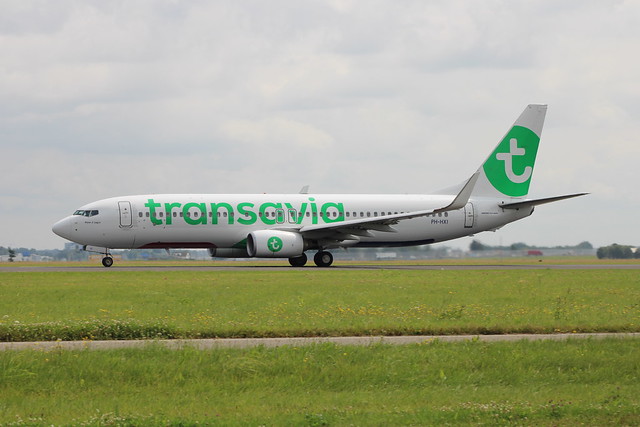
Transavia B738 at Amsterdam on Aug 25th 2025, flight control problems
A Transavia Boeing 737-800, registration PH-HXI performing flight HV-5517 from Amsterdam (Netherlands) to Pafos (Cyprus), was climbing out of…
 Fleet type match
Transavia B738 at Faro on Aug 11th 2025, engine problem
A Transavia Boeing 737-800, registration PH-HSW performing flight HV-5514 from Faro (Portugal) to Eindhoven (Netherlands), was climbing out of Faro's…
 Fleet type match
Transavia B738 near Lisbon on Aug 2nd 2025, engine fire indication
A Transavia Boeing 737-800, registration PH-HSF performing flight HV-3514 from Faro (Portugal) to Eindhoven (Netherlands), was enroute at FL360 about…
 Fleet type match
Transavia A21N near Bordeaux on Jan 13th 2025, radar and radio contact lost, alert and distress phases triggered
A Transavia Airbus A321-200N, registration PH-YHA performing flight HV-5932 from Granada,SP (Spain) to Amsterdam (Netherlands), was enroute at FL340…
 Fleet type match
Transavia A21N at Amsterdam on May 23rd 2025, engine shut down in flight, gear bolt found
A Transavia Airbus A321-200N, registration PH-YHZ performing flight HV-6935 from Amsterdam (Netherlands) to Tirana (Albania), was climbing out of…
Newest articles
 Fleet type match
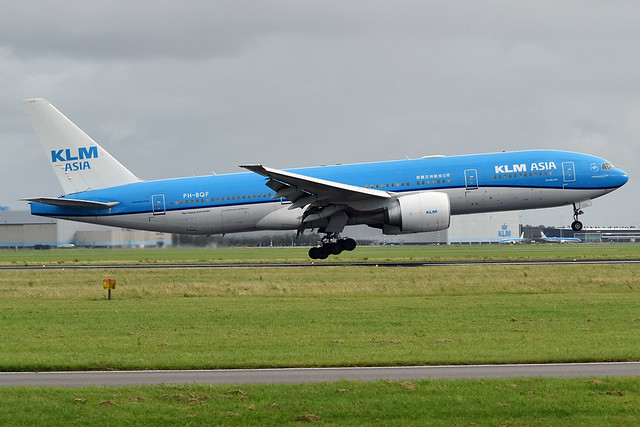
KLM B772 at Amsterdam on Apr 16th 2026, smoke indication
A KLM Boeing 777-200, registration PH-BQF performing flight KL-862 from Tokyo Narita (Japan) to Amsterdam (Netherlands), was on final approach to…
 Fleet type match
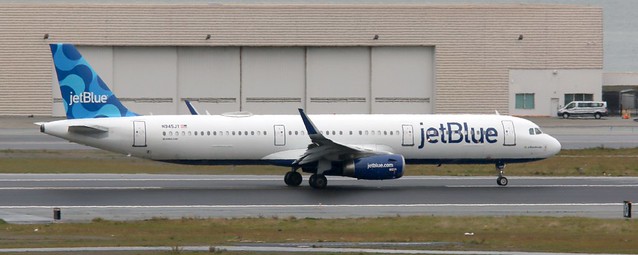
Jetblue A321 near Chicago on Apr 17th 2026, odour in cabin
A Jetblue Airbus A321-200, registration N945JT performing flight B6-734 from San Francisco,CA to Boston,MA (USA), was enroute at FL350 about 150nm…
Subscribe today
Are you researching aviation incidents? Get access to AeroInside Insights, unlimited read access and receive the daily newsletter.
Pick your plan and subscribePartner

ELITE Simulation Solutions is a leading global provider of Flight Simulation Training Devices, IFR training software as well as flight controls and related services. Find out more.
SafetyScan Pro provides streamlined access to thousands of aviation accident reports. Tailored for your safety management efforts. Book your demo today
AeroInside Blog
Popular aircraft
Airbus A320Boeing 737-800
Boeing 737-800 MAX
Popular airlines
American AirlinesUnited
Delta
Air Canada
Lufthansa
British Airways