Transavia A21N near Bordeaux on Jan 13th 2025, radar and radio contact lost, alert and distress phases triggered
Last Update: July 24, 2025 / 18:41:21 GMT/Zulu time

Incident Facts
Date of incident
Jan 13, 2025
Classification
Incident
Airline
Transavia Airlines
Flight number
HV-5932
Departure
Granada, Spain
Destination
Amsterdam, Netherlands
Aircraft Registration
PH-YHA
Aircraft Type
Airbus A321-Neo
ICAO Type Designator
A21N
The French BEA reported: "While the aircraft was cruising, radar and radio contact was lost several times. Alert and distress phases were triggered by the CRNA/SO. The crew diverted to Bordeaux Mérignac (33).", rated the occurrence an incident and categorized the occurrence "a failure or malfunction of a circuit or component (not part of the powertrain)". The occurrence is being investigated by the BEA.
On Jul 2nd 2025 the Dutch Onderzoeksraad added: "During the approach, the crew were unable to select navigation aids."
The aircraft remained on the ground in Bordeaux until Jan 24th 2025, then positioned back to Amsterdam.
On Jul 23rd 2025 the BEA added, that two similiar occurrences were identified over a period of 7 months, all three occurrences are handled by one investigation. A preliminary report in French and a preliminary report in English has been released on Jul 23rd 2025. The two other occurrences are: Incident: Lingus A20N enroute on Sep 20th 2024, loss of radio and radar contact and Incident: Transavia A21N over France on Apr 29th 2025, loss of radar contact, loss of separation.
The BEA summarized the sequence of events (translated from the French report):
The crew of the Airbus A321neo registered PH-YHA took off from Federico García Lorca Airport in Granada-Jaén (Spain) at 7:24 p.m. bound for Amsterdam Schiphol Airport (Netherlands), with the call sign TRA59M. The captain was PF and the co-pilot was PM on this flight.
Cruising at FL 340, the crew is in contact with CRNA-Southwest. At 8:48 p.m., the crew indicates that the ECAM NAV LS TUNING DISAGREE and NAV ATC/XPDR STBY alerts appear, as well as the ECAM TCAS STBY memo. The STBY NAV function is activated without crew intervention on both RMPs, and the radio frequencies of both RMPs are desynchronized. Repeated transitions of the TCAS to STBY mode are recorded on the FDR.
Between 8:48 p.m. and 9:07 p.m., the aircraft disappeared from radar screens six times and reappeared with a transponder code that appeared to be random (2107, 1001, 2110, 2111) and did not correspond to the code selected by the crew. Mode C is lost intermittently and the IDENT function of the transponder activates without crew intervention on numerous occasions.
Several total audio losses occur on the co-pilot's side: the co-pilot receives no signal in his headset and sends a radio message that is not received by the control center.
The alert phase (ALERFA) is triggered by CRNA-Southwest at 8:57 p.m.
The crew indicates in their testimony that they cannot process the ECAM messages because they appear and disappear continuously. The crew then attempts to reset each RMP.
At 9:07 p.m., the crew is transferred to CRNA-West on frequency 125.965 MHz. The crew selects this frequency and transmits a message to the CRNA-West controller, but the message is received on the previous frequency (that of CRNA-Southwest). The crew then informed the CRNA-Southwest controller that they were unable to change radio frequencies. The only usable frequencies were the CRNA-Southwest frequency (132.430 MHz) and the distress frequency 121.5 MHz. CRNA-Southwest notified CRNA-West, which indicated that it could not accept the flight under these conditions.
The crew declared a “PAN PAN” at 9:10 p.m. and reported problems with the radio, transponder, and TCAS. The crew requested to divert to Paris-Orly (94). The CRNA-Southwest controller refused and asked them to turn left to heading 190° for a diversion to Bordeaux-Mérignac airport Mérignac.
The CRNA-Sud-Ouest called the Bordeaux-Mérignac approach control center to inform them of the arrival of flight TRA59M. The CRNA asked if the Bordeaux-Mérignac controllers could transmit on 121.5 MHz. The Bordeaux-Mérignac approach control center indicates that it has a backup radio with which it may be able to transmit on 121.5 MHz. The Bordeaux-Mérignac approach controller makes a test transmission and the CRNA-Sud-Ouest confirms that it has received the message.
The captain, anticipating a possible loss of all communications, asks the CRNA-Sud-Ouest controller if he can obtain advance approach and landing clearances.
CRNA-Sud-Ouest coordinated with the Bordeaux-Mérignac approach control center and they agreed to give the crew a limit clearance17 at 5,000 ft on the ETPAR point to ensure that the crew was in contact with the approach on 121.5 MHz. At 9:25 p.m., the crew was cleared for the RNP05Z approach and transferred to the approach controller on 121.5 MHz.
The crew declared a “PAN PAN” on 121.5 MHz, and radio contact was established with the Bordeaux-Mérignac approach control center. The distress phase (DETRESFA) was triggered at 9:27 p.m. by CRNA-Sud-Ouest. The crew was unable to activate the FMS approach mode or arm the guidance modes associated with RNP approaches. The crew then used the TRK and FPA modes to manually select the approach route and glide slope. The crew landed without further incident.
Incident Facts
Date of incident
Jan 13, 2025
Classification
Incident
Airline
Transavia Airlines
Flight number
HV-5932
Departure
Granada, Spain
Destination
Amsterdam, Netherlands
Aircraft Registration
PH-YHA
Aircraft Type
Airbus A321-Neo
ICAO Type Designator
A21N
This article is published under license from Avherald.com. © of text by Avherald.com.
Article source
You can read 2 more free articles without a subscription.
Subscribe now and continue reading without any limits!
Read unlimited articles and receive our daily update briefing. Gain better insights into what is happening in commercial aviation safety.
Send tip
Support AeroInside by sending a small tip amount.
Related articles
 Fleet type match
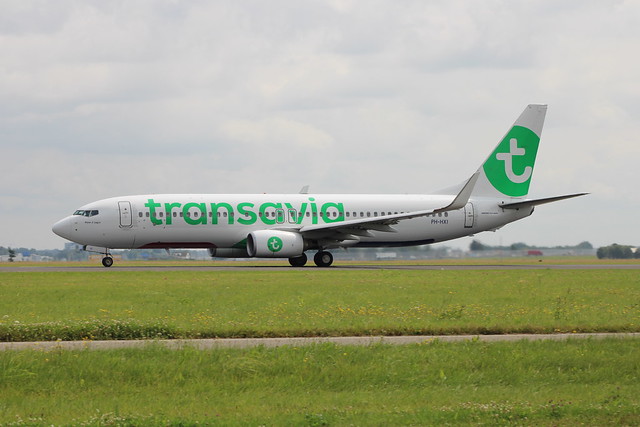
Transavia B738 at Amsterdam on Aug 25th 2025, flight control problems
A Transavia Boeing 737-800, registration PH-HXI performing flight HV-5517 from Amsterdam (Netherlands) to Pafos (Cyprus), was climbing out of…
 Fleet type match
Transavia B738 at Faro on Aug 11th 2025, engine problem
A Transavia Boeing 737-800, registration PH-HSW performing flight HV-5514 from Faro (Portugal) to Eindhoven (Netherlands), was climbing out of Faro's…
 Fleet type match
Transavia B738 near Lisbon on Aug 2nd 2025, engine fire indication
A Transavia Boeing 737-800, registration PH-HSF performing flight HV-3514 from Faro (Portugal) to Eindhoven (Netherlands), was enroute at FL360 about…
 Fleet type match
Transavia A21N over France on Apr 29th 2025, loss of radar contact, loss of separation
A Transavia Airbus A321-200N, registration PH-YHC performing flight HV-6144 from Alicante,SP (Spain) to Amsterdam (Netherlands), was enroute at FL360…
 Fleet type match
Transavia A21N at Amsterdam on May 23rd 2025, engine shut down in flight, gear bolt found
A Transavia Airbus A321-200N, registration PH-YHZ performing flight HV-6935 from Amsterdam (Netherlands) to Tirana (Albania), was climbing out of…
Newest articles
 Fleet type match
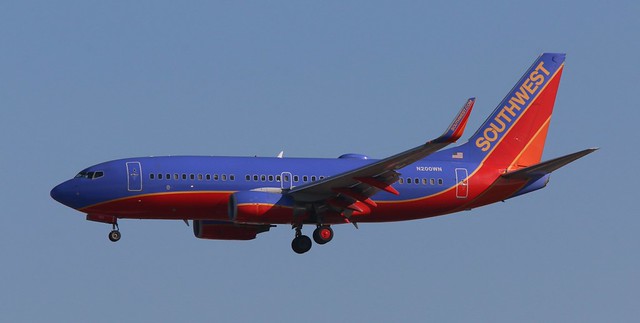
Southwest B737 at Las Vegas on Apr 8th 2026, HUD takes captain down
A Southwest Airlines Boeing 737-700, registration N200WN performing flight WN-568 from Las Vegas,NV to Reno,NV (USA), was climbing out of Las Vegas'…
 Fleet type match
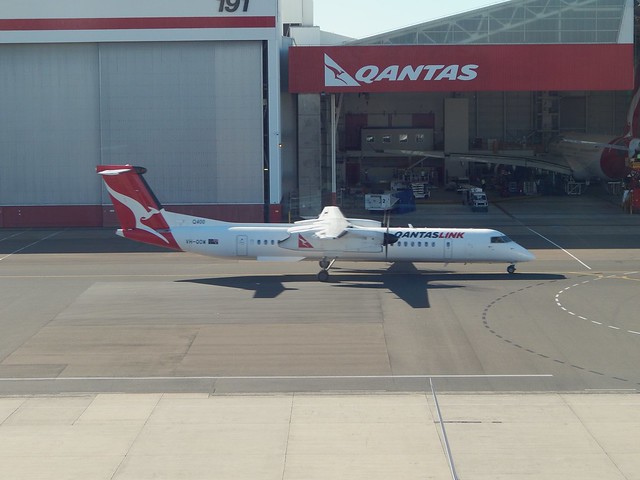
Qantaslink DH8D near Townsville on Apr 20th 2026, rudder problems
A Qantaslink de Havilland Dash 8-400 on behalf of Qantas, registration VH-QOW performing flight QF-2472 from Townsville,QL to Mount Isa,QL…
Subscribe today
Are you researching aviation incidents? Get access to AeroInside Insights, unlimited read access and receive the daily newsletter.
Pick your plan and subscribePartner

ELITE Simulation Solutions is a leading global provider of Flight Simulation Training Devices, IFR training software as well as flight controls and related services. Find out more.
SafetyScan Pro provides streamlined access to thousands of aviation accident reports. Tailored for your safety management efforts. Book your demo today
AeroInside Blog
Popular aircraft
Airbus A320Boeing 737-800
Boeing 737-800 MAX
Popular airlines
American AirlinesUnited
Delta
Air Canada
Lufthansa
British Airways