Atlanta Icelandic B744 at Frankfurt on Nov 29th 2023, tail strike on departure, flew across Atlantic
Last Update: January 27, 2026 / 16:21:59 GMT/Zulu time
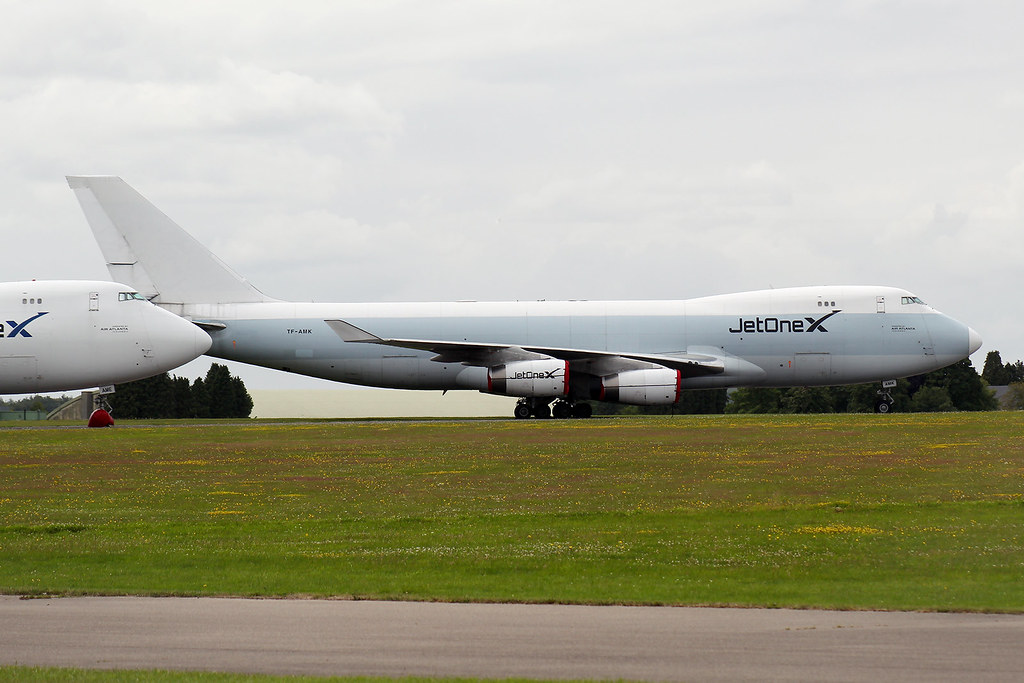
Incident Facts
Date of incident
Nov 29, 2023
Classification
Accident
Airline
Air Atlanta Icelandic
Flight number
CC-703
Departure
Frankfurt Hahn, Germany
Destination
Greenville, United States
Aircraft Registration
TF-AMK
Aircraft Type
Boeing 747-400
ICAO Type Designator
B744
The aircraft remained on the ground in Greenville for about 13 days, then ferried to Marana,AZ (USA) on Dec 12th 2023. The aircraft remained on the ground in Marana until Jan 8th 2024 and subsequently returned to service.
On Feb 21st 2024 Germany's BFU reported the aircraft was rotating when the stall warning activated and the stick shaker operated. The pitch angle was temporarily reduced and the aircraft climbed out and continued the flight to destination. After landing it was determined that the tail of the aircraft had briefly contacted the runway surface leading to damage of the aircraft.
On Jan 27th 2026 the BFU released their final report concluding the probable causes were:
- The pilot in command confirmed that he had accidentally entered a Vr too low with 30 kt into the Multipurpose Control and Display Unit. This constitutes an unintentional action on his part that had safety-related consequences.
- The values entered in the Multipurpose Control and Display Unit were not controlled according to the standard operating procedures.
- In the rotation phase, the longitudinal angle of inclination was about 15°. The aerodynamic lift forces were too low at that point in time, which activated the stall warning, followed by the triggering of the stick shaker on the control yoke.
The investigation identified the following contributing factors:
- Crew resource management was not effective at the crucial stage of controlling the entered values in the Multipurpose Control and Display Unit.
The BFU analysed:
According to the description of the co-pilot, the take-off performance calculation was carried out by both pilots. The data from the take-off performance calculation were not correctly entered into the MCDU by the pilot in command. The co-pilot did not crosscheck whether the data had been entered error-free. Thus, the incorrect entry remained unnoticed until the stick shaker was activated during the initial take-off phase.
The airline described in detail in the Flight Crew Operation Manual, Normal Procedures, Amplified Procedures, NP.20.18, D6-30151-543, the procedure for crosschecking the calculated data in the MCDU. In addition, the EFB Task Flow Guide described a cross-check of the take-off calculation, including the assignment of the respective flight crew member to carry out the activity. Several points in the airline’s documentation explain the procedures, including the responsibilities for calculations and implementations.
The standard operating procedures represent an effective safety barrier, which should also be used in personally perceived stress situations. The procedure describes the process of the take-off performance calculation as well as the mutual review of the results and their subsequent entry into the FMS. First, the take-off parameters are calculated by the PF and the PM on the EFB. Subsequently, the PM reads the determined values aloud. The pilot in command shall enter the confirmed data into the FMS or MCDU. Finally, a mutual cross-check of the entered values is planned. In the present incident, this procedure was most likely not carried out.
The wrong entry should have been noticed by the co-pilot at the latest during the takeoff run, as the indicated speed for Vr was significantly too low for the almost maximum take-off mass. Due to the many years of flight experience of the pilot in command and the co-pilot and their experience with the handling of different take-off masses and corresponding take-off speeds, the low speed should have been noticeable to both, but in particular to the co-pilot in his function as the monitoring pilot. He represented the last safety barrier and had the opportunity to inform the pilot in command of the error.
Incident Facts
Date of incident
Nov 29, 2023
Classification
Accident
Airline
Air Atlanta Icelandic
Flight number
CC-703
Departure
Frankfurt Hahn, Germany
Destination
Greenville, United States
Aircraft Registration
TF-AMK
Aircraft Type
Boeing 747-400
ICAO Type Designator
B744
This article is published under license from Avherald.com. © of text by Avherald.com.
Article source
You can read 2 more free articles without a subscription.
Subscribe now and continue reading without any limits!
Read unlimited articles and receive our daily update briefing. Gain better insights into what is happening in commercial aviation safety.
Send tip
Support AeroInside by sending a small tip amount.
Related articles
 Fleet type match
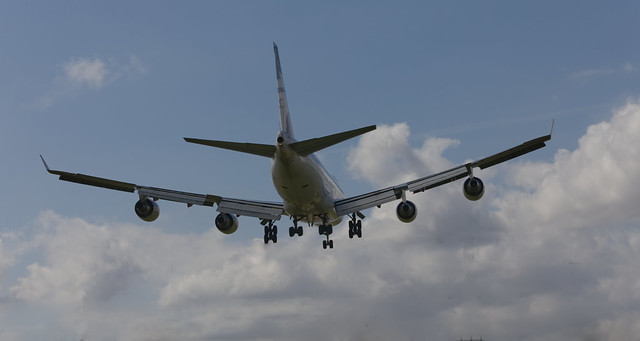
Atlanta Icelandic B744 at Hong Kong on Jan 16th 2025, engine failure
An Air Atlanta Icelandic Boeing 747-400, registration TF-AMU performing flight CC-4400 from Hong Kong (China) to Dubai al Maktoum (United Arab…
 Fleet type match
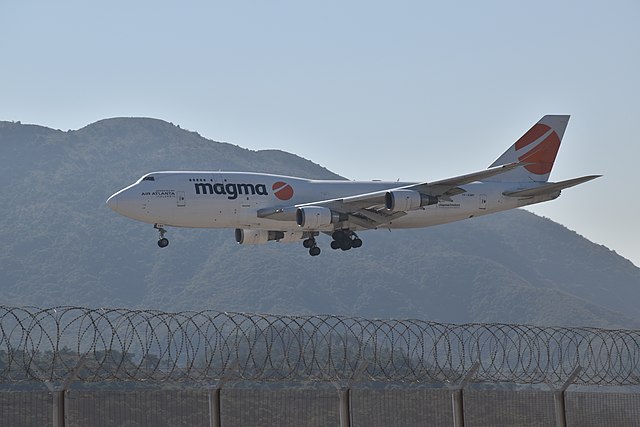
Atlanta Icelandic B744 over Atlantic on Jun 30th 2022, fire detection fault
An Air Atlanta Icelandic Boeing 747-400 freighter, registration TF-AMP performing freight flight CC-764 from Frankfurt/Main (Germany) to Chicago…
 Fleet type match
Atlanta Icelandic B744 at Liege on Jan 31st 2021, engine shut down in flight
An Air Atlanta Icelandic Boeing 747-400 freighter on behalf of Saudi Arabian Cargo Airlines, registration TF-AMA performing flight SV-3920 from Liege…
 Fleet type match
Atlanta Icelandic B744 at Frankfurt on May 15th 2020, rejected takeoff
An Air Atlanta Icelandic Boeing 747-400 freighter on behalf of Saudi Arabian Airlines, registration TF-AMN performing flight CC-375/SV-375 from…
 Fleet type match
Atlanta Icelandic B744 near Frankfurt on Mar 18th 2018, cracked windshield
An Air Atlanta Icelandic Boeing 747-400 freighter, registration TF-AMQ performing flight CC-716 from Frankfurt Hahn (Germany) to Greenville,SC (USA),…
Newest articles
Transair B735 at Nouakchott on Sep 10th 2026, runway excursion
A Transair Boeing 737-500, registration 6V-AJD performing charter flight R2-4401 from Dakar (Senegal) to Nouakchott (Mauritania) carrying the soccer…
Sepehran B733 at Mashhad on Sep 14th 2026, rejected takeoff due to severe vibrations
A Sepehran Boeing 737-300, registration EP-FSU performing flight SHI-4358 from Mashhad to Kermanshah (Iran), was accelerating on Mashhad's runway 31L…
Subscribe today
Are you researching aviation incidents? Get access to AeroInside Insights, unlimited read access and receive the daily newsletter.
Pick your plan and subscribePartner

ELITE Simulation Solutions is a leading global provider of Flight Simulation Training Devices, IFR training software as well as flight controls and related services. Find out more.
SafetyScan Pro provides streamlined access to thousands of aviation accident reports. Tailored for your safety management efforts. Book your demo today
AeroInside Blog
Popular aircraft
Airbus A320Boeing 737-800
Boeing 737-800 MAX
Popular airlines
American AirlinesUnited
Delta
Air Canada
Lufthansa
British Airways