Swift B734 at Montpellier on Sep 24th 2022, overran runway on landing
Last Update: May 22, 2025 / 14:47:36 GMT/Zulu time
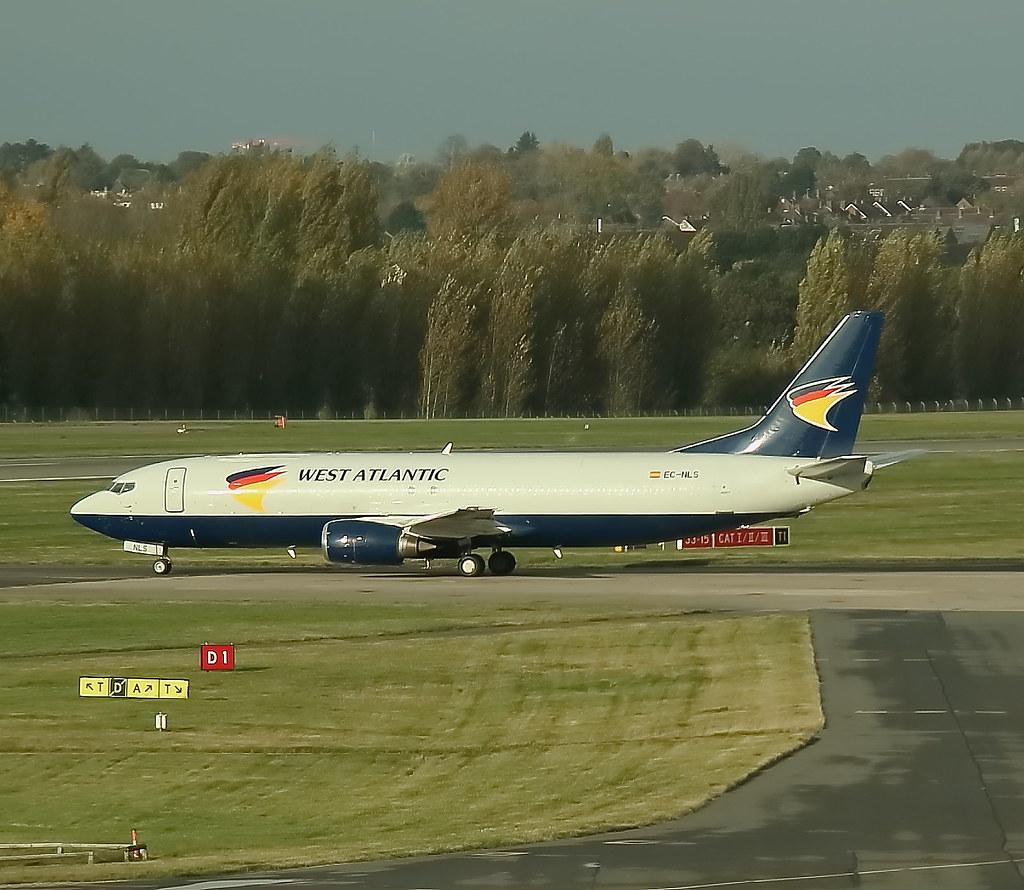
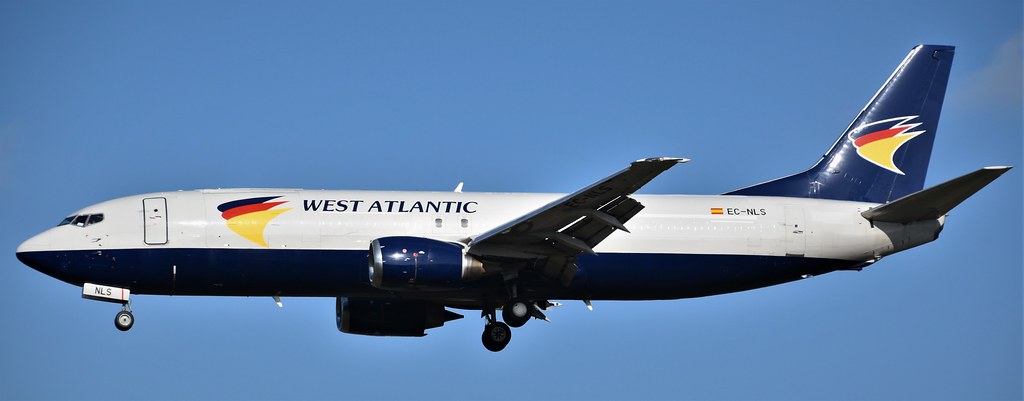
Incident Facts
Date of incident
Sep 24, 2022
Classification
Accident
Airline
Swiftair
Flight number
SWN-5745
Departure
Paris Charles de Gaulle, France
Destination
Montpellier, France
Aircraft Registration
EC-NLS
Aircraft Type
Boeing 737-400
ICAO Type Designator
B734
Airport ICAO Code
LFMT
The airport reported the aircraft's front part (nose) is partially submerged in the L'Etang de Mauguio. The airport was closed for all traffic until the aircraft can be removed. The accident investigation office is on site, resources to return the aircraft onto and subsequently off the runway have been deployed.
The BEA announced they have opened a safety investigation.
On Sep 25th 2022 The Aviation Herald received information that the aircraft sustained substantial damage.
On Sep 28th 2022 The Aviation Herald received information that the aircraft has been moved. Both engines had impacts with the ground, one of them ingested brackish water, the avionics compartment and parts of the cockpit were flooded with brackish water, the nose landing gear and the forward lower skin were damaged.
On Sep 29th 2022 the BEA reported the occurrence was rated an accident and is being investigated by the BEA stating the aircraft overran runway 12L during a night landing.
On Oct 4th 2022 The Aviation Herald received information that according to preliminary assessments the aircraft will be written off.
ON May 22nd 2025 the BEA released their final report concluding the probable causes of the accident were:
The runway overrun occurred because of a long landing at high speed, principally due to the windshear encountered by the aeroplane. A balked landing was not carried out because the crew had not detected these two conditions.
The following factors may have contributed to the crew not detecting the long landing:
- lack of monitoring by the PM;
- no lights in the touchdown zone;
- the environmental conditions (dark night, heavy rain);
- failure to consider the threats linked to the presence of a storm close to the airport.
The BEA summarized the sequence of events:
At 00:30, on descending through 5,000 ft, at 19 NM from the VOR, the approach checklist was carried out. At this point in the flight, the briefing for the new approach to runway 12L had not been formally carried out.
Two minutes later, when the aeroplane was at the 4,000 ft level-off intermediate approach segment, the crew configured the aeroplane, extending the landing gear and selecting flaps 30, the configuration chosen for the landing. The selected airspeed was 159 kt. The PM suggested to the PF that he choose an approach speed (Vapp) of between 140 and 143 kt (the Vref is 136 kt) taking into account a headwind of 14 kt. The PF selected a speed of 143 kt.
At 11.4 NM from the VOR, i.e. 0.3 NM from the FAF, when the speed started to decrease, the V/S descent mode was selected and the PF called out a rate of descent of 900 ft/min. The aeroplane encountered a northerly wind of 20 kt at this point in the flight and its ground speed was 183 kt.
On approaching the altitude/distance cross-check at 10 NM, the PM informed the PF that the aeroplane was above the approach slope. The PF called out the landing checklist. The aeroplane passed the 10 NM cross-check point 200 ft above the published altitude. While the checklist was being carried out, the rate of descent increased to values of the order of 1,700 ft/min.
At 9 NM from the VOR, the aeroplane joined the published approach slope, the airspeed was 146 kt and the ground speed 158 kt. The rate of descent stabilized at around 800 ft/min.
Three separate times, the PM suggested increasing the rate of descent. The PF seemed to hesitate, replying that 1,000 ft/min seemed a lot to him. At 7 NM from the VOR, the aeroplane was nearly 100 ft above the slope, the airspeed was 144 kt and the ground speed 160 kt.
At 00:34, the crew were cleared to land. The wind information provided by the controller was 040° of 8 kt. The crew did not pick up that the surface wind information had changed with respect to the value previously provided by the controller. The aeroplane encountered a northerly wind of 14 kt at this point.
On passing the cross-check at 6 NM from the VOR, the aeroplane was nearly 100 ft above the slope, the airspeed was 146 kt and the ground speed 155 kt. The PM suggested holding the rate of descent at 900 ft/min.
Shortly before passing 5 NM from the VOR, at 1,800 ft, the speed decreased to 136 kt. The PM called out “SPEED”. The rate of descent decreased to around 550 ft/min. The PF mentioned a gust. At the altitude/distance cross-check at 5 NM, the crew checked that the aeroplane was on the approach slope.
At 4 NM from the VOR, the aeroplane was at 1,430 ft, 180 ft above the approach slope. The rate of descent increased to 1,000 ft/min and then decreased to 800 ft/min. The airspeed was 150 kt and decreasing. The ground speed was of the order of 155 to 160 kt. The crew did not carry out an altitude-distance cross-check at this point. They selected the minima on the MCP.
The noise of the windshield wipers can be perceived on the CVR recording from 00:35:31.
At 00:35:35, the PF called out that the runway was in sight. The aeroplane was 3.5 NM from the VOR, at 1,200 ft (i.e. nearly 120 ft above the slope), the airspeed was 145 kt and the ground speed 155 kt. A discussion then started between the PM and the PF regarding the confirmation of the identification of the runway.
After this exchange, the crew observed that they were a little high. It is possible that the crew could make out the PAPI. The altitude/distance cross-check at 3 NM was not formalised.
On passing the stabilization gate at 1,000 ft AAL, the aeroplane was configured for landing, nearly 200 ft above the approach slope. The rate of descent was of the order of 900 ft/min, the N1 rating was stable at around 60%, the airspeed was 148 kt (Vapp+5). The ground speed was 156 kt. The northerly wind was roughly 15 kt. The PM suggested changing to manual mode to join the runway axis. The stabilization check was not called out.
At 00:35:53, the PF disengaged the autopilot and the autothrottle. He simultaneously slightly pulled back the throttle levers. The N1 rating of both engines decreased to 50%. Roll inputs on the wheel were recorded, consistent with actions to search for the runway axis13. During this phase, the pitch attitude was reduced by one degree. The airspeed slightly decreased to 142 kt. The rate of descent increased to 1,900 ft/min. The PM called out “SINK RATE” five times.
The PF made a nose-up input. The vertical speed decreased to 1,200 ft/min. The aeroplane passed the minima at 670 ft14. The “300 ft above minimums”, “approaching minimums” and “minimums” callouts were not made. The PM identified and verbalized a RH crosswind component of 21 kt. The airspeed was 145 kt, the ground speed was 159 kt.
At 00:36:08, at 2 NM from the VOR, when the aeroplane was at 568 ft, the captain offered to take the controls. The co-pilot agreed and the captain called out, “I have controls.” The captain was then PF.
The aeroplane flew through 430 ft, the throttle levers were pushed forward a few degrees, the N1 rating of both engines increased to 66% and the airspeed increased to 156 kt. The recording showed that the throttle levers were briefly pulled and then returned to their original position. The N1 ratings decreased to 50% before becoming established at 66%, the airspeed decreased to 150 kt. The ground speed remained at 166 kt.
As the aeroplane was descending from 250 ft to 210 ft, the wind slightly turned to 350° and increased in strength to 30 kt. The tailwind component increased from 12 kt to 20 kt. The crosswind component remained at around 17 kt from the LH side.
In nearly four seconds, as the aeroplane was descending from 200 ft to 100 ft, the wind encountered by the aeroplane turned from 350° to 70° and decreased from 30 kt to 8 kt. The aeroplane’s airspeed increased up 170 kt. The ground speed slightly increased to 170 kt.
At 00:36:32, the aeroplane crossed the threshold of runway 12L at a height of 100 ft, called out by the synthetic voice. The PF moved the throttle levers back by 10° without setting them to idle, the N1 rating of both engines decreased from 66% to 38%. The PF made successive pitch-up and pitch-down inputs, the pitch attitude changed from 0.5° nose down to 2.5° nose up.
At 00:36:35, the synthetic voice called out 50 ft. The PF corrected the roll from a 6° RH roll to a 4° LH roll. The aeroplane’s airspeed and ground speed were 170 kt.
At 00:36:37, the synthetic voice called out 40 ft.
At 00:36:39, the synthetic voice called out 30 ft.
At 00:36:41, the synthetic voice called out 20 ft. The aeroplane’s airspeed was 159 kt. The PF pulled the throttle levers to idle, the N1 ratings decreased to 32%. A larger nose-up input was recorded.
At 00:36:44, the synthetic voice called out 10 ft.
Six seconds later, at 00:36:50, all the parameters showed that the main landing gear had touched down on the runway. The aeroplane’s speed was 144 kt. The aeroplane was at 1,500 m from the threshold of runway 12L. It was at 1,100 m from the end of the runway.
In the following second, the ground spoilers automatically deployed.
At 00:36:53, the thrust reverser controls were set to REV IDLE. The thrust reversers were deployed in the following second. An asymmetric pressure was recorded on the brakes with a pressure of 385 psi on the LH side and 1,485 psi on the RH side, along with a light pressure on the right pedal. The deceleration was around 0.3 g.
At 00:36:56, the aeroplane’s ground speed was 125 kt, the thrust reverser controls were pulled to the FULL REV position. The PM who had made no callouts since handing over the controls to the captain 48 s earlier, called out “REVERSE”.
The pressure on the brakes increased still in an asymmetric manner.
At 00:37:06, the aeroplane’s ground speed was 85 kt, the braking action became symmetric with more than 2,900 psi on each side consistent with maximum manual braking. The N1 ratings reached 80%. The deceleration increased to 0.37 g.
It was estimated that the runway overrun was at 00:37:08, with a ground speed of the order of 70 kt.
The aeroplane finished its run with its nose in the Or lake. The captain asked for the evacuation procedure to be complied with and transmitted a Mayday message on the frequency.
Related NOTAM:
A4505/22 NOTAMN
Q) LFMM/QFALC/IV/NBO/A /000/999/4335N00358E005
A) LFMT B) 2209240155 C) 2209252359
E) AD CLOSED.
Metars:
LFMT 240200Z AUTO 03020KT 9000 -RA SCT014/// SCT033/// OVC110/// ///CB 16/15 Q1012 BECMG 36010KT BKN045 BKN055=
LFMT 240130Z AUTO 02019KT 2800 0800 R30/2100D RA BCFG FEW004/// OVC013/// ///CB 16/16 Q1013 BECMG 9999 NSW BKN045 BKN055=
LFMT 240100Z AUTO 36021KT 2200 1200 R30/1600D +RA BR VCTS SCT008/// BKN015/// OVC020/// ///CB 16/16 Q1013 BECMG 36010KT 9999 NSW BKN045 BKN055=
LFMT 240030Z AUTO 09011KT 050V130 5000 RA BR SCT013/// BKN022/// BKN028/// ///CB 17/16 Q1013 TEMPO 01015G25KT BECMG NSW BKN045 BKN055=
LFMT 240000Z AUTO 15016KT 2600 RA BR SCT009/// BKN013/// BKN019/// ///CB 18/17 Q1014 TEMPO 01015G25KT 3000 TSRA BKN020 SCT030CB BKN040=
LFMT 232330Z AUTO 17015KT 6000 RA FEW010/// BKN016/// BKN022/// ///CB 20/18 Q1014 TEMPO 01015G25KT 3000 TSRA=
LFMT 232300Z AUTO 16019KT 9999 FEW024/// BKN030/// OVC037/// ///CB 21/17 Q1014 TEMPO 01015G25KT 3000 TSRA=
LFMT 232230Z AUTO 12013KT 080V140 9999 OVC039/// ///CB 20/19 Q1014 TEMPO 01015G25KT 3000 TSRA=
LFMT 232200Z AUTO 08010KT 7000 // OVC040/// ///CB 19/17 Q1015=
LFMT 232130Z AUTO 05008KT 9000 2500 // FEW021/// OVC037/// ///CB 19/17 Q1015=
LFMT 232100Z AUTO 04006KT 010V090 9999 FEW020/// SCT025/// OVC037/// ///CB 19/17 Q1016 TEMPO 14015G25KT 3000 TSRA=
LFMT 232030Z AUTO 02007KT 8000 -RA SCT021/// OVC039/// ///TCU 19/17 Q1016 TEMPO 32015G35KT 1400 +TSRA BKN025CB=
Incident Facts
Date of incident
Sep 24, 2022
Classification
Accident
Airline
Swiftair
Flight number
SWN-5745
Departure
Paris Charles de Gaulle, France
Destination
Montpellier, France
Aircraft Registration
EC-NLS
Aircraft Type
Boeing 737-400
ICAO Type Designator
B734
Airport ICAO Code
LFMT
This article is published under license from Avherald.com. © of text by Avherald.com.
Article source
You can read 2 more free articles without a subscription.
Subscribe now and continue reading without any limits!
Read unlimited articles and receive our daily update briefing. Gain better insights into what is happening in commercial aviation safety.
Send tip
Support AeroInside by sending a small tip amount.
Related articles
 Fleet type match
Swift AT72 near Marseille on May 4th 2026, flight control and other system issues
A Swiftair Avions de Transport Regional ATR-72-200 freighter, registration EC-JXF performing flight WT-4759 from Marseille to Paris Charles de Gaulle…
Swift B738 at Basel on Sep 30th 2025, unstable go around
A Swift Air Boeing 737-800 on behalf of DHL, registration EC-IXE performing flight QY-4908 from Brussels (Belgium) to Basel/Mulhouse…
 Fleet type match
Swift B734 at Vilnius on Nov 25th 2024, impacted building on final approach
A Swiftair Boeing 737-400 on behalf of DHL, registration EC-MFE performing flight QY-5960 from Leipzig (Germany) to Vilnius (Lithuania) with 4 crew,…
 Fleet type match
Swift AT42 at Ostrava on Oct 31st 2023, engine fire
A Swiftair Avions de Transport Regional ATR-42-300 freighter, registration EC-IVP performing flight WT-1907 from Ostrava (Czech Republic) to Cologne…
 Fleet type match
Swift AT72 at Palma Mallorca and Madrid on Feb 19th 2021, tyre damage on departure
A Swiftair Avions de Transport Regional ATR-72-212A, registration EC-LYJ performing flight from Palma Mallorca,SP to Madrid,SP (Spain) with 2 crew,…
Newest articles
 Fleet type match
Wizz Malta A21N near Bratislava on Jun 28th 2026, first officer incapacitated
A Wizz Air Malta Airbus A321-200N, registration 9H-WMC performing flight W4-1686 from Catania (Italy) to Gdansk (Poland), was enroute at FL350 north…
ULS Cargo A333 at Istanbul on Jun 30th 2026, engine failure
An ULS Airlines Cargo Airbus A330-300 freighter on behalf of THY Turkish Airlines, registration TC-GOL performing flight TK-6078 from Istanbul…
Subscribe today
Are you researching aviation incidents? Get access to AeroInside Insights, unlimited read access and receive the daily newsletter.
Pick your plan and subscribePartner

ELITE Simulation Solutions is a leading global provider of Flight Simulation Training Devices, IFR training software as well as flight controls and related services. Find out more.
SafetyScan Pro provides streamlined access to thousands of aviation accident reports. Tailored for your safety management efforts. Book your demo today
AeroInside Blog
Popular aircraft
Airbus A320Boeing 737-800
Boeing 737-800 MAX
Popular airlines
American AirlinesUnited
Delta
Air Canada
Lufthansa
British Airways