India A20N enroute on Aug 4th 2026, upset injures 17 people
Last Update: September 4, 2026 / 18:49:25 GMT/Zulu time
Incident Facts
Date of incident
Aug 4, 2026
Classification
Accident
Airline
Air India
Flight number
AI-2379
Departure
Phuket, Thailand
Destination
Delhi, India
Aircraft Registration
VT-EXO
Aircraft Type
Airbus A320-200N
ICAO Type Designator
A20N
The airline reported 13 passengers and 4 cabin crew received injuries.
India's Civil Aviation Ministry reported 8 passengers and 4 cabin crew were admitted to hospitals, all of them in stable condition. Flight data and cockpit voice recorder have been secured.
On Aug 10th 2026 India's DGCA reported that a transient technical fault caused the upset. The DGCA also stated that drug test on the captain has "not been negative" and needs confirmation. The occurrence is being investigated by India's AAIB.
On Aug 10th 2026 India's Pilots' Association reported that all three hydraulic systems failed. When the captain realized the triple hydraulic failure he instructed the first officer to take the nose of the aircraft down causing the loss of about 300 feet of altitude and a negative G-Load that caused the passengers to be thrown around the cabin. The crew had only a split second for the decision and could not have first switched on the fasten seat belt signs. The quick reaction by the crew saved countless lives on board.
On Aug 10th 2026 the airline changed their narrative of the accident now stating a "sudden loss of altitude during cruise" instead of inflight turbulence.
On Aug 13th 2026 a photo of the printed Post Flight Report (PFR) has surfaced (see below).
On Aug 13th 2026 India's media report that a second test of the captain was positive for Cannabis, too. The captain had been prescribed Cannabis by his family doctor to manage severe sleep difficulties. According to the media reports the captain told the AAIB that he had not slept well during his layover in Phuket and slept on board of the aircraft for about 30-35 minutes. He was pilot monitoring during the flight, the first officer was flying the aircraft.
In an assessment conducted by Airbus Airbus states, that the flight data recorder was successfully downloaded and decoded. According to the error code and FDR data the control of elevators and ailerons was lost for about 4 seconds:
at 04:02:44 the green hydraulic system failed causing a system reconfiguration
at 04:02:45 both blue and yellow hydraulic systems failed causing the total loss of both left and right hand elevators and total loss of ailerons. The right elevator shifted to +0.6 and the left elevator to -1.0 degrees. The ailerons, in dampening mode, started to deflect to their zero hinge moment, -13.6/-13.1 degrees leading to pitch increase of the aircraft.
At 04:02:51 the blue hydraulic system recovered, a few seconds later the yellow system and also the green system, the flight control surfaces were recovered.
This system behaviour is the consequence of the loss of hydraulic pressure.
On Aug 18th 2026 Airbus phoned The Aviation Herald and asked to remove the images of the Airbus paper to protect their copyright and confidentiality with customers, which we comply with.
On Sep 4th 2026 India's AAIB released their preliminary report describing the sequence of events:
On 04 August 2026, M/s Air India’s Airbus A320-251N aircraft bearing registration VTEXO, was scheduled to operate an International Flight AI-2379, from Phuket International Airport (VTSP) to Indira Gandhi International Airport, Delhi (VIDP). The Pilot-In-Command (PIC) of the flight was an ATPL holder, who was the Pilot monitoring (PM) and the Co-pilot was a CPL holder, who was the Pilot Flying (PF). There were 145 persons onboard (POB) i.e. 137 passengers (including 03 infants), 06 cabin crew and 02 flight crew.
Flight took-off at 01:41 UTC from Phuket airport and no abnormalities were reported. Subsequently, at 03:40 UTC, Flight AI 2379 entered Kolkata Flight Information Region (FIR) and contacted Kolkata ACC. Kolkata ACC, instructed the aircraft to climb from FL340 to FL360. The flight crew followed the ATC instructions and the aircraft climbed to the assigned FL 360.
At 04:02:43 UTC, while cruising at FL 360, aircraft’s Flight control (F/CTL) system detected loss of green hydraulic system. Further at 04:02:47 UTC, Flight control (F/CTL) system detected loss of Blue and Yellow hydraulic system. At 04:02:48 UTC, the Autopilot got disengaged and Continuous Repetitive Chime (CRC) came. At 04:02:51 UTC, the Stall warning triggered for 2 seconds. The Co-Pilot, who was the Pilot Flying (PF) responded and tried to control the prevailing situation. Subsequently, PIC took over the controls. Meanwhile, the aircraft encountered altitude upset. Initially, it gained 372 ft and fell by 292 ft from its assigned FL360 during the event.
At around 04:02:52 UTC, the Blue hydraulic system was recovered, and few seconds later, the Yellow hydraulic and the Green hydraulic systems were also recovered. Consequently, this led to the recovery of the Flight control (F/CTL) surfaces. Subsequently, the aircraft operation returned to its normal operating condition.
At the time of the event, the aircraft was cruising at FL360 and seat belt signs were off. Consequently, some passengers and cabin crew suffered injuries. Cabin Supervisor apprised the cockpit about the injuries suffered by the passengers and cabin crew. The flight crew assessed the cabin situation and took the decision of continuing the flight to its planned destination i.e. Delhi airport and did not divert to the nearest enroute airport.
Later, the flight crew contacted ATC Delhi and sought medical priority. ATC responded accordingly and provided requisite assistance. At 05:30 UTC aircraft landed safely on runway 11 L at IGI airport, Delhi. Subsequently, aircraft taxied on its own power to the parking bay and parked at 05:37 UTC.
On arrival, at Delhi airport, medical assistance was provided to total 24 persons onboard (20 passengers and 04 cabin crew) by the airport medical team. Subsequently, they were shifted to nearby hospitals for further medical assessment. 20 persons were discharged after initial treatment for minor injuries. Remaining 04, who had received serious injuries were hospitalised for further treatment.
The aircraft sustained damages at several places inside the cabin mainly to the hatrack (overhead stowage bins) and ceiling panels.
The aircraft suffered damages limited to the cabin.
Incident Facts
Date of incident
Aug 4, 2026
Classification
Accident
Airline
Air India
Flight number
AI-2379
Departure
Phuket, Thailand
Destination
Delhi, India
Aircraft Registration
VT-EXO
Aircraft Type
Airbus A320-200N
ICAO Type Designator
A20N
This article is published under license from Avherald.com. © of text by Avherald.com.
Article source
You can read 2 more free articles without a subscription.
Subscribe now and continue reading without any limits!
Read unlimited articles and receive our daily update briefing. Gain better insights into what is happening in commercial aviation safety.
Send tip
Support AeroInside by sending a small tip amount.
Related articles
 Fleet type match
India A20N at Delhi on Nov 27th 2025, cargo smoke indication
An Air India Airbus A320-200N, registration VT-EXO performing flight AI-2939 from Delhi to Ahmedabad (India) with 170 people on board, was climbing…
Fleet type match
India A20N near Bhopal on Nov 3rd 2025, cargo smoke indication
An Air India Airbus A320-200N, registration VT-EXO performing flight AI-2487 from Delhi to Bangalore (India) with 172 people on board, was enroute at…
 Fleet type match
India A21N at Bangalore on May 21st 2026, tail strike on go around
An Air India Airbus A321-200N, registration VT-TVF performing flight AI-2651 from Delhi to Bangalore (India) with 179 people on board, was about to…
 Fleet type match
India B788 at Ahmedabad on Jun 12th 2025, lost height shortly after takeoff, no thrust reported
An Air India Boeing 787-8, registration VT-ANB performing flight AI-171 from Ahmedabad (India) to London Gatwick,EN (UK) with 230 passengers and 12…
India A319 at Mumbai on Jul 14th 2023, engine stall on departure
An Air India Airbus A319-100, registration VT-SCJ performing flight AI-776 from Mumbai to Kolkata (India) with 115 passengers and 6 crew, was…
India B773 over China on May 27th 2026, TCAS failure
An Air India Boeing 777-300, registration VT-ALL performing flight AI-173 from Delhi (India) to San Francisco,CA (USA) with 230 people on board, was…
 Fleet type match
India A20N at Delhi on May 21st 2026, engine fire
An Air India Airbus A320-200N, registration VT-CIO performing flight AI-2802 from Bangalore to Delhi (India), was on approach to Delhi when the crew…
Newest articles
 Fleet type match
Tracep L410 at Kenge on Sep 25th 2026, crashed on landing
A Tracep Let L-410, registration 9S-GUC performing a flight from Kikwit to Kinshasa N'Dolo (DR Congo) with 13 people on board, diverted to Kenge due…
 Fleet type match
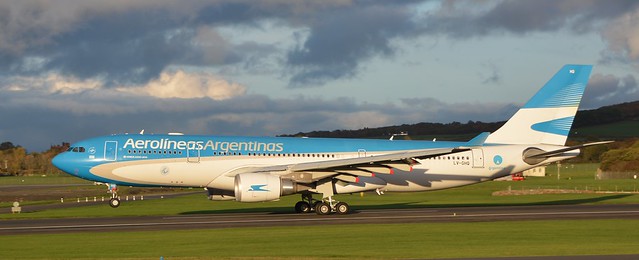
Argentinas A332 at Buenos Aires on Sep 24th 2026, engine compressor stalls
An Aerolineas Argentinas Airbus A330-200, registration LV-GHQ performing flight AR-1132 from Buenos Aires Ezeiza,BA (Argentina) to Madrid,SP (Spain),…
Subscribe today
Are you researching aviation incidents? Get access to AeroInside Insights, unlimited read access and receive the daily newsletter.
Pick your plan and subscribePartner

ELITE Simulation Solutions is a leading global provider of Flight Simulation Training Devices, IFR training software as well as flight controls and related services. Find out more.
SafetyScan Pro provides streamlined access to thousands of aviation accident reports. Tailored for your safety management efforts. Book your demo today
AeroInside Blog
Popular aircraft
Airbus A320Boeing 737-800
Boeing 737-800 MAX
Popular airlines
American AirlinesUnited
Delta
Air Canada
Lufthansa
British Airways