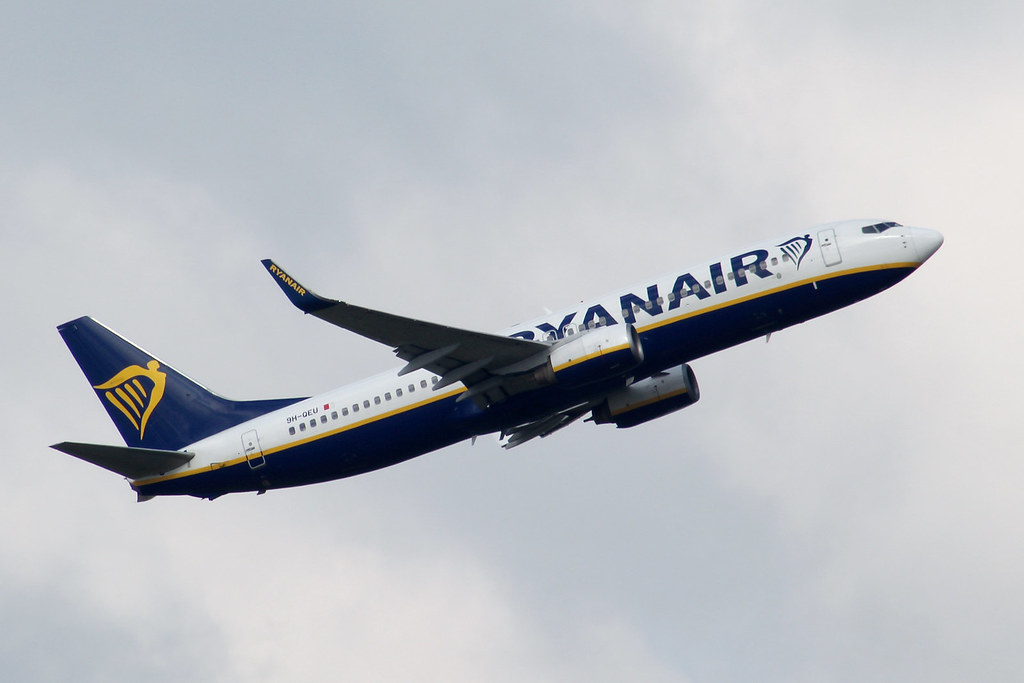
Malta B738 at Thessaloniki on Jul 10th 2026, engine damage, cabin window shattered, passenger partly sucked out
Last Update: August 14, 2026 / 10:39:16 GMT/Zulu time
Incident Facts
Date of incident
Jul 10, 2026
Classification
Accident
Airline
Malta Air
Flight number
FR-1879
Departure
Thessaloniki, Greece
Destination
Memmingen, Germany
Aircraft Registration
9H-QEU
Aircraft Type
Boeing 737-800
ICAO Type Designator
B738
The Republic of North Macedonia opened an investigation into the occurrence. The NTSB appointed an accredited representative to assist the investigation.
On Jul 16th 2026 the NTSB announced: "Following further analysis of the Ryanair Boeing 737 flight track, investigators determined that the accident occurred in Greek airspace. Under the provisions of ICAO Annex 13, which allow the country in which the accident occurs to delegate an investigation, the Hellenic Air and Rail Safety Investigation Authority elected to delegate the investigation to the NTSB. The NTSB accepted the delegation and is leading the investigation, with Greece participating as the Accredited Representative."
The aircraft is still on the ground in Thessaloniki on Jul 31st 2026.
On Jul 31st 2026 the NTSB stated, that there had been one serious injury. The occurrence was rated an accident.
On Aug 14th 2026 the NTSB released their preliminary report summarizing the sequence of events:
According to the flight crew, while climbing through an altitude of about 16,000 ft, near Polykastro, Greece, (about 4.5 nm south of the Greek border with Northern Macedonia) they received a No. 2 engine HIGH VIBRATION indication. They reduced the engine power and initiated the Engine High Vibration non-normal checklist. Shortly after, the engine vibration indication was reduced. The crew subsequently continued the climb on autopilot.
The engine vibrations then increased significantly, they heard a loud bang, and the autopilot was disengaged. While assessing the engine condition, the cabin altitude warning sounded.
The flight crew donned their oxygen masks, declared an emergency, and began an immediate descent.
The flight attendants (FAs), who were preparing for cabin service, reported hearing and feeling a loud continuous vibration and seeing a small amount of fog/smoke before the oxygen masks dropped. One reported hearing an automated public address system announcement saying “emergency descent”. Another recalled manually making an additional decompression announcement.
The FAs recalled that passengers had donned their oxygen masks. FA2 and FA4 initially sat down in the forward jumpseats and donned their oxygen masks, however FA4 moved to the galley to use another mask after the one above the jumpseat detached from the overhead.
FA1 noticed some passengers were standing up and asking for help and responded to assist.
The FA noticed that the passenger in seat 11F was partially lodged in a damaged cabin window, and that the entire window was missing. Other passengers were assisting and managed to pull the injured passenger back into the cabin. The FA then sat in seat 11B and donned an oxygen mask. That mask became detached and the FA used a different one.
A passenger went to the forward galley and asked the FA2 and FA4 for something heavy and metal to try and block the broken cabin window hole and retrieved a metal box to bring back to row 11.
The injured passenger was subsequently moved to row 12 and was attended to by a passenger who was a doctor throughout the remainder of the flight. The doctor asked for first aid equipment, and FA1 retrieved the forward first aid kit.
The FAs communicated with the flight deck, confirmed the flight crew were ok, and were informed of the engine failure, decompression, and the intent to return to SKG with an estimated time enroute of 20 minutes.
The FAs also received instructions to secure the cabin, which they did. The flight crew later informed them when the oxygen masks were no longer necessary. After descending below 10,000 ft, the flight crew secured the No. 2 engine and returned to SKG uneventfully. The airplane remained on the runway for an inspection and then proceeded to the gate, where first responders were waiting.
The NTSB described the damage:
Examination of the airplane revealed that the No. 2 engine, an CFM International (a joint company between Safran Aircraft Engines and GE Aerospace) model CFM56-7B26, experienced a fan blade separation that resulted in engine fragments striking the fuselage and the right horizontal stabilizer. The pressurized section of the fuselage was penetrated 1) through the passenger cabin window located at row 11, as well as 2) lower lobe fuselage skin behind the right wing-to-body fairing. Additional impact damage was found on the right wing-to-body fairing, a dent with paint smearing on the fuselage window belt skin, a dent on a stringer common to the dented fuselage window belt skin, a gouge on the right horizontal stabilizer upper skin and a dent on the right horizontal stabilizer leading edge.
Examination of the engine and nacelle revealed that one fan blade (No.10) had fractured and separated below the blade platform. The outer blade tips were fractured and separated on two additional fan blades (Nos. 16 and 21). All remaining blades were full length but exhibited varying levels of impact deformation. Three loose fan blade fragments were recovered from the engine. A visual examination of the core was performed and there was no evidence of radial uncontainment though the engine cases, or any undercowl fire. The engine inlet cowl, which is forward of the fan case, exhibited evidence of punctures as described below.
The inlet and fan cowling remained attached to the engine. The inlet cowl inner barrel exhibited impact damage, tearing, and/or missing material from the 3 to 9 o’clock (as viewed from the rear) positions. The inlet lip skin had a scrape mark at approximately the 7 o’clock position.
...
Bird remains, including feathers, were recovered from the forward face of IDG oil cooler, one of the thrust reverser blocker door drag links, and the lower (6 o’clock position) of the engine fan case near the thrust reverser split flange. The remains, along with the samples from the fan blades described below, were hand carried to the Smithsonian Institution Feather Identification Lab in Washington, DC, for examination.
Incident Facts
Date of incident
Jul 10, 2026
Classification
Accident
Airline
Malta Air
Flight number
FR-1879
Departure
Thessaloniki, Greece
Destination
Memmingen, Germany
Aircraft Registration
9H-QEU
Aircraft Type
Boeing 737-800
ICAO Type Designator
B738
This article is published under license from Avherald.com. © of text by Avherald.com.
Article source
You can read 2 more free articles without a subscription.
Subscribe now and continue reading without any limits!
Read unlimited articles and receive our daily update briefing. Gain better insights into what is happening in commercial aviation safety.
Send tip
Support AeroInside by sending a small tip amount.
Related articles
 Fleet type match
Malta Air B738 at Milan on May 27th 2023, nose tyre damage on departure
A Malta Air Boeing 737-800 on behalf of Ryanair, registration 9H-QEU performing flight FR-7540 from Milan Malpensa (Italy) to Barcelona,SP (Spain),…
 Fleet type match
Malta Air B738 at Prestwick, Edinburgh and Manchester on Oct 3rd 2025, landed below minimum fuel
A Malta Air Boeing 737-800 on behalf of Ryanair, registration 9H-QBD performing flight FR-3418 from Pisa (Italy) to Prestwick,SC (UK), was on final…
 Fleet type match
Malta Air B38M at Faro and Seville on Aug 24th 2026, flaps failure
A Malta Air Boeing 737-8 MAX on behalf of Ryanair, registration 9H-VUT performing flight FR-5667 from Edinburgh,SC (UK) to Faro (Portugal), was on…
 Fleet type match
Malta Air B738 near Barcelona on Aug 13th 2026, loss of cabin pressure
A Malta Air Boeing 737-800 on behalf of Ryanair, registration 9H-QBK performing flight FR-9014 from London Stansted,EN (UK) to Barcelona,SP (Spain)…
 Fleet type match
Malta B738 at Madrid on Jul 27th 2026, bird strike
A Malta Air Boeing 737-800 on behalf of Ryanair, registration 9H-QBI performing flight FR-2753 from Madrid,SP (Spain) to Milan Malpensa (Italy), was…
 Fleet type match
Malta Air B738 at Gothenburg on Apr 5th 2026, difficulty to control after go around, descent during go around
A Malta Air Boeing 737-800 on behalf of Ryanair, registration 9H-QDZ performing positioning flight FR-9672 from Copenhagen (Denmark) to Gothenburg…
Newest articles
 Fleet type match
Volotea A319 at Paris on Oct 7th 2026, rejected takeoff due to go around
A Volotea Airbus A319-100, registration EC-MUU performing flight V7-2797 from Paris Orly to Rodez (France), was accelerating for takeoff from Orly's…
 Fleet type match
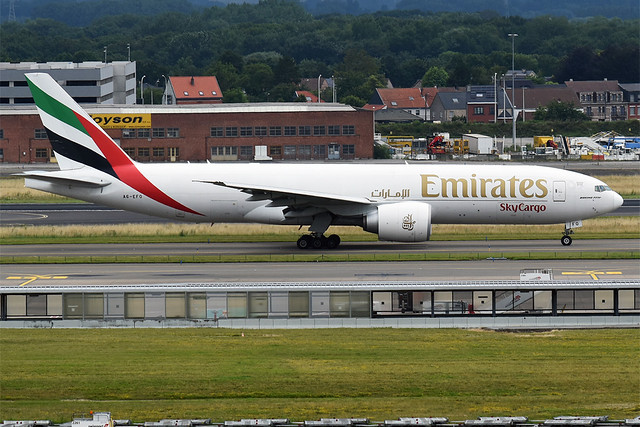
Emirates B772 at Amsterdam on Oct 8th 2026, gear disagrees
An Emirates Boeing 777-200 freighter, registration A6-EFO performing flight EK-9648 from Nairobi (Kenya) to Amsterdam (Netherlands), was on final…
Subscribe today
Are you researching aviation incidents? Get access to AeroInside Insights, unlimited read access and receive the daily newsletter.
Pick your plan and subscribePartner

ELITE Simulation Solutions is a leading global provider of Flight Simulation Training Devices, IFR training software as well as flight controls and related services. Find out more.
SafetyScan Pro provides streamlined access to thousands of aviation accident reports. Tailored for your safety management efforts. Book your demo today
AeroInside Blog
Popular aircraft
Airbus A320Boeing 737-800
Boeing 737-800 MAX
Popular airlines
American AirlinesUnited
Delta
Air Canada
Lufthansa
British Airways