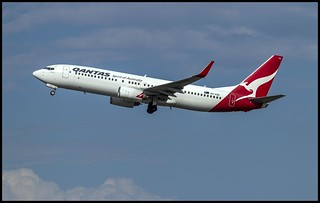
Qantas B738 at Brisbane on May 4th 2024, severe turbulence injures 3, 4 people out of seats on landing
Last Update: May 27, 2025 / 10:24:13 GMT/Zulu time
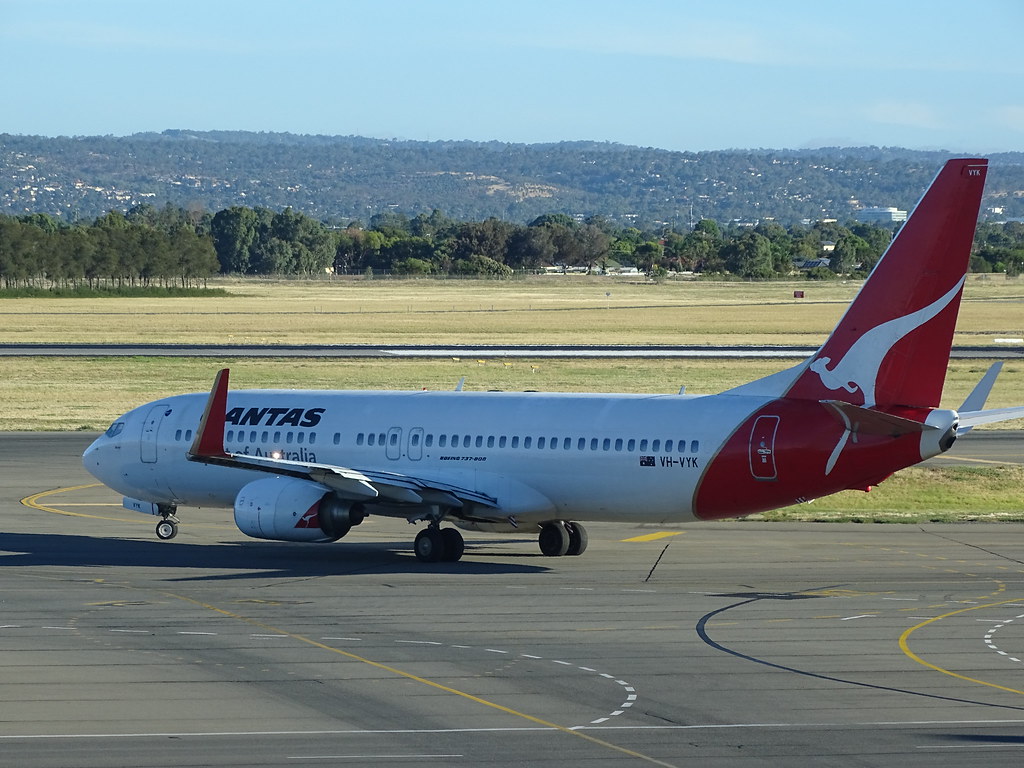
Incident Facts
Date of incident
May 4, 2024
Classification
Report
Airline
Qantas
Flight number
QF-520
Departure
Sydney, Australia
Destination
Brisbane, Australia
Aircraft Registration
VH-VYK
Aircraft Type
Boeing 737-800
ICAO Type Designator
B738
On May 27th 2025 the ATSB released their final report concluding the probable causes of the accident were:
Contributing factors
- The captain did not communicate to the cabin crew about the expected turbulence, likely as a result of the captain not knowing the severity of the turbulence.
- Three cabin crew were unrestrained while performing duties during unanticipated severe turbulence resulting in all 3 receiving injuries.
Other factors that increased risk
- Although the captain had instructed that the uninjured passengers and crew needed to be seated, 3 cabin crew and one passenger were unrestrained for landing due to being preoccupied with administering first aid to the injured cabin crew member. This increased the risk of injury to the unrestrained occupants and had the potential to compromise a safe emergency evacuation if required.
- The Qantas 737 procedures did not require flight crew to receive positive confirmation that the cabin was secure for landing. This increased the risk that occupants and objects were not secure for landing.
- A crew member with undiagnosed concussion from the accident flight operated on subsequent flights without receiving appropriate medical attention.
- Qantas lacked a procedure to ensure cabin crew fitness was assessed after a significant injury. This increased the risk that a crew member could continue to operate while being unfit for duty. (Safety issue)
The ATSB analysed:
Crew communication
During the descent into Brisbane, the captain commenced cabin preparations earlier than usual, using standard protocols to account for known weather conditions en route.
Although the graphical area forecast indicated the possibility of moderate to severe turbulence, the captain did not observe weather radar returns or receive any other pilot reports indicating the presence of moderate to severe turbulence during the descent.
Approximately 5–6 minutes after initiating cabin preparations, the aircraft entered stratiform cloud and the captain contacted the customer service manager (CSM) to check on the cabin crew’s progress. The purpose of this communication was to provide the captain with information to guide the timing of the seatbelt sign illumination. However, the captain did not provide any weather-related information to the CSM during this interaction, leaving the cabin crew unaware of any increased likelihood of turbulence.
Two minutes later, the seatbelt sign was illuminated, accompanied by the ‘seatbelt’ public announcement (PA). The captain then observed an approaching cumulus cloud along the flight path but determined it did not pose an immediate hazard based on a visual assessment and the lack of radar indications. As a result, the captain did not perform the ‘turbulence’ PA, which would have prompted the cabin crew to immediately secure themselves in the nearest seat or wedge themselves in the aisle to prepare for the turbulence encounter.
Although the captain contacted the CSM to confirm the time remaining to prepare the cabin, the absence of indications to the subsequent severity of the turbulence limited the captain's perception of the possible threat. Therefore, additional precautions were not considered. The captain followed normal descent procedures, however, did not discuss any additional weather-related information in communications with the CSM.
As a result, the cabin crew, who relied on information from the flight crew, were unprepared for the turbulence encounter. This situation underscores the difficulties posed by unexpected turbulence, as the procedures for managing in-flight turbulence rely on the flight crew's ability to predict or avoid these situations.
Crew unrestrained during severe turbulence
When the seatbelt sign was illuminated during the descent, cabin crew members were required to perform several duties whilst being unrestrained. In the moments immediately preceding the turbulence encounter, the CSM and R2P recalled checking their assigned lavatories as part of securing the cabin for landing.
Cabin crew were required to complete their assigned duties within one minute of the seatbelt sign being illuminated, which was also the case for unanticipated light turbulence. The captain performed the ‘seatbelts’ PA when the seatbelt sign was illuminated, which indicated unanticipated light turbulence to the cabin crew members. However, the cabin crew did not recall hearing this PA and remained unaware of the increased risk of turbulence as the aircraft approached a cumulus cloud.
Because the turbulence event occurred less than one minute after the illumination of the seatbelt sign, which was accompanied by the ‘seatbelt’ PA, the cabin crew did not have sufficient time to ensure they were seated and restrained prior to the aircraft being affected by turbulence. The injuries sustained during the encounter reflect research showing that cabin crew members face a higher risk of turbulence-related injuries, especially during the descent phase of a flight when they are preparing for landing (National Transportation Safety Board, 2021).
Cabin management
After the turbulence event, the CSM and left 2 primary (L2P) turned their attention to the right 2 primary (R2P) who was laying on the floor of the aft galley and was unable to move due to their injury. The turbulence event occurred in the latter stages of the descent, which meant there was little time to provide first aid to the R2P and complete the required preparations for landing. The CSM, L2P and the passengers assisting the R2P were reluctant to return to their assigned seats despite the clear instructions from the captain to do so.
The situation in the aft galley disrupted the procedural flow and meant that the CSM and L2P became focused on providing first aid rather than returning to their seats to complete the callback and silent review prior to landing. Interruptions often lead people to forget to resume their tasks, while multitasking can further complicate the situation by increasing the overall workload within a limited timeframe (Loukopoulos & Barshi, 2009). In this case, the CSM and L2P had to balance providing first aid and securing the cabin. High stress levels are also known to cause errors (Kim & Hyun, 2022), which likely contributed to the CSM prioritising providing first aid over securing themselves and the cabin for landing.
The CSM subsequently lost situational awareness with respect to the phase of flight and the sequence of the standard operating procedures. As a result of being situated in the aft galley, the CSM likely missed audible cues, such as the extension of the landing gear.
The captain did not recall receiving any requests for more time to prepare the cabin for landing. Additionally, the single aisle cabin configuration of the Boeing 737 offered limited options for accommodating the R2P anywhere other than the aft galley. After repeated instructions for everyone to be seated for landing, the captain was confident that all uninjured occupants had complied.
The decision of the CSM and L2P to remain unrestrained in the aft galley during a critical phase of flight increased the risk of incapacitation to additional cabin crew, which could have further compromised their ability to manage a landing-based emergency effectively if one was to happen. Additionally, the 5 occupants in the aft galley created a potential obstruction to emergency exits, increasing the likelihood of delays or complications if they needed to enact an emergency evacuation.
The aircraft landed with the CSM, L2P, R2P and 2 passengers unrestrained in the aft galley. The flight crew was made aware by the CSM that the injured cabin crew member was unsecured and unable to be made secured for landing and instructed the CSM to ensure everyone else was secure for landing. While this instruction was communicated to those people unsecure in the cabin, the instruction was not followed as described above. The CSM attempted to inform the flight crew by instructing the L2P to communicate with them. However, the captain again instructed that everyone who could be secured needed to be, as they were landing. As such, the flight crew assumed all cabin occupants would be secure apart from the injured R2P crew. At this stage, the cabin crew operating procedures requiring the CSM to inform the flight crew if the cabin was not secure broke down as there was no further communication that the cabin was not secure.
The captain stated that if they had known that 4 uninjured occupants were still unrestrained in the aft galley, they would have taken appropriate action to ensure they had returned to their seats prior to the final approach to land. The lack of a positive signal increased the likelihood that flight crew would be unaware of unrestrained occupants during the approach and landing phases of flight.
While the lack of a positive cabin secure signal played a role in this occurrence, the available data does not indicate it as a significant ongoing risk.
Post-flight medical assessment
Shortly after arrival at the gate at Brisbane airport, the R2P was attended to by ambulance personnel. However, the CSM and L2P, who were also injured during the event, did not receive any follow-up medical assessments or treatment. This situation arose due to procedural gaps, which relied on crew members to self-assess and report a significant injury to receive a medical assessment.
While the CSM self-diagnosed a minor injury and reported it the following day, the L2P was unaware of their injury. As a result, the L2P operated on multiple flights while experiencing symptoms of an undiagnosed concussion, until some days later when co-workers noticed signs of a possible injury.
The Qantas integrated operations control protocols did not mandate contacting the on-call doctor in cases where a passenger or crew member was significantly injured. Although the protocol required consultation with the on-call doctor in cases of severe turbulence, this turbulence event was classified as moderate, and no medical consultation was either required or requested. Additionally, the Qantas group injury response tool also relied on crew members self-assessing their injuries to determine if medical treatment would be required, but an injured crew member may not realise the extent of their injury at the time.
In the cases of a concussion, symptoms may include impairments in neurocognitive functioning, primarily affecting attention, concentration, memory, and judgment or problem-solving (Ryan & Warden, 2003). Returning to work with an undiagnosed concussion likely compromised the L2P’s ability to perform safety-critical tasks. A subtle incapacity due to an undiagnosed injury could negatively impact operational safety, particularly during emergencies.
Aircraft Registration Data
Incident Facts
Date of incident
May 4, 2024
Classification
Report
Airline
Qantas
Flight number
QF-520
Departure
Sydney, Australia
Destination
Brisbane, Australia
Aircraft Registration
VH-VYK
Aircraft Type
Boeing 737-800
ICAO Type Designator
B738
This article is published under license from Avherald.com. © of text by Avherald.com.
Article source
You can read 2 more free articles without a subscription.
Subscribe now and continue reading without any limits!
Read unlimited articles and receive our daily update briefing. Gain better insights into what is happening in commercial aviation safety.
Send tip
Support AeroInside by sending a small tip amount.
Related articles
 Fleet type match
Qantas B738 at Mildura on Jun 18th 2013, landed below weather minima
A Qantas Boeing 737-800, registration VH-VYK performing flight QF-735 from Sydney,NS to Adelaide,SA (Australia) with 146 passengers and 6 crew, had…
 Fleet type match
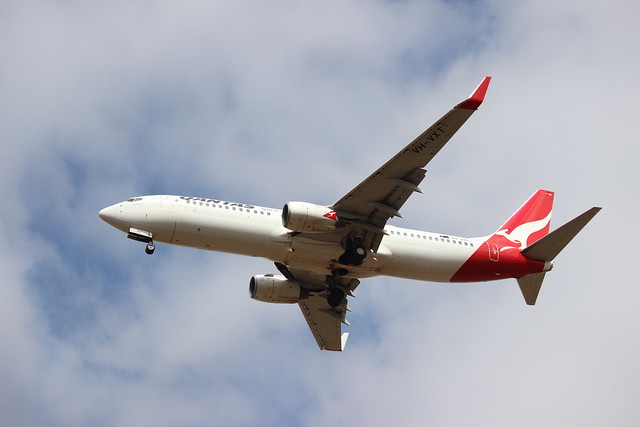
Qantas B738 near Rockhampton on Apr 18th 2026, cargo smoke indication
A Qantas Boeing 737-800, registration VH-VXT performing flight QF-705 from Cairns,QL to Melbourne,VI (Australia), was enroute at FL370 about 240nm…
 Fleet type match
Qantas B738 enroute on Apr 10th 2026, fumes on board
A Qantas Boeing 737-800, registration VH-VZC performing flight QF-857 from Canberra,AC to Perth,WA (Australia), was enroute at FL380 about 500nm west…
 Fleet type match
Qantas A388 at Sydney on Jan 4th 2026, rejected takeoff
A Qantas Airbus A380-800, registration VH-OQB performing flight QF-1 from Sydney,NS (Australia) to Singapore (Singapore), was accelerating for…
 Fleet type match
Qantas A332 enroute on Dec 23rd 2025, pressurization problem
A Qantas Airbus A330-200, registration VH-EBA performing flight QF-36 from Singapore (Singapore) to Melbourne,VI (Australia) with 240 people on…
 Fleet type match
Qantas B738 near Auckland on Sep 26th 2025, cargo fire indication
A Qantas Boeing 737-800, registration VH-VZE performing flight QF-141 from Sydney,NS (Australia) to Auckland (New Zealand), was descending towards…
Newest articles
EBB E120 at Mandera on Apr 24th 2026, runway excursion on landing
An EBB Air Embraer EMB-120, registration 5Y-EBB performing a flight from Nairobi to Mandera (Kenya) with 32 passengers and 4 crew, landed on…
 Fleet type match
Jazz CRJ9 at New York on Mar 22nd 2026, collision with fire truck on runway
A Jazz Canadair CRJ-900, registration C-GNJZ performing flight AC-8646 from Montreal,QC (Canada) to New York La Guardia,NY (USA) with 72 passengers…
Subscribe today
Are you researching aviation incidents? Get access to AeroInside Insights, unlimited read access and receive the daily newsletter.
Pick your plan and subscribePartner

ELITE Simulation Solutions is a leading global provider of Flight Simulation Training Devices, IFR training software as well as flight controls and related services. Find out more.
SafetyScan Pro provides streamlined access to thousands of aviation accident reports. Tailored for your safety management efforts. Book your demo today
AeroInside Blog
Popular aircraft
Airbus A320Boeing 737-800
Boeing 737-800 MAX
Popular airlines
American AirlinesUnited
Delta
Air Canada
Lufthansa
British Airways