Jetstar A320 at Christchurch on May 31st 2024, temporary runway excursion on landing
Last Update: March 18, 2026 / 19:01:07 GMT/Zulu time
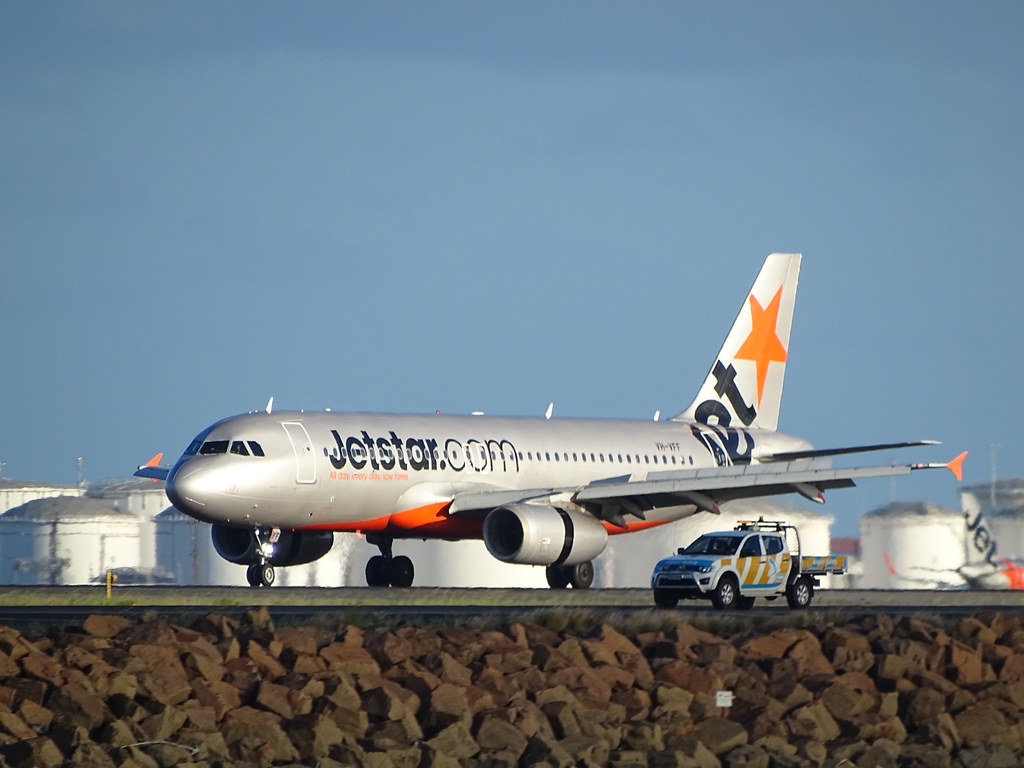
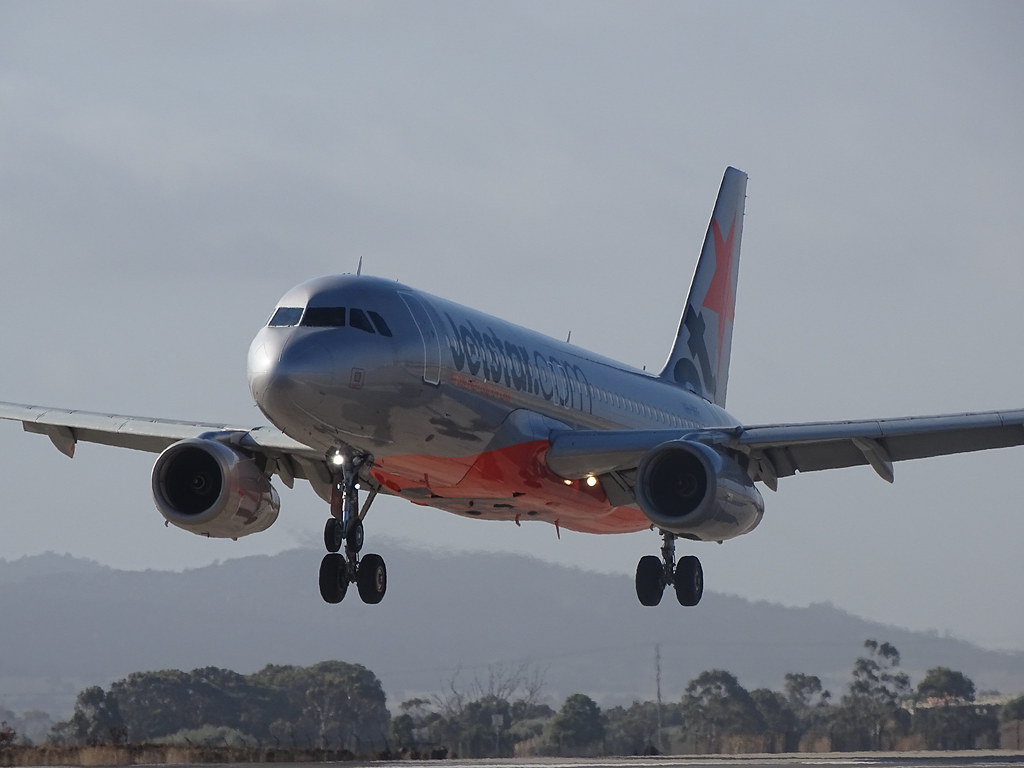
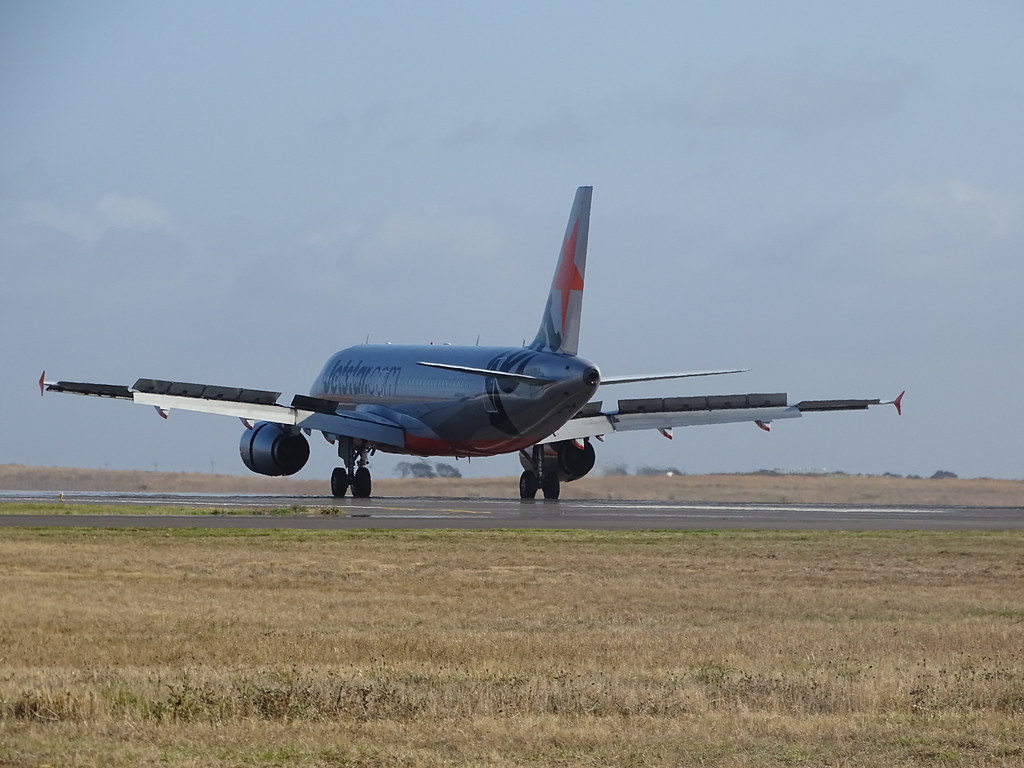
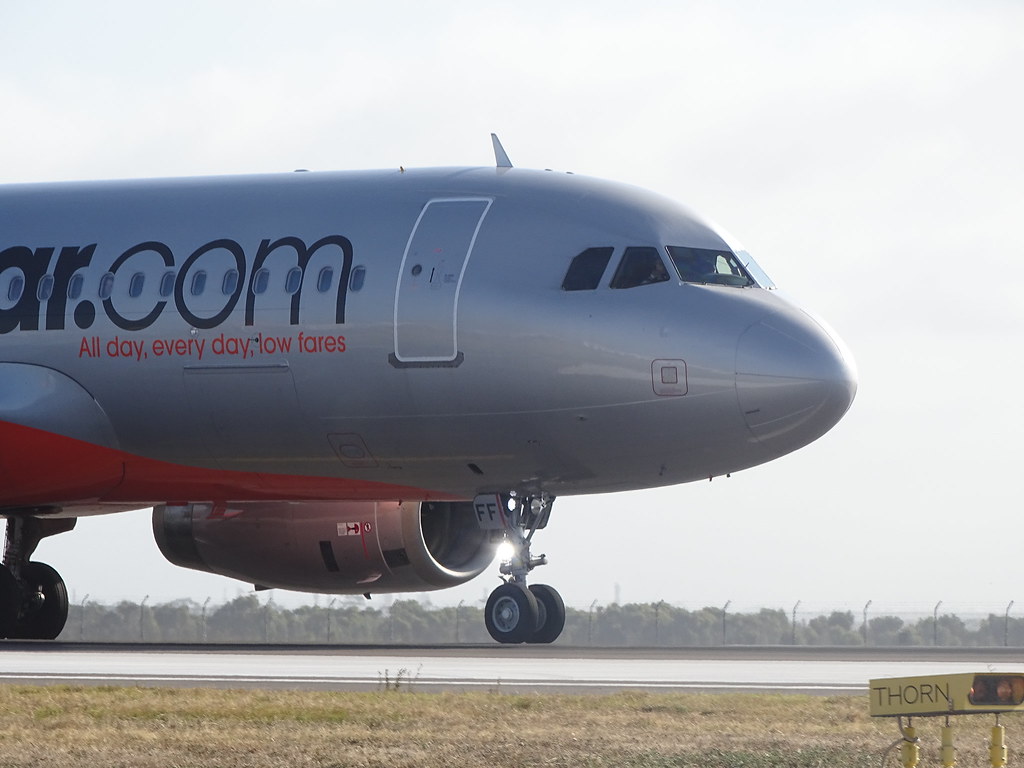
Incident Facts
Date of incident
May 31, 2024
Classification
Accident
Airline
Jetstar Airways
Flight number
JQ-225
Departure
Auckland, New Zealand
Destination
Christchurch, New Zealand
Aircraft Registration
VH-VFF
Aircraft Type
Airbus A320
ICAO Type Designator
A320
Airport ICAO Code
NZCH
Passengers reported that the crew told them the aircraft had suffered a hydraulic leak at the right hand side during approach, after touchdown the right hand engine just seemed to spool up and caused them to vacate the runway, the aircraft swerved to the right and took a few runway edge lights out, they had to bring the aircraft to a stop for safety reasons, they were safe, emergency services were checking around the aircraft that everything was safe.
The airline reported a steering issue caused the runway excursion. There were no injuries, the aircraft was towed to the apron. New Zealand's TAIC is investigating.
New Zealand's TAIC opened an investigation into the occurrence.
On Jun 17th 2024 the TAIC reported on descent towards Christchurch the crew received a low yellow hydraulic quantity indication, which impacted nose gear steering. Upon landing the aircraft temporarily veered off the runway, impacted a runway sign and received damage to the right hand engine. The TAIC rated the occurrence an incident and opened an investigation.
On Mar 18th 2026 the TAIC released their final report concluding the probable causes of the accident were:
- The yellow hydraulic system failed during the cruise phase of a flight between Auckland and Christchurch. This resulted in the loss of nosewheel steering and the No. 2 engine thrust reverser.
- The hydraulic pipe failed as a result of overload stress on the inside surface at a deformed section of the pipe. The deformity was very likely caused when the new part’s packaging was damaged in transit from the Airbus Filton warehouse in Bristol, United Kingdom to the Airbus Fuhlsbüttel warehouse in Hamburg, Germany. However, the part was not subsequently inspected for damage and remained labelled as a serviceable item. The damage was not detected before installation or while it was in service.
- Cyclic fatigue, due to the pressurisation and depressurisation of the hydraulic fluid at each engine start-up and shut down, very likely exacerbated crack formation.
- The operator’s standard operating procedure for landing with a yellow hydraulics system failure allowed the captain to decide if they should land and remain on the runway or, if the opportunity existed, to steer off the runway with differential braking. In a situation of heightened task attention and risk, this standard operating procedure introduced greater risk.
- The captain elected to land at the planned destination and use rudder and differential braking to steer the aeroplane off the runway at a rapid exit to avoid causing delays to other aircraft during the morning peak at Christchurch.
- As the aeroplane approached the runway exit, the captain unintentionally pushed the thrust levers from reverse, further forward past FWD IDLE and into CLIMB. This error was not detected.
- It is likely the captain was startled by the unexpected acceleration to CLIMB power and pulled the thrust levers back into REV MAX. The resulting reverse thrust from engine No. 1 and forward thrust from engine No. 2 caused an asymmetric thrust output and turning moment to the left.
- The captain lost directional control of the aeroplane, which then turned left and ran off rapid exit A4, over the grass area and back to the runway, where it stopped.
- The FCTM provided no guidance on use of differential braking specifically for steering off the runway using a rapid exit. When the flight crew used the rapid exit with nosewheel steering unavailable, this increased their cognitive workload and the risk of an incident.
- There is a risk that Airbus A320 pilots could move the thrust levers while on the ground to an unintended position that would lead to an unexpected increase in engine thrust.
Related NOTAMs:
B3077/24 NOTAMN
Q) NZZC/QMAXX/IV/NBO/A /000/999/4329S17232E005
A) NZCH B) 2405302101 C) 2405310500 EST
E) MOVEMENT AREA GUIDANCE SIGN TWY A4 U/S
B3081/24 NOTAMN
Q) NZZC/QMRLC/IV/NBO/A /000/999/4329S17232E005
A) NZCH B) 2405302119 C) 2405302230
E) RWY 02/20 CLSD
B3082/24 NOTAMR B3081/24
Q) NZZC/QMRLC/IV/NBO/A /000/999/4329S17232E005
A) NZCH B) 2405302130 C) 2405310100
E) RWY 02/20 CLSD
Metars:
NZCH 301930Z AUTO 19001KT 9999 NCD 00/00 Q1017=
NZCH 301900Z AUTO 28003KT 9999 NCD 01/00 Q1016=
NZCH 301830Z AUTO 33001KT 9999 NCD 01/01 Q1016=
NZCH 301800Z AUTO 27002KT 9999 NCD 01/01 Q1016=
NZCH 301730Z AUTO 32002KT 9999 NCD 02/01 Q1016=
NZCH 301700Z AUTO 24001KT 9999 NCD 01/00 Q1015=
NZCH 301630Z AUTO 34001KT 9999 NCD 02/01 Q1015=
NZCH 301600Z AUTO 22001KT 9999 NCD 03/02 Q1015=
NZCH 301530Z AUTO 27001KT 9999 NCD 04/03 Q1015=
Incident Facts
Date of incident
May 31, 2024
Classification
Accident
Airline
Jetstar Airways
Flight number
JQ-225
Departure
Auckland, New Zealand
Destination
Christchurch, New Zealand
Aircraft Registration
VH-VFF
Aircraft Type
Airbus A320
ICAO Type Designator
A320
Airport ICAO Code
NZCH
This article is published under license from Avherald.com. © of text by Avherald.com.
Article source
You can read 2 more free articles without a subscription.
Subscribe now and continue reading without any limits!
Read unlimited articles and receive our daily update briefing. Gain better insights into what is happening in commercial aviation safety.
Send tip
Support AeroInside by sending a small tip amount.
Related articles
 Fleet type match
Jetstar A320 at Brisbane on Oct 23rd 2020, rejected takeoff due to engine failure
A Jetstar Airbus A320-200, registration VH-VFF performing flight JQ-930 from Brisbane,QL to Cairns,QL (Australia), was accelerating for takeoff from…
 Fleet type match
Jetstar A320 at Hervey Bay on Aug 11th 2025, unstable approach due to PAPIs
A Jetstar Airbus A320-200, registration VH-VQL performing flight JQ-890 from Sydney,NS to Hervey Bay,QL (Australia), was on final approach to Hervey…
 Fleet type match
Jetstar A21N near Adelaide on May 25th 2026, fuel leak
A Jetstar Airways Airbus A321-200N, registration VH-OFW performing flight JQ-37 from Sydney,NS (Australia) to Denpasar (Indonesia), was enroute at…
 Fleet type match
Jetstar A320 near Adelaide on Feb 24th 2026, fumes on board
A Jetstar Airways Airbus A320-200, registration VH-VGN performing flight JQ-782 from Melbourne,VI to Adelaide,SA (Australia), was descending towards…
 Fleet type match
Jetstar A20N at Hamilton on Nov 8th 2025, during backtracking overflown by landing aircraft
A Jetstar Airbus A320-200N, registration VH-A5E performing flight JQ-166 from Hamilton (New Zealand) to Sydney,NS (Australia), was backtracking…
 Fleet type match
Jetstar A21N over Pacific on Jan 30th 2026, engine problem
A Jetstar Airbus A321-200N, registration VH-OLQ performing flight JQ-120 from Nadi (Fiji) to Sydney,NS (Australia), was enroute at FL340 about 250nm…
Newest articles
 Fleet type match
Cebu Pacific A21N at Butuan on Aug 9th 2026, runway excursion during line up
A Cebu Pacific Airlines Airbus A321-200N, registration RP-C4120 performing flight 5J-786 from Butuan to Manila (Philippines), was backtracking…
Flysafair B738 at East London on Aug 6th 2026, bird strike
A Flysafair Boeing 737-800, registration ZS-SJJ performing flight FA-379 from East London to Johannesburg (South Africa), was climbing out of East…
Subscribe today
Are you researching aviation incidents? Get access to AeroInside Insights, unlimited read access and receive the daily newsletter.
Pick your plan and subscribePartner

ELITE Simulation Solutions is a leading global provider of Flight Simulation Training Devices, IFR training software as well as flight controls and related services. Find out more.
SafetyScan Pro provides streamlined access to thousands of aviation accident reports. Tailored for your safety management efforts. Book your demo today
AeroInside Blog
Popular aircraft
Airbus A320Boeing 737-800
Boeing 737-800 MAX
Popular airlines
American AirlinesUnited
Delta
Air Canada
Lufthansa
British Airways