India Express A320 at Bangalore on May 18th 2024, engine fire
Last Update: April 7, 2026 / 19:55:10 GMT/Zulu time
Incident Facts
Date of incident
May 18, 2024
Classification
Incident
Cause
Engine fire
Airline
AirAsia India
Flight number
IX-1132
Departure
Bangalore, India
Destination
Kochi, India
Aircraft Registration
VT-ATF
Aircraft Type
Airbus A320
ICAO Type Designator
A320
The airport reported the crew reported an engine fire, the aircraft returned to Bangalore, ground services saw still flames, hence all 179 passengers and 6 crew were safely evacuated.
On Jun 4th 2024 India's AAIB reported that after takeoff a stall and fire in the #2 engine occurred. The crew carried out the checklist items and returned to Bangalore. The occurrence was rated a serious incident and is being investigated by the AAIB.
On Jul 10th 2024 India's AAIB released their preliminary report rating the occurrence a serious incident and summarizing the sequence of events:
On 18.05.2024 Air India express scheduled flight No AIX – 1182 took off from Kempegowda International airport Bengaluru at 1732 UTC for Cochin International Airport on VT – ATF aircraft. The aircraft had total 185 POB including 06 crew members. While the aircraft was on its initial climb the crew heard a bang sound from the right side of the aircraft. The crew also noticed small fluctuation in N1 RPM of No.2 engine and yellow hydraulic System fault momentarily. The no.2 engine stall warning also came on momentarily and went off. The cabin crew on the R2 informed the crew on intercom about fire on right side of the aircraft/engine; however, the crew did not get any warning or indication of fire on the flight deck. The PIC and PM discussed the situation and decided to return back to Bengaluru airport. In view of the fire “MAY DAY” was declared by the PIC and a safe landing was executed at Bengaluru international Airport in coordination with the air traffic services. As per the crew statements both the fire extinguishers were operated to extinguish the fire after landing but the fire still persisted. After the aircraft exited the runway and stopped at link ‘H’ the Crash Fire tenders (CFT) discharged the foam into the engine and extinguished the fire. The crew ordered emergency evacuation of the passengers. All the four slides were deployed by the cabin crew and all the passengers and crews exited from the aircraft safely. 10 passengers suffered minor injuries during exiting from the slides. Injured passengers were treated at the local hospital and were declared fit for travel. Post landing the engine oil quantity in the cockpit indicated 17.5 Quarts on No.1 engine and 7.5 Quarts on No.2 engine.
The AAIB reported with respect to the initial damage assessment:
There was no evidence of any damage to the aircraft or No.2 aero engine during visual examination, however during the Boroscopic examination of the engine No.2 presence of magnetic chips on magnetic chip detector, metallic strands on No.3 scavenge screen plugs filter were found. High pressure turbine (HPT) aft blade strainer outer seal was found dislodged from the position.
On Apr 7th 2026 the AAIB released their final report concluding the probable causes of the serious incident were:
The most probable cause of the engine no.2 fire was leakage of lubricating oil into the exhaust system, where it ignited under prevailing temperature and airflow conditions within the exhaust, resulting in Engine exhaust fire.
The leak is attributed to particles liberated from heavy interference between Center Venting Tube (CVT) and Air Oil Separator (AOS). This interference was generated at last assembly in repair shop out of tolerance, after CVT repair.
The liberated particles migrated to the No.4 roller bearing, leading to rollers spalling and progressive wear/stress of cage spacers junction. This resulted in deformation and opening of the bearing of the bearing cage under centrifugal effect causing rubbing between the cage and the outer race. The progressive degradation led to roller gathering and seizure with the outer raceway, until some rollers (qty 2) welded on the outer raceway Inner raceway and shoulder final wear by roller hard rubbing during final bearing operation as a plain bearing operation.
The failure of the No.4 bearing subsequently caused heavy wear of the aft sump abradable sealing area and associated rotor imbalance, leading to lubricating oil leakage into the exhaust system and subsequent fire.
The AAIB analysed the circumstances leading to the occurrence:
On the 18th of May 2024, AXB A320 MSN 6015 registered VT-ATF and equipped with CFM56 engines was scheduled for a flight from VOBL (Bengaluru, India) to VOCI (Kochi, India). After an uneventful takeoff, the subject aircraft experienced engine stalls, associated with jolts and bangs from Engine 2, as the aircraft had crossed the thrust reduction altitude The flight crew was informed just after by the cabin crew that fire from engine 2 was visible. The flight crew reduced the engine 2 thrust lever to IDLE. The engine parameters displayed in the cockpit did not show abnormalities. The flight crew declared MAYDAY to ATC, reporting engine fire and turned back to Bengaluru. Once the aircraft landed and came to stand still, the captain shut down Engine 2. As the cabin crew informed the crew that there was a fire coming from the exhaust of Engine 2, the captain discharged the fire extinguisher bottles. Fire still persisted and was extinguished by the firemen. After the fire was extinguished by the fire brigade, an emergency evacuation of the passengers was performed. All the four door escape slides were deployed. The airline reported that no passenger was injured. No damage in the aircraft structure was observed after the event. The fire was contained inside the engine core and the exhaust area and therefore no ECAM warning linked to engine fire (which addresses fire in the nacelle) was triggered. CFM established that the engine 2 stalls were the consequence of the bearing #4 distress. The most probable cause of this bearing failure would come from particles liberated because of interferences between Center Vent Tube and Air Oil Separator, which then migrated through the lubrication hole to the bearing #4. It was determined by CFM that the interferences were the result of a CVT with lugs width out of tolerance after a repair. CFM conducted a quality investigation with the MRO. The MRO have subsequently put actions in place to reinforce control and instructions. Another consequence of this bearing #4 failure was that resulting debris and unbalance led to an oil leakage in the exhaust area, causing the sustained fire. Operational procedures were reviewed to assess if additional guidance could enhance the management of this event scenario, and no operational enhancement has been identified.
Incident Facts
Date of incident
May 18, 2024
Classification
Incident
Cause
Engine fire
Airline
AirAsia India
Flight number
IX-1132
Departure
Bangalore, India
Destination
Kochi, India
Aircraft Registration
VT-ATF
Aircraft Type
Airbus A320
ICAO Type Designator
A320
This article is published under license from Avherald.com. © of text by Avherald.com.
Article source
You can read 2 more free articles without a subscription.
Subscribe now and continue reading without any limits!
Read unlimited articles and receive our daily update briefing. Gain better insights into what is happening in commercial aviation safety.
Send tip
Support AeroInside by sending a small tip amount.
Related articles
 Fleet type match
India Express A320 at Port Blair and Chennai on Sep 1st 2025, landed below minimum fuel
An Air India Express Airbus A320-200, registration VT-ATF performing flight IX-2610 from Chennai to Port Blair (India), was on final approach Port…
Fleet type match
AirAsia India A320 at Ranchi on Jul 15th 2017, rejected takeoff due to bird strike
An AirAsia India Airbus A320-200, registration VT-ATF performing flight I5-541 from Ranchi to Delhi (India), was accelerating for takeoff from Ranchi…
 Fleet type match
Asia India A20N at Kochi on Sep 10th 2023, hydraulic problem
An AirAsia India Airbus A320-200N, registration VT-ATH performing flight I5-1130 from Kochi to Bangalore (India) with 168 passengers and 6 crew, was…
 Fleet type match
Asia India A320 at Delhi on Aug 11th 2023, bird strike
An AirAsia India Airbus A320-200, registration VT-NAG performing flight I5-1569 from Delhi to Surat Gujarat (India) with 84 people on board, was…
Fleet type match
Asia India A320 at Bangalore and Pune on Feb 12th 2023, burst tyre on departure
An AirAsia India Airbus A320-200, registration VT-NAG performing flight I5-386 from Bangalore to Pune (India), departed Bangalore's runway 09L,…
 Fleet type match
Asia India A320 at Lucknow on Jan 29th 2023, rejected takeoff due to bird strike
An AirAsia India Airbus A320-200, registration VT-RED performing flight I5-319 from Lucknow to Kolkata (India) with 170 people on board, was…
Fleet type match
AirAsia India A320 at Ranchi on Aug 8th 2020, rejected takeoff due to bird strike
An AirAsia India Airbus A320-200, registration VT-HKG performing flight I6-632 from Ranchi to Mumbai (India), was accelerating for takeoff from…
Newest articles
 Fleet type match
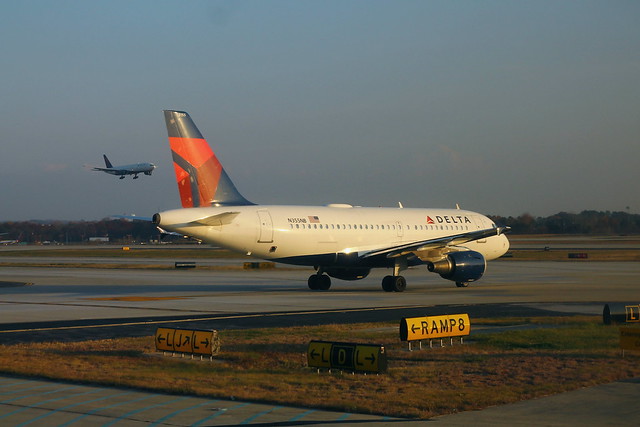
Delta A319 at Minneapolis on Oct 4th 2026, landing gear situation on departure
A Delta Airlines Airbus A319-100, registration N355NB performing flight DL-2692 from Minneapolis,MN to New York JFK,NY (USA) with 120 people on…
 Fleet type match
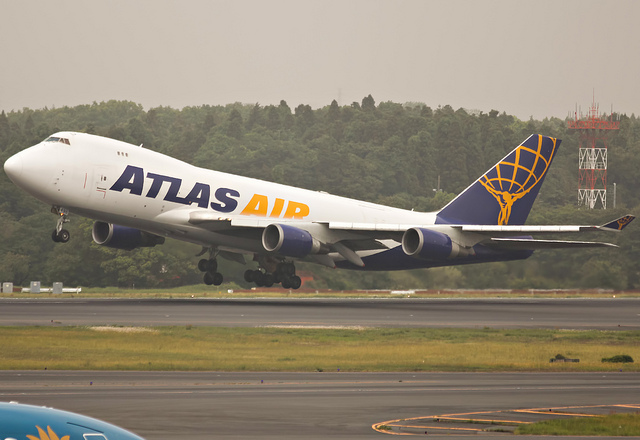
Atlas B744 at Winnipeg on Sep 28th 2026, hydraulic leak
An Atlas Air Boeing 747-400, registration N498MC performing flight 5Y-8447 from Winnipeg,MB (Canada) to Seoul (South Korea), was enroute at FL320…
Subscribe today
Are you researching aviation incidents? Get access to AeroInside Insights, unlimited read access and receive the daily newsletter.
Pick your plan and subscribePartner

ELITE Simulation Solutions is a leading global provider of Flight Simulation Training Devices, IFR training software as well as flight controls and related services. Find out more.
SafetyScan Pro provides streamlined access to thousands of aviation accident reports. Tailored for your safety management efforts. Book your demo today
AeroInside Blog
Popular aircraft
Airbus A320Boeing 737-800
Boeing 737-800 MAX
Popular airlines
American AirlinesUnited
Delta
Air Canada
Lufthansa
British Airways