Antilles DHC6 at Saint Barthelemy on Aug 24th 2023, runway excursion and collision with stationary helicopter
Last Update: March 13, 2026 / 14:45:58 GMT/Zulu time
Incident Facts
Date of incident
Aug 24, 2023
Classification
Accident
Airline
Air Antilles Express
Flight number
3S-722
Departure
Pointe-a-Pitre, Guadeloupe
Destination
Saint Barthelemy, Saint Barthélemy
Aircraft Registration
F-OMYS
Aircraft Type
De Havilland DHC-6 Twin Otter
ICAO Type Designator
DHC6
Airport
Gustaf III Airport, Gustavia
Airport ICAO Code
TFFJ
On Sep 1st 2023 the French BEA reported, they are investigating the occurrence rated an accident. There were no injuries, however, substantial damage occurred. During landing on runway 28 the aircraft went off the runway, collided with a panel and a parked helicopter.
On Mar 13th 2026 the BEA released their final report concluding the probable causes of the accident were:
Scenario
During the landing, the nose wheel was not centred. This wheel was oriented to the left-hand side.
When the nose wheel came into contact with the ground, the aeroplane deviated to the left. The PF was unable to correct this deviation despite his actions (rudder, ailerons and then asymmetric use of reverse thrust).
The aeroplane veered off the side of the runway and collided with a helicopter parked on the dedicated stand.
The crew were not aware of the modifications to the procedures for checking the Nose Wheel Steering (NWS) system after take-off and before landing which consisted of checking that the NWS was locked in the centred position. De Havilland had introduced them in the Pilot Operating Handbook (POH) for the DHC-6 series in 2017. These modifications were not included in the operator’s procedures which were an adaptation of the De Havilland procedures for multi-pilot operations.
The NWS check after take-off and before landing was therefore not completely carried out, with the crew not making a manual input on the NWS lever to check that the NWS was locked in the centred position.
The tension in the NWS control cable was insufficient. It was not possible to determine the cause of this incorrect adjustment. The probable consequences of this was a situation where, on take-off, the NWS marks were aligned although the NWS was not locked in the centred position. As it was not locked, the nose wheel probably pivoted during the flight.
Contributing factors
It was not possible to determine, at the time the before landing checklist was carried out, whether the nose wheel was aligned on the aeroplane’s axis. If it was, and became misaligned after the checklist was completed, the only safety barrier would have been the actual verification of NWS locking by the manual verification action on the NWS lever, as provided for by the standard procedure.
The following factors may have contributed to the crew’s lack of knowledge of the after take-off and before landing NWS check procedures:
- shortcomings in the operator’s development of the documentation which resulted in the amendment of these procedures not being included in the operating manual;
- the instructors paying insufficient attention to the carrying out of the NWS check during initial training and then in the successive training of pilots on the DHC-6.
If the wheel was already misaligned when this checklist was carried out, the visual check of the marks on the NWS lever should have identified this situation. Taking this hypothesis, the following factors may have contributed to the lack of a visual check or to its ineffectiveness:
- a distraction effect linked to the occurrence of the compensation problem in the captain's ear, concomitant with carrying out the checklist;
- a task saturation effect, even reduced attention on the part of the co-pilot, who, when the checklist was carried out, was performing the tasks of PF and PM;
- a probable lack of concentration on the part of the crew;
- the captain’s fatigue linked to sleep deprivation in the days preceding the accident.
Metars:
TFFJ 241700Z AUTO 02008KT //// // ////// 33/27 Q1012=
TFFJ 241630Z AUTO 03008KT //// // ////// 33/26 Q1012=
TFFJ 241600Z AUTO 02008KT //// // ////// 33/27 Q1012=
TFFJ 241530Z AUTO 02008KT //// // ////// 34/27 Q1013=
TFFJ 241500Z AUTO 02009KT //// // ////// 34/28 Q1013=
TFFJ 241430Z AUTO 03009KT //// // ////// 32/27 Q1012=
TFFJ 241400Z AUTO 03009KT //// // ////// 31/27 Q1012=
TFFJ 241330Z AUTO 04009KT //// // ////// 30/25 Q1012=
TFFJ 241300Z AUTO 04008KT //// // ////// 30/26 Q1012=
TFFJ 241230Z AUTO 05008KT //// // ////// 30/26 Q1012=
TFFJ 241200Z AUTO 06004KT 020V130 //// // ////// 29/26 Q1011=
TFFJ 241130Z AUTO VRB03KT //// // ////// 28/26 Q1011=
TFFJ 241100Z AUTO VRB01KT //// // ////// 27/26 Q1011=
Incident Facts
Date of incident
Aug 24, 2023
Classification
Accident
Airline
Air Antilles Express
Flight number
3S-722
Departure
Pointe-a-Pitre, Guadeloupe
Destination
Saint Barthelemy, Saint Barthélemy
Aircraft Registration
F-OMYS
Aircraft Type
De Havilland DHC-6 Twin Otter
ICAO Type Designator
DHC6
Airport
Gustaf III Airport, Gustavia
Airport ICAO Code
TFFJ
This article is published under license from Avherald.com. © of text by Avherald.com.
Article source
You can read 2 more free articles without a subscription.
Subscribe now and continue reading without any limits!
Read unlimited articles and receive our daily update briefing. Gain better insights into what is happening in commercial aviation safety.
Send tip
Support AeroInside by sending a small tip amount.
Related articles
Antilles Express AT42 at Sint Maarten on Jan 28th 2020, engine shut down in flight
An Air Antilles Express Avions de Transport Regional ATR-42-500 on behalf of Winair, registration F-OIXD performing flight WM-806 from Sint Maarten…
Newest articles
 Fleet type match
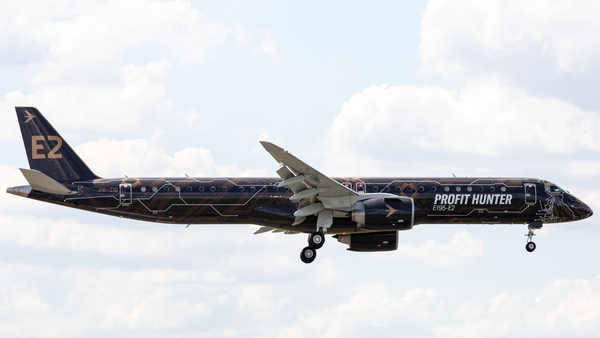
Porter E295 at Edmonton and Toronto on Feb 22nd 2026, passenger observed tyre separating on departure
A Porter Airlines Embraer ERJ-195-E2, registration C-GZQM performing flight PD-402 from Edmonton,AB to Toronto,ON (Canada) with 94 people on board,…
Calm AT72 at Arviat on Apr 25th 2026, runway excursion
A Calm Air Avions de Transport Regional ATR-72-212A, registration C-GREJ performing freight flight MO-488 from Thompson,MB to Arviat,NU (Canada) with…
Subscribe today
Are you researching aviation incidents? Get access to AeroInside Insights, unlimited read access and receive the daily newsletter.
Pick your plan and subscribePartner

ELITE Simulation Solutions is a leading global provider of Flight Simulation Training Devices, IFR training software as well as flight controls and related services. Find out more.
SafetyScan Pro provides streamlined access to thousands of aviation accident reports. Tailored for your safety management efforts. Book your demo today
AeroInside Blog
Popular aircraft
Airbus A320Boeing 737-800
Boeing 737-800 MAX
Popular airlines
American AirlinesUnited
Delta
Air Canada
Lufthansa
British Airways