Indigo AT72 at Hubli on Jun 14th 2021, burst tyres on landing
Last Update: July 11, 2025 / 07:05:30 GMT/Zulu time
Incident Facts
Date of incident
Jun 14, 2021
Classification
Accident
Airline
Indigo Airlines
Flight number
6E-7979
Departure
Kannur, India
Destination
Hubli, India
Aircraft Registration
VT-IYX
Aircraft Type
ATR ATR-72-200
ICAO Type Designator
AT72
The runway was closed for about 4 hours until the aircraft could be moved off the runway.
The airport reported the aircraft performed a balked landing due to heavy winds and bad weather and landed about 30 minutes later. Soon after touchdown the crew reported they suspected blown tyres and stopped on the runway. 18 passengers booked onto the onward leg to Bangalore were delayed due to the cancellation of the onward sector.
On Jun 24th 2021 India's AIB reported: "The aircraft made a balked landing at Hubli airport. After landing, both nose gear tires burst." and rated the occurrence a serious incident. The occurrence is under investigation.
Some time in the past India's AIB released their final report concluding the probable causes of the accident were:
The probable cause of this accident is attributed to inappropriate aircraft landing technique and not following the bounced landing recovery procedure i.e., delayed flare, high speed at touchdown and delay in initiating a “Go-Around”.
Contributory factors for this accident were lack of situational awareness and lack of commitment to initiate a “Go-Around” after experiencing a significant bounce.
The AIB reported the captain (57, ATPL, 5999 hours total, 252 hours on type) was pilot flying, the first officer (31, CPL, 980 hours total, 740 hours on type) was pilot monitoring.
The AIB analysed (amongst others):
The aircraft carried out a non-precision approach on runway 26. Between 30ft RA to 5ft RA, elevators were deflected in both nose up and down orders. The resultant deflection was a nose down order. Pitch angle was -0.3° at 10ft RA and then reduced to -2.3° at 5ft RA. IAS was 111kt. At 5ft RA, power levers were retarded to FI.
Due to delayed flare, higher IAS than targeted speed (+13 than Vapp)and pitch angle -0.3° aircraft touched down with a VRTG of +1.9 G. Due to nose down attitude of the aircraft, the touchdown was three pointers i.e., all three gears got compressed simultaneously. This was an undesired landing attitude of the aircraft. However, instead of initiating a “Go-Around”, nose down order was applied, as the PF was trying to settle down the aircraft anyway. Consequently, aircraft bounced in air. However, PF kept on applying nose down order.
Then the second touchdown occurred on nose landing gear first with -2.0° of pitch angle, VRTG +1.5 G. This time the PM gave a call for “Go-Around”, but PF did not agree and replied “Hold Hold”. The PF intentions were clear of settling down the aircraft instead of initiating a “Go -Around”. Aircraft encounter another bounce and PF kept on applying the nose down order.
The third touchdown also occurred on nose landing gear first with -3.7° of pitch angle, a VRTG +1.8 G and again elevators nose down order. A “Go-Around” call given by the PM was disagreed by PF. This further clarifies that PF was not committed to initiate a “Go-Around”. Aircraft encountered another bounce.
The fourth touchdown occurred. The aircraft touched down on nose landing gear first a third time. This time pitch angle was -5.9°, a 3.3 G vertical and 0.4 G lateral. Then a dual input registered in the DFDR indicates PM took the control to initiate a much awaited “Go-Around”. However, the dual inputs were mainly in the same direction. This time aircraft bounced and “Go-Around” was initiated simultaneously.
The crew initiated a “Go-Around”, only after the fourth touchdown. During “Go-Around” landing gear unsafe procedure was displayed for 20 sec. However, the indication was not noticed by the crew. When the landing gears were selected up, the landing gear unsafe indication cleared automatically. Aircraft climbed as per ATC instruction and entered a holding pattern and carried out two right orbits. During hold crew discussed diversion to Bengaluru and also enquired the weather from ATC Hubli. ATC Hubli reported raining over the field and runway wet.
Later at 14:53:33 UTC, crew again enquired about raining condition, ATC Hubli, responded “light drizzling Sir”. Thereafter, crew requested for approach and ATC cleared the aircraft for approach to runway 26.
During second approach on the same runway 26, when the landing gears were selected down, landing gear unsafe procedure was displayed again. Crew noticed the indication this time. Crew followed QRH procedure and disregarded the unsafe indication. Checklists were carried out and the landing phase initiated. When the aircraft was established on approach track runway 26, ATC Hubli, passed the METAR to the aircraft.
On landing, aircraft touched down on MLG with +3.3° of pitch angle, power lever were at FI just before touchdown and the IAS was less than Vapp target. However, VRTG was high(+1.9 G) and aircraft bounced. PM gave a call for “Go-Around” PF replied “No, Hold”. Aircraft bounced. A second touched down occurred on with +0.3° of pitch angle and both power lever were at FI. However, VRTG was again high. Aircraft bounced again. Subsequently third touched down occurred followed by another bounce. Aircraft touched down fourth time. However, VRTG was less than 1.5G. When the nose landing gear wheel touched down, crew observed a grinding noise and vibration.
Therefore, the crew stopped aircraft on the runway and informed ATC Hubli of a suspected nose wheel tyre burst and switching off engines on the runway itself. At 15:04:08 UTC, finally the aircraft came to rest approx 1300m of the runway threshold.
Metars:
VOHB 150030Z 28009KT 6000 SCT008 SCT012 BKN080 22/21 Q1007=
VOHB 141200Z 24010KT 9999 SCT008 SCT012 BKN080 24/22 Q1007=
VOHB 141100Z 26009KT 9999 SCT008 SCT012 BKN080 25/21 Q1006=
VOHB 141000Z 24008KT 9999 SCT010 SCT015 BKN080 26/20 Q1006=
VOHB 140900Z 24009KT 9999 FEW010 SCT015 BKN080 26/20 Q1007=
VOHB 140800Z 25011KT 9999 FEW010 SCT015 BKN080 26/20 Q1007=
Incident Facts
Date of incident
Jun 14, 2021
Classification
Accident
Airline
Indigo Airlines
Flight number
6E-7979
Departure
Kannur, India
Destination
Hubli, India
Aircraft Registration
VT-IYX
Aircraft Type
ATR ATR-72-200
ICAO Type Designator
AT72
This article is published under license from Avherald.com. © of text by Avherald.com.
Article source
You can read 1 more free article without a subscription.
Subscribe now and continue reading without any limits!
Read unlimited articles and receive our daily update briefing. Gain better insights into what is happening in commercial aviation safety.
Send tip
Support AeroInside by sending a small tip amount.
Related articles
 Fleet type match
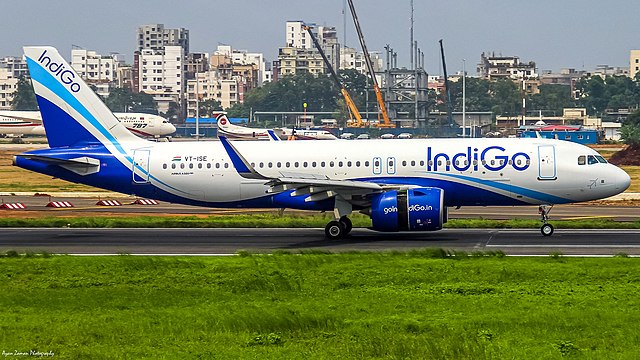
Indigo A20N at Amritsar on Feb 5th 2023, engine shut down in flight
An Indigo Airbus A320-200N, registration VT-ISE performing flight 6E-5926 from Amritsar to Kolkata (India) with 122 passengers and 6 crew, was…
 Fleet type match
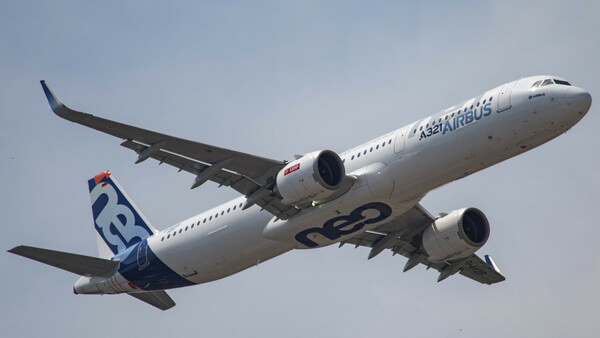
Indigo A21N at Gorakhpur on Jan 11th 2026, bird strike
An Indigo Airbus A321-200N, registration VT-IMR performing flight 6E-437 from Gorakhpur to Bangalore (India) with 216 people on board, was climbing…
Indigo AT72 at Ranchi on Dec 12th 2025, tail strike on landing
An Indigo Avions de Transport Regional ATR-72-212A, registration VT-IRN performing flight 6E-7361 from Bhubaneswar to Ranchi (India) with 56 people…
 Fleet type match
Indigo B789 at Amsterdam on Nov 26th 2026, technical issue with landing gear
An Indigo Boeing 787-9, registration LN-LNR performing flight 6E-22 from Amsterdam (Netherlands) to Mumbai (India), was climbing out of Amsterdam's…
 Fleet type match
Indigo A20N near Varanasi on Oct 22nd 2025, fuel leak
An Indigo Airbus A320-200N, registration VT-ITR performing flight 6E-6961 from Kolkata to Srinagar (India) with 166 people on board, was enroute at…
Newest articles
 Fleet type match
Frontier A21N near Orlando on Apr 21st 2026, cracked windshield
A Frontier Airlines Airbus A321-200N, registration N645FR performing flight F9-1417 from Orlando,FL to Houston Intercontinental,TX (USA), was…
 Fleet type match
Westjet B38M at Vancouver on Mar 16th 2026, first officer incapacitated
A Westjet Boeing 737-8 MAX, registration C-FXWJ performing flight WS-2609 (dep Mar 15th) from Cancun (Mexico) to Vancouver,BC (Canada) with 119…
Subscribe today
Are you researching aviation incidents? Get access to AeroInside Insights, unlimited read access and receive the daily newsletter.
Pick your plan and subscribePartner

ELITE Simulation Solutions is a leading global provider of Flight Simulation Training Devices, IFR training software as well as flight controls and related services. Find out more.
SafetyScan Pro provides streamlined access to thousands of aviation accident reports. Tailored for your safety management efforts. Book your demo today
AeroInside Blog
Popular aircraft
Airbus A320Boeing 737-800
Boeing 737-800 MAX
Popular airlines
American AirlinesUnited
Delta
Air Canada
Lufthansa
British Airways