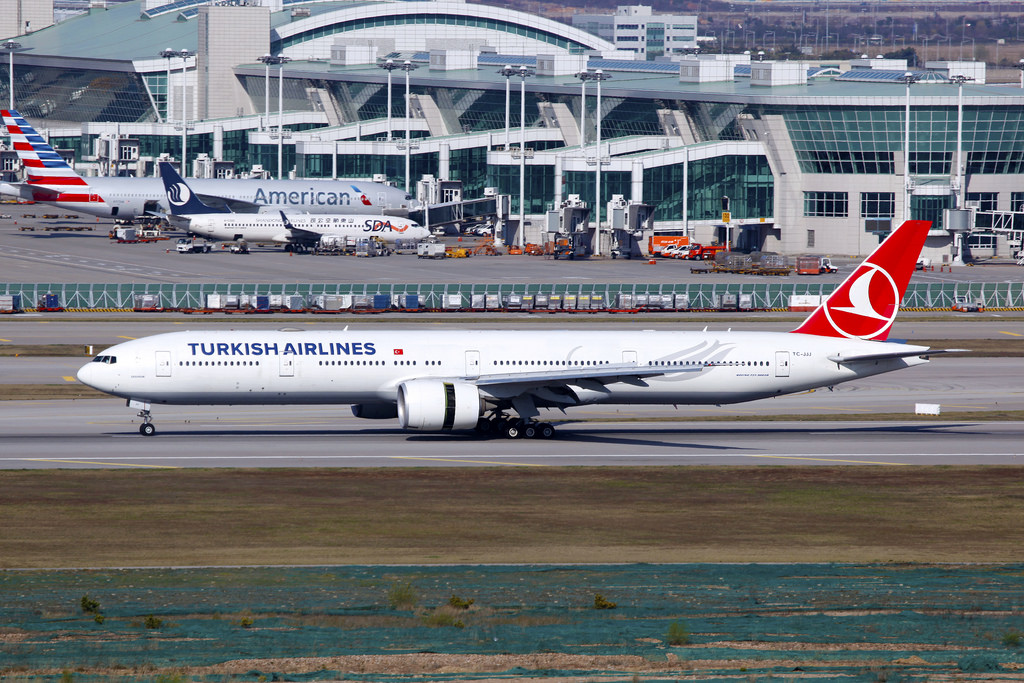
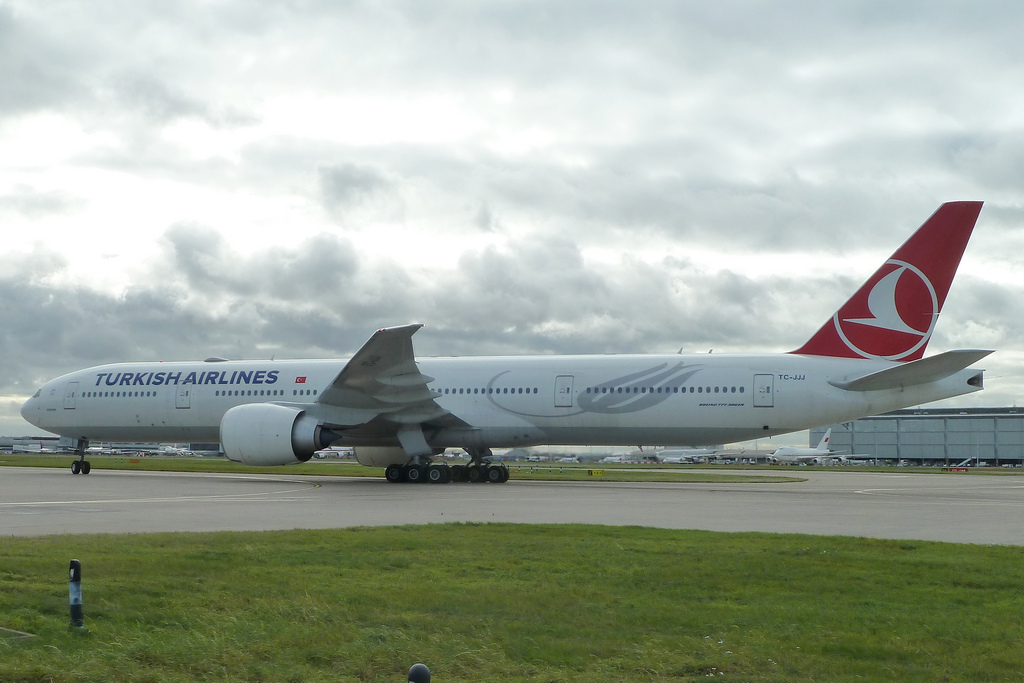
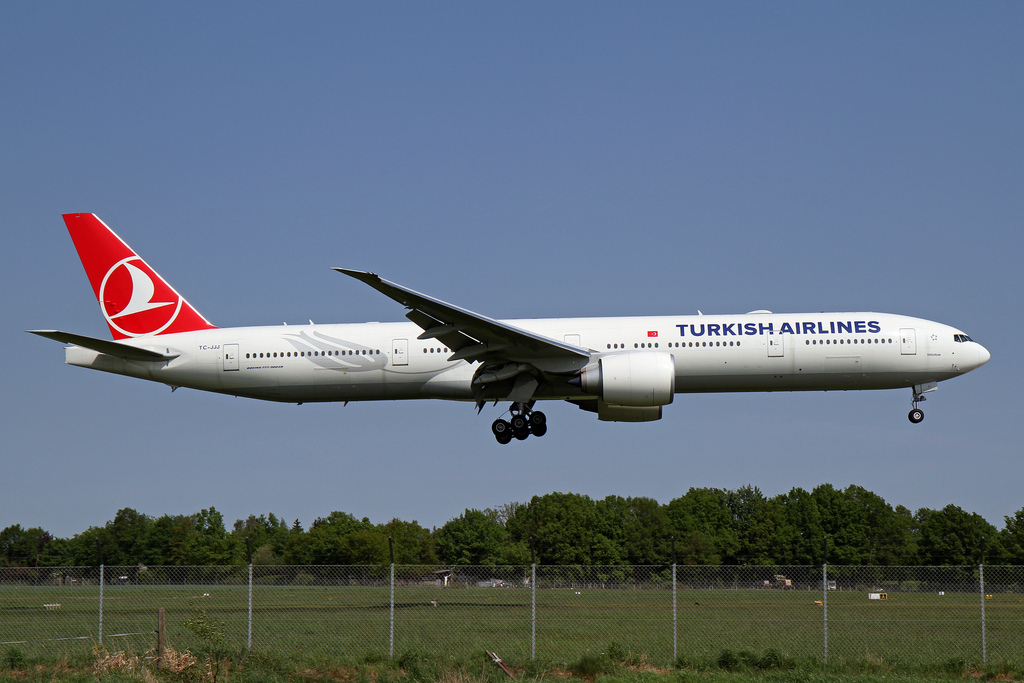
THY B773 near Keflavik on Feb 13th 2023, severe turbulence and uncontrolled descent cause 7 injuries
Last Update: May 10, 2025 / 04:43:10 GMT/Zulu time





Incident Facts
Date of incident
Feb 13, 2023
Classification
Report
Airline
THY Turkish Airlines
Flight number
TK-18
Departure
Toronto, Canada
Destination
Istanbul, Turkey
Aircraft Registration
TC-JJJ
Aircraft Type
Boeing 777-300
ICAO Type Designator
B773
On May 9th 2025 Iceland's RNSA released their final report concluding the probable causes of the occurrence were:
SIA‐Iceland found the following to be the causes of the serious incident:
- An encounter with severe turbulence.
- Breakdown in Crew Resource Management.
- Loss of Situational Awareness.
Contributing factors
SIA‐Iceland found the following to be contributing factors to the serious incident:
- SIGMET for high‐altitude severe mountain waves had not been issued prior to the incident.
- The Captain (PM) did not follow procedure by using the phrase “I have control” (used by the flight operator), when he tried to take over the controls.
- Inappropriate control inputs during the aircraft upset.
- The autothrottle remained engaged and speedbrakes remained deployed during
the aircraft upset.
The RNSF summarized the sequence of events:
At 08:09 UTC, when at FL350 north of the glacier Langjökull in Iceland, the aircraft encountered severe turbulence.
There were three pilots on the flight crew, two Captains and a First Officer, because the length of the flight required a relief pilot (augmented flight crew). One of the Captains, who was also the Commander of the flight, was resting and not on the flight deck when the aircraft encountered the turbulence. The Captain, occupying the leftseat, wasthe Pilot Monitoring (PM) and the First Officer was the Pilot Flying (PF).
According to the flight crew, they were flying along their planned route in Reykjavik CTA3 when the airplane encountered severe turbulence. The flight crew had expected light turbulence in this area and had therefore turned the seatbeltsign ON, about 10 min before encountering the severe turbulence.
The turbulence encounter resulted in an aircraft upset condition, with an extremely low pitch angle and high rate of descent. The flight crew struggled to control the lateral and vertical path simultaneously and the aircraft lost close to 8000 ft of altitude in approximately one minute, with the highest rate of descent of 17,100 feet per minute.
The airspeed increased beyond the airspeed limit. This occurred regardless of the flight crew‘s effort to keep the airspeed within its limit. During the upset, multiple stick shaker activations occurred. The aircraft’s lowest altitude was FL273.
The flight crew regained control of the aircraft and then maintained FL280, still in light turbulence, for a short time and then started climbing. They scanned the instruments for any anomalies within the aircraft systems.
At 08:13, the aircraft re‐encountered turbulence.
When the turbulence conditions had improved and conditions permitted, the Commander of the flight re‐entered the flight deck. The Commander sat down in the observer’s seat and at 08:15 communicated with ATC, where the following PAN‐PAN message was transmitted:
“Reykjavik Turkish 18Alpha – PAN‐PAN, PAN‐PAN, PAN‐PAN, severe turbulence, we cannot maintain level, descending 290 now passing 300.”
The Commander then replaced the Captain in the left seat and took over as the Pilot Flying.
After that the flight crew talked to the cabin chief to inquire about any damage and injuries in the cabin. No one was seriously injured, although a few passengers and cabin crew members had incurred minor injuries and were under the supervision of a medical doctor, travelling as a passenger on the flight. After discussing the possibility of diverting the flight to either Glasgow Airport (EGPF) or Copenhagen Airport (EKCH) as well as consulting with IOCC2F1F, the decision was made to continue the flight to Istanbul Airport (LTFM), where a request for ambulances for the injured was made to ATC.
Incident Facts
Date of incident
Feb 13, 2023
Classification
Report
Airline
THY Turkish Airlines
Flight number
TK-18
Departure
Toronto, Canada
Destination
Istanbul, Turkey
Aircraft Registration
TC-JJJ
Aircraft Type
Boeing 777-300
ICAO Type Designator
B773
This article is published under license from Avherald.com. © of text by Avherald.com.
Article source
You can read 2 more free articles without a subscription.
Subscribe now and continue reading without any limits!
Read unlimited articles and receive our daily update briefing. Gain better insights into what is happening in commercial aviation safety.
Send tip
Support AeroInside by sending a small tip amount.
Related articles
 Fleet type match
THY B773 at Lahore on Oct 5th 2021, bird strike
A THY Turkish Airlines Boeing 777-300, registration TC-JJJ performing flight TK-714 from Istanbul (Turkey) to Lahore (Pakistan), landed on Lahore's…
Fleet type match
THY B773 at Istanbul on Feb 6th 2016, bird strike
A THY Turkish Airlines Boeing 777-300, registration TC-JJJ performing flight TK-15 from Istanbul (Turkey) to Sao Paulo Guarulhos,SP (Brazil) with 294…
 Fleet type match
THY A321 and SunExpress B738 at Stuttgart on Oct 23rd 2023, loss of separation
A THY Turkish Airlines Airbus A321-200, registration TC-JSZ performing flight TK-1706 from Stuttgart (Germany) to Istanbul (Turkey), was departing…
 Fleet type match
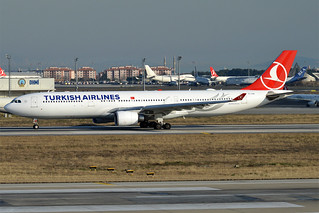
THY A333 at Kathmandu and Kolkata on Feb 4th 2026, engine fire indication
A THY Turkish Airlines Airbus A330-300, registration TC-LNG performing flight TK-727 from Kathmandu (Nepal) to Istanbul (Turkey) with 236 passengers…
 Fleet type match
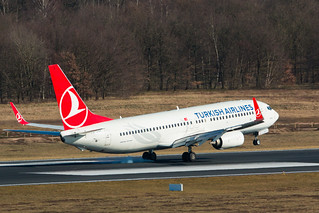
THY B738 at Chisinau on Jan 31st 2026, flaps problem
A THY Turkish Airlines Boeing 737-800, registration TC-JVF performing flight TK-269 from Istanbul (Turkey) to Chisinau (Moldova), was on final…
 Fleet type match
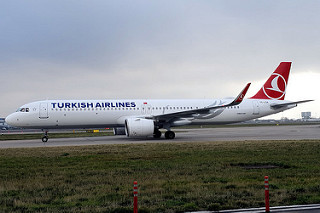
THY A21N at Amsterdam on Dec 20th 2025, hydraulic failure
A THY Turkish Airlines Airbus A321-200N, registration TC-LSA performing flight TK-1955 from Istanbul (Turkey) to Amsterdam (Netherlands), was…
 Fleet type match
THY A333 at Colombo on Dec 16th 2025, gear problem on departure
A THY Turkish Airlines Airbus A330-300, registration TC-JNZ performing flight TK-733 from Colombo (Sri Lanka) to Istanbul (Turkey) with 202…
Newest articles
 Fleet type match
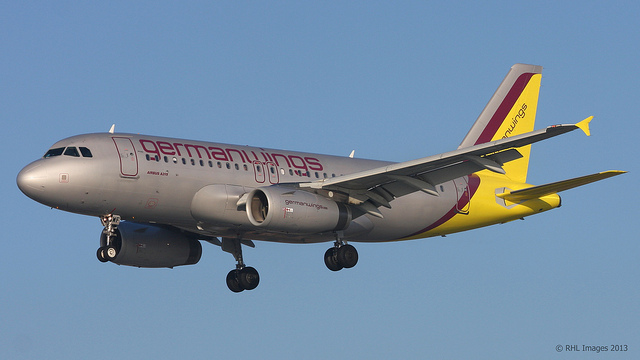
Eurowings A319 near Hamburg on Apr 10th 2026, engine indication
A Eurowings Airbus A319-100, registration D-AGWF performing flight EW-7462 from Hamburg (Germany) to London Heathrow,EN (UK) with about 130 people on…
 Fleet type match
Starlux A21N near Taipei on Apr 10th 2026, hydraulic fault
A Starlux Airlines Airbus A321-200N, registration B-58202 performing flight JX-783 from Taipei (Taiwan) to Cebu (Philippines), was enroute at FL340…
Subscribe today
Are you researching aviation incidents? Get access to AeroInside Insights, unlimited read access and receive the daily newsletter.
Pick your plan and subscribePartner

ELITE Simulation Solutions is a leading global provider of Flight Simulation Training Devices, IFR training software as well as flight controls and related services. Find out more.
SafetyScan Pro provides streamlined access to thousands of aviation accident reports. Tailored for your safety management efforts. Book your demo today
AeroInside Blog
Popular aircraft
Airbus A320Boeing 737-800
Boeing 737-800 MAX
Popular airlines
American AirlinesUnited
Delta
Air Canada
Lufthansa
British Airways