Delta B712 at Atlanta on Feb 24th 2025, haze in cabin
Last Update: May 21, 2025 / 19:18:26 GMT/Zulu time


Incident Facts
Date of incident
Feb 24, 2025
Classification
Accident
Airline
Delta Airlines
Flight number
DL-876
Departure
Atlanta, United States
Destination
Columbia, United States
Aircraft Registration
N942AT
Aircraft Type
Boeing 717-200
ICAO Type Designator
B712
On May 21st 2025 the NTSB released their preliminary report summarizing the sequence of events:
On February 24, 2025, at 0848 eastern standard time, Delta Air Lines flight 876, a Boeing 717-200, N942AT, experienced smoke in the cabin and cockpit during takeoff from Atlanta Hartsfield/Jackson International Airport (ATL), Atlanta Georgia. The airplane returned to the airport, landed safely, and the crew conducted an emergency evacuation. There were 99 passengers and crew on board, and two passengers received minor injuries during the evacuation. The flight was conducted under the provisions of Title 14 Code of Federal Regulations Part 121 scheduled domestic passenger flight from ATL to Columbia Metro Airport (CAE), Columbia, South Carolina.
During the takeoff roll, flight attendants (FA) in both the forward and aft areas of the cabin saw smoke. The two FAs in the forward section first noticed it emanating from the area over the L1 door. The FA In the aft section first noticed it “coming out of all the vents”. Both the FA in the aft section and the lead FA in the forward section attempted to contact the pilots using the emergency call button but did not get a response. They also took turns using the interphone to try and announce to the pilots that there was smoke in the cabin. After takeoff, the lead FA also knocked on the cockpit door.
The aft flight attendant made a public address announcement to the passengers, advised that they were aware of and trained for the situation and to remain calm. The lead FA recalled that the smoke was very thick, and that he was unable to see past the first row of seats. A nonrevenue flight attendant who had been in a jumpseat, self-deployed to the exit row to prevent an unanticipated evacuation, or assist in evacuation if one ensued.
The pilots reported that just as the airplane rotated for takeoff, they heard the flight attendant call chime and knocking on the flight deck door. Shortly thereafter smoke was visible rising from the floor near the rear of the cockpit. They donned their oxygen masks and initially delayed responding to the flight attendant calls, as the captain focused on flying the airplane while first officer declared an emergency with air traffic control.
Shortly after takeoff, a master caution alert for smoke detected in the forward lavatory occurred. The first officer began the quick reference handbook (QRH) checklist for this alert and then attempted to communicate with the cabin crew using the handset phone. He recalled that he could hear the cabin crew, but when he spoke, they could not hear him. As the lead FA began to unlock the cockpit door, he was able to hear the first officer on the interphone advise that the pilots were aware and returning to the airport. The lead FA then relayed that information to the other cabin crew and passengers.
Soon after, an alarm warning of low oil pressure for the right engine occurred in the cockpit. The crew performed the QRH procedure which ultimately led them to shut down the right engine.
As the airplane was returning to the airport, the captain elected to change the approach from runway 27R to 27L “in order to get glidepath guidance since our visibility was restricted due to the smoke and the facemask”. The remainder of the approach and landing were uneventful.
The crew stopped the airplane on the runway after landing and the airport rescue and fire fighting vehicles arrived soon after. The pilots opened the flight deck door, noticed a “tremendous” amount of smoke in the cabin, and the captain immediately ordered an evacuation. The aft FA coordinated the evacuation through the tailcone door with no anomalies. The lead FA managed door 1L, which he initially had some difficulty opening but succeeded on his 3rd attempt. The 3rd FA managed the evacuation through the 1R door with no anomalies.
The non-revenue FA managed the overwing emergency exits evacuation. She remained on the wing with some passengers who were unable to jump from the wing to the ground. The airplane does not have evacuation slides for the overwing exits, the egress path is to slide down the trailing edge of the wing. The wing flaps were extended to 25° prior to the evacuation (in accordance with the checklist) to reduce the height from the wing to ground.
She coordinated with the other three FAs and they determined at that time, because there were no remaining risks inside or outside the cabin, the passengers remaining on both wings could reenter the cabin and evacuate using the 3 usable deployed doors slides.
The airplane was equipped with Rolls Royce model BR715-C1 engines. During a post incident examination, maintenance personnel found no oil visible in the sight glass of the right engine oil reservoir, indicating the quantity was at or near zero. Examination of the right engine’s components continues.
Aircraft Registration Data
Incident Facts
Date of incident
Feb 24, 2025
Classification
Accident
Airline
Delta Airlines
Flight number
DL-876
Departure
Atlanta, United States
Destination
Columbia, United States
Aircraft Registration
N942AT
Aircraft Type
Boeing 717-200
ICAO Type Designator
B712
This article is published under license from Avherald.com. © of text by Avherald.com.
Article source
You can read 2 more free articles without a subscription.
Subscribe now and continue reading without any limits!
Read unlimited articles and receive our daily update briefing. Gain better insights into what is happening in commercial aviation safety.
Send tip
Support AeroInside by sending a small tip amount.
Related articles
Delta A321 at Atlanta on Oct 9th 2026, engine compressor stall
A Delta Airlines Airbus A321-200, registration N334DN performing flight DL-2050 from Buffalo,NY to Atlanta,GA (USA), was on final approach to…
 Fleet type match
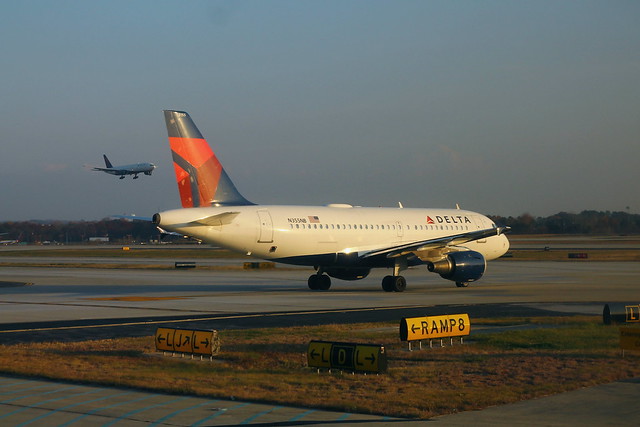
Delta A319 at Minneapolis on Oct 4th 2026, landing gear situation on departure
A Delta Airlines Airbus A319-100, registration N355NB performing flight DL-2692 from Minneapolis,MN to New York JFK,NY (USA) with 120 people on…
 Fleet type match
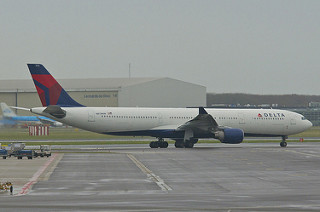
Delta A333 over Atlantic on Sep 27th 2026, smoke on board
A Delta Airlines Airbus A330-300, registration N824NW performing flight DL-251 from Barcelona,SP (Spain) to Boston,MA (USA) with 296 people on board,…
 Fleet type match
Delta A333 at Barcelona on Sep 25th 2026, engine compressor stall
A Delta Airlines Airbus A330-300, registration N813NW performing flight DL-195 from Barcelona,SP (Spain) to Atlanta,GA (USA), was climbing out of…
 Fleet type match
Delta A21N at Kahului on Sep 19th 2026, fuel fumes on board
A Delta Airlines Airbus A321-200N, registration N530DE performing flight DL-394 from Kahului,HI to Seattle,WA (USA), was climbing out of Kahului's…
Newest articles
Delta A321 at Atlanta on Oct 9th 2026, engine compressor stall
A Delta Airlines Airbus A321-200, registration N334DN performing flight DL-2050 from Buffalo,NY to Atlanta,GA (USA), was on final approach to…
 Fleet type match
Flydubai B38M near Tabuk on Sep 30th 2026, fight in the cockpit, first officer under investigation for suspected suicide attempt
A FlyDubai Boeing 737-8 MAX, registration A6-FKF performing flight FZ-1073 from Dubai (United Arab Emirates) to Tel Aviv (Israel) with 174 passengers…
Subscribe today
Are you researching aviation incidents? Get access to AeroInside Insights, unlimited read access and receive the daily newsletter.
Pick your plan and subscribePartner

ELITE Simulation Solutions is a leading global provider of Flight Simulation Training Devices, IFR training software as well as flight controls and related services. Find out more.
SafetyScan Pro provides streamlined access to thousands of aviation accident reports. Tailored for your safety management efforts. Book your demo today
AeroInside Blog
Popular aircraft
Airbus A320Boeing 737-800
Boeing 737-800 MAX
Popular airlines
American AirlinesUnited
Delta
Air Canada
Lufthansa
British Airways