Ambitious Plans to Modernize Civil Aviation in the Next 20 Years
Last Update: October 24, 2024 / 08:49:04 GMT/Zulu time
In recent years, in the specialized press about aircraft construction and real concepts, much has been said about plans to change the approach to constructing passenger airliners in the next 10-15 years. Some statements say that all-electric airplanes and engines with zero carbon footprint should be developed. You can learn more about the development of civil aviation by contacting grademiners and asking an experienced writer to pick up real and interesting facts on this topic and conclude whether it is possible. We will focus on telling you what is happening now in major aviation bureaus' engineering departments and what concepts could become a reality in the next few decades.
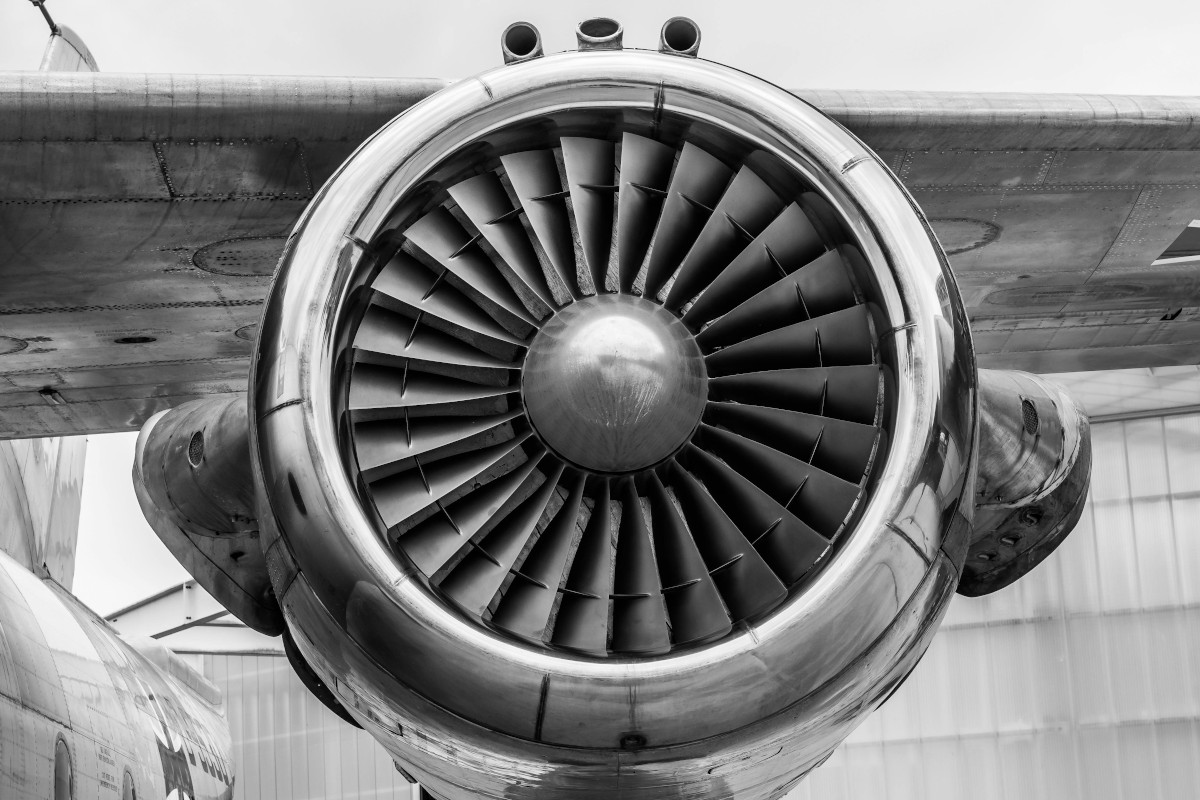
What We're Flying Now
Suppose we put aside dreams and look at reality. In that case, modern aviation is in such a position and at such a stage of development that the emergence of something radically new looks challenging because of many objective problems. First of all, it should be understood that modern aviation is a rather conservative environment with the main focus on passenger safety and reducing the cost of flights.
Let's look at the standard layout of passenger long-haul airliners, with arrow-shaped wings and engines under the wings and extended fuselage. We realize that aircraft design has stayed the same since the second half of the 20th century. There have been no radical changes since then. There are new materials, more economical engines, and comfortable passenger cabins with all available benefits of technology, especially in the first and business classes, but the basic idea is the same.
With this development, it is difficult to expect dramatic changes as it will take billions of dollars and about ten years to develop, test, build prototypes, and certify.
The World's Main Aircraft Fleet
The main airliner producers in the world remain the American company Boeing and the European concern Airbus. In the coming years, both companies will receive many orders for new airplane lines, so the development of brand-new airliners is not a priority. In total, the two aviation giants are to deliver to their customers about 12 thousand new airplanes, the production of which will take an average of 10 years.
Airbus
Airbus's main hit now is the A320 Neo model. It can rightly be called the airplane of today and the near future. About 2,700 airplanes of this model already serve customers worldwide, and the company has about 6,000 more orders for this model.
Boeing
Boeing's main airplane at the moment is the 737 Max airliner model. Although its order volume is about one-third less than that of Airbus, these two airlines remain the undisputed monopolists on the market and the main suppliers of airliners on the planet.
Experimental Programs
In 2021, the International Air Transport Association issued a resolution stating that by 2050, passenger aircraft should reduce carbon dioxide emissions to 0. The ambitious task seems almost impossible, but airlines have already started developing concepts. For Airbus, such a project was ZEROe. This is a series of concerts to develop power plants for airplanes fueled by liquid hydrogen and use electric motors for additional power. Airbus claims that the first flying prototypes will appear by 2035.
However, the introduction of hydrogen technology comes with significant challenges. It is necessary to create infrastructure for hydrogen storage and refueling in airports; the fuel itself is still very expensive, while hydrogen is much more explosive and flammable than kerosene.
Another Airbus concept is an airplane variant based on the principle of flying wings. It is worth saying that this dream of many aircraft designers looks impressive, but it is not quite clear how to realize it. First of all, such a design implies that most passengers will not be able to sit at the window at the same time, and all inside the cabin will experience serious lateral overloads, as when turning on the car at high speed.
Boeing, in turn, is developing a new program for aircraft reconstruction called Sustainable Flight Demonstrator in cooperation with NASA. Under this program, they want to build two prototypes with a transonic hemispherical wing. If the calculations are correct, such an implementation could reduce fuel consumption by as much as 30%.
Ideas for a Return to Supersonic Passenger Flights
Boom Technology is the company working on the Overture project. The company plans to build an 80-seat aircraft that will be able to fly up to 7,800 kilometers at a speed of 1,800 kilometers per hour. The company says it wants to introduce the prototype by 2029. However, given that none of the engine manufacturers have accepted the offer to develop the engine because of the cost and the company is working on the project independently, the timing of the promise looks a little dubious.
Testing New Concepts in Practice
Some companies are not waiting for solutions from the current market leaders and are trying out concepts of powerplant operation on existing airplanes.
In March 2023, Universal Hydrogen conducted the first experimental flight of the Dash 8 regional airplane. Its right-hand electric motor is powered by a hydrogen fuel cell. The airplane was in the air for no more than 15 minutes, but it spent part of the flight exclusively on power from the hydrogen propulsion system.

Another prototype of a small regional jet, Eviation Alice, capable of carrying up to 9 people or 1200 kilograms of cargo, made its first flight in September 2022. Like the previous prototype, the airplane uses an electric propulsion system. It may actually be the first all-electric airplane to enter the commercial market, but the range is still very small.
Conclusion
According to many experts, aviation has been in conditional stagnation for the last twenty years. Now, it has to adapt to the challenges of modernity. New projects can really replace the usual airliners, but counting on it in the next few decades is still not worth it.
Incident Facts
Classification
Blog
© AeroInside
Read unlimited articles and receive our daily update briefing. Gain better insights into what is happening in commercial aviation safety.
Send tip
Support AeroInside by sending a small tip amount.
Newest articles
 Fleet type match
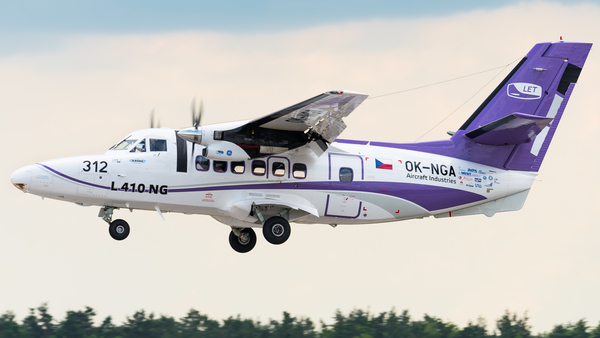
Tracep L410 at Kenge on Sep 25th 2026, crashed on landing
A Tracep Let L-410, registration 9S-GUC performing a flight from Kikwit to Kinshasa N'Dolo (DR Congo) with 13 people on board, diverted to Kenge due…
 Fleet type match
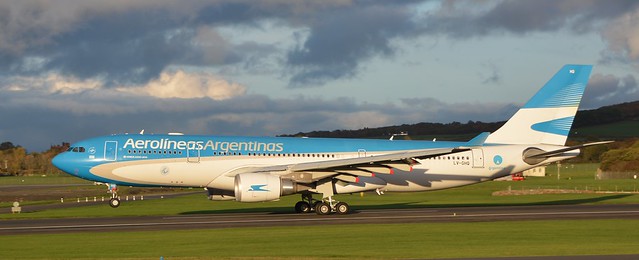
Argentinas A332 at Buenos Aires on Sep 24th 2026, engine compressor stalls
An Aerolineas Argentinas Airbus A330-200, registration LV-GHQ performing flight AR-1132 from Buenos Aires Ezeiza,BA (Argentina) to Madrid,SP (Spain),…
Subscribe today
Are you researching aviation incidents? Get access to AeroInside Insights, unlimited read access and receive the daily newsletter.
Pick your plan and subscribePartner

ELITE Simulation Solutions is a leading global provider of Flight Simulation Training Devices, IFR training software as well as flight controls and related services. Find out more.
SafetyScan Pro provides streamlined access to thousands of aviation accident reports. Tailored for your safety management efforts. Book your demo today
AeroInside Blog
Popular aircraft
Airbus A320Boeing 737-800
Boeing 737-800 MAX
Popular airlines
American AirlinesUnited
Delta
Air Canada
Lufthansa
British Airways