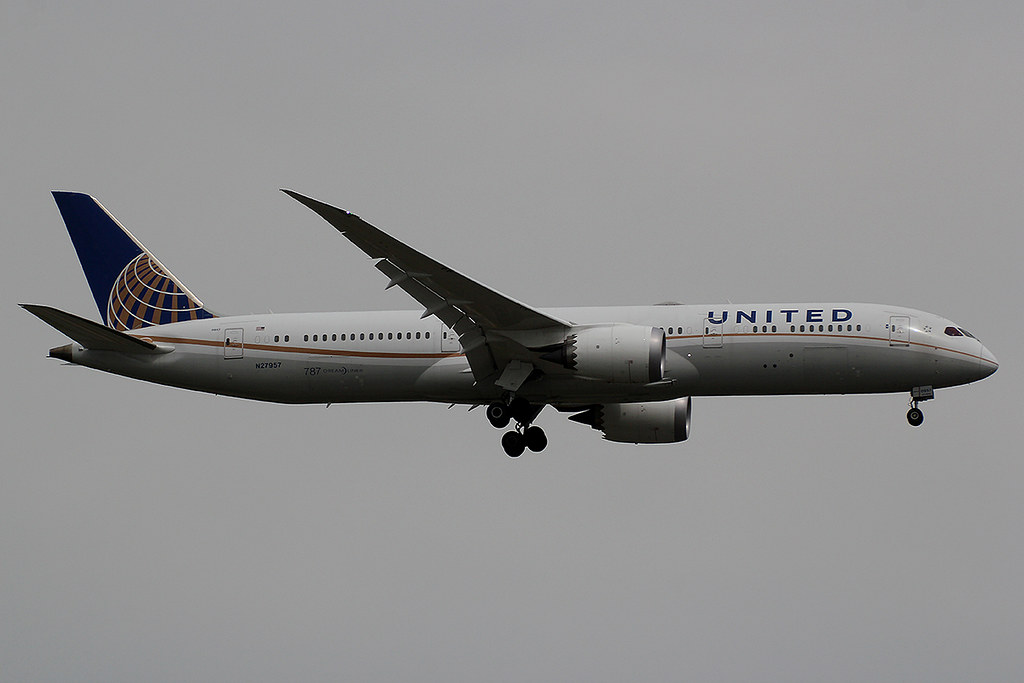
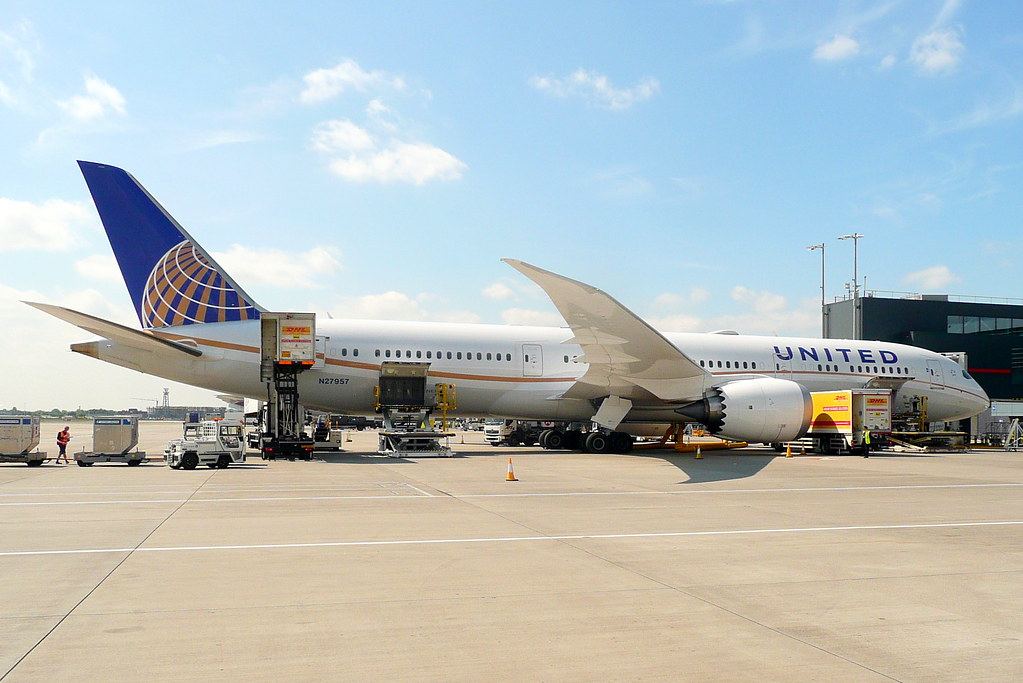
United B789 near Singapore on May 14th 2024, uncontained engine failure

Last Update: September 4, 2025 / 16:31:23 GMT/Zulu time

Bookmark this article
Incident Facts

Date of incident
May 14, 2024

Classification
Incident

Airline
United

Flight number
UA-28

Aircraft Registration
N27957

ICAO Type Designator
B789

A United Boeing 787-9, registration N27957 performing flight UA-28 from Singapore (Singapore) to San Francisco,CA (USA) with 197 passengers and 14 crew, was enroute at FL310 about 200nm east of Singapore when the crew shut the left hand engine (GEnx) down, drifted down to FL150 and returned to Singapore for a safe landing on runway 20C about 90 minutes after departure.

The FAA reported: "AIRCRAFT DEPARTED, SHORTLY AFTER REPORTED A #1 LEFT ENGINE FAILURE AND RETURNED TO AIRPORT, POST FLIGHT INSPECTION REVEALED A HOLE IN THE LEFT ENGINE COWLING AND ENGINE CASE, SINGAPORE."

The airline reported the aircraft returned to resolve an engine issue.

On Jun 26th 2024 the NTSB released their preliminary report stating:

On May 14, 2024, at 1430 UTC, a Boeing 787-9, registration N27957, operated as United Airlines flight 28, experienced an uncontained No. 1 (left) engine failure shortly after takeoff from Singapore Changi Airport. The flight crew secured the No. 1 engine, declared an emergency, and executed an air return to SIN where they made an uneventful single engine landing. There were no injuries reported. The airplane was operated as a Title 14 Code of Federal Regulations Part 121 flight from Singapore Changi Airport (SIN) to San Francisco International Airport (SFO), San Francisco, California.

According to the flight crew, after just reached a cruise altitude of FL310 when they heard a pop and felt the aircraft shutter, followed by a No. 1 engine fire warning indication. A visual inspection of the No. 1 engine was performed after landing at SIN. Damage was observed to the No. 1 engine nacelle and there was a hole in the engine case at approximately the 10 o’clock position.

The data recorders will be downloaded at the NTSB Headquarters in Washington, DC. The No. 1 engine will be retained for teardown examination.

Due to the failure of the No. 1 engine taking place in international waters outside the territory of a State, the NTSB is leading the investigation as the State of Registry in accordance with ICAO Annex 13 guidelines. Additional parties to the investigation include the Federal Aviation Administration (FAA), Boeing, United Airlines, and GE Aerospace.

On Sep 4th 2025 the NTSB released their final report concluding the probable causes of the incident were:

The uncontained left engine failure was caused by the failure and liberation of the HPT stage 1 aft blade retainer as a result of a fatigue crack in the upper collet radius that originated from a surface connected cluster of Oxide/Carbonitride/Nitride/Carbide (OCNC) particles.

Contributing to the failure of the HPT stage 1 aft blade retainer was an unknown material behavior unique to OCNC clusters in Rene 65 material that are surface connected in highly stressed material that may result in a localized reduction of material fatigue life capability.

The NTSB analysed:

The No. 1 (left) engine high pressure turbine (HPT) stage 1 aft blade retainer developed a fatigue crack that initiated and propagated through thickness and circumferentially until final overload failure that was not contained by the turbine case.

Fractography of the HPT stage 1 aft blade retainer revealed the crack initiated in the upper collet radius at a single point of origin which corresponded to a surface connected material anomaly that measured 0.005 inches by 0.015 inches by 0.0005 inches. The fracture surface contained an area of intergranular fracture morphology with visible beach marks, consistent with hold-time fatigue growth and the remaining fracture surface was consistent with overload fracture.

Further examination of the material anomaly was determined to be a cluster of particles enriched with Titanium, Aluminum, Zirconium, Magnesium, and Oxygen, which is consistent with Oxide/Carbonitride/Nitride/Carbide (OCNC) particles. Analysis of the HPT stage 1 aft blade retainer material found all dimensional and material characteristics to be conforming to GE Aerospace drawings and material specifications. The presence of OCNC particles and clusters of particles is inherent to Rene 65 material with quantity and size distributions accounted for within GE’s philosophy for material life limit calculations.

The calculated stress conditions for the GEnx HPT stage 1 aft blade retainer collet feature were found to be uniquely high when compared to the stress conditions of other rotating hardware. This higher stress environment was determined to be the result of the assembly interference fits between the HPT stage 1 disk, the HPT stage 1 aft blade retainer, and the HPT mid seal in combination with the engine’s operational loads.
Aircraft Registration Data
Registration mark
N27957
Country of Registration
United States
Date of Registration
Qbhg e dfqhngbf Subscribe to unlock
Manufacturer
BOEING
Aircraft Model / Type
787-9
Number of Seats
ICAO Aircraft Type
B789
Year of Manufacture
Serial Number
Aircraft Address / Mode S Code (HEX)
Engine Count
Engine Manufacturer
Engine Model
Ebfi bghkkb j Subscribe to unlock
Engine Type
Pounds of Thrust
Main Owner
Ekcqlbim dljmphjp m cljknilnk kiAAjmAfAdghjnpflfiiAb bbnAe fjidqqjeipegh Subscribe to unlock
Incident Facts

Date of incident
May 14, 2024

Classification
Incident

Airline
United

Flight number
UA-28

Aircraft Registration
N27957

ICAO Type Designator
B789

This article is published under license from Avherald.com. © of text by Avherald.com.
Article source

You can read 2 more free articles without a subscription.

Subscribe now and continue reading without any limits!

Are you a subscriber? Login
Subscribe

Read unlimited articles and receive our daily update briefing. Gain better insights into what is happening in commercial aviation safety.

Send tip

Support AeroInside by sending a small tip amount.

Related articles

Newest articles

Subscribe today

Are you researching aviation incidents? Get access to AeroInside Insights, unlimited read access and receive the daily newsletter.

Pick your plan and subscribe

Partner

ELITE Logo

ELITE Simulation Solutions is a leading global provider of Flight Simulation Training Devices, IFR training software as well as flight controls and related services. Find out more.

SafetyScan Pro

SafetyScan Pro provides streamlined access to thousands of aviation accident reports. Tailored for your safety management efforts. Book your demo today

AeroInside Blog
Popular aircraft
Airbus A320
Boeing 737-800
Boeing 737-800 MAX
Popular airlines
American Airlines
United
Delta
Air Canada
Lufthansa
British Airways