ANA B789 near Gamagori on Jan 31st 2024, turbulence injures 2 flight attendants
Last Update: July 10, 2026 / 17:08:19 GMT/Zulu time

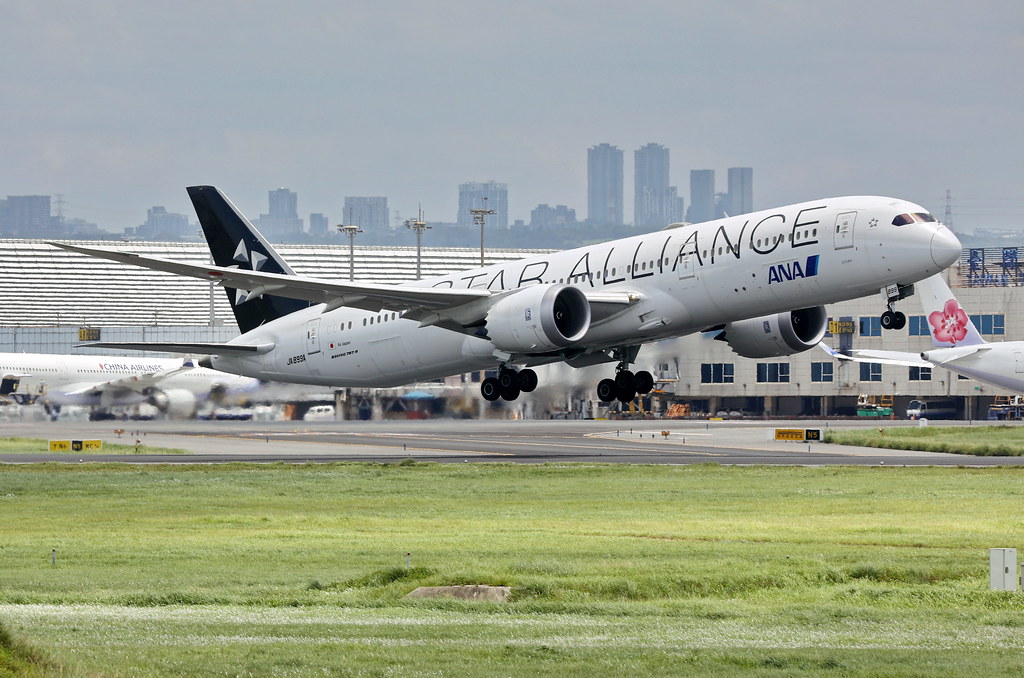
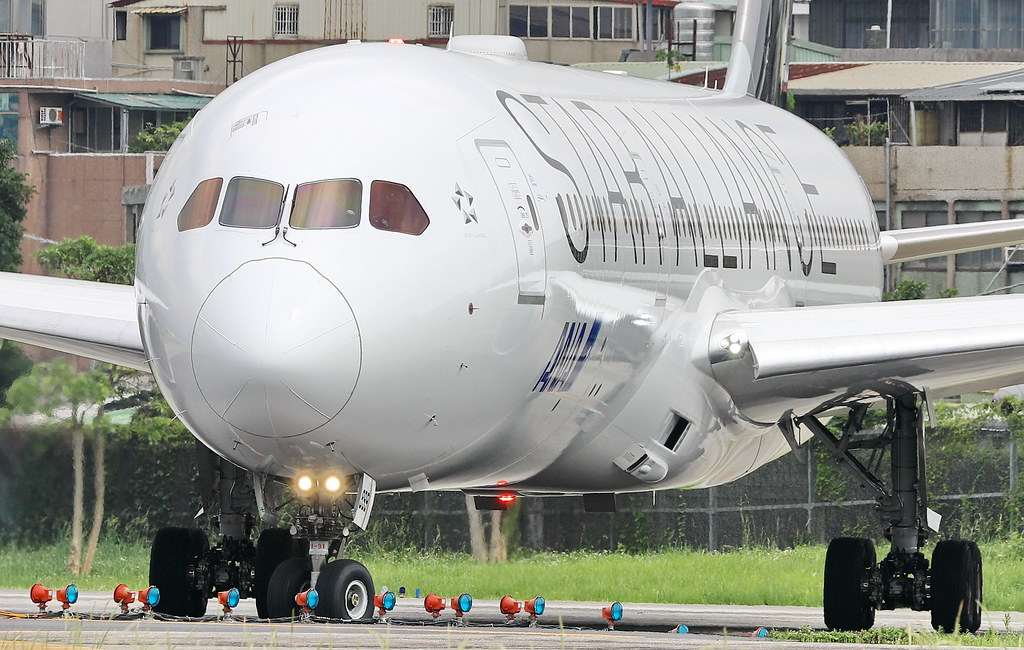

Incident Facts
Date of incident
Jan 31, 2024
Classification
Accident
Airline
ANA All Nippon Airways
Flight number
NH-849
Departure
Tokyo Haneda, Japan
Destination
Bangkok, Thailand
Aircraft Registration
JA899A
Aircraft Type
Boeing 787-9 Dreamliner
ICAO Type Designator
B789
On Feb 2nd 2024 Japan's Ministry of Transport reported two days after returning from Bangkok one of the flight attendants, who had tripped during the turbulence encounter, was diagnosed with a serious injuries, a bone fracture. A second flight attendant hit her leg against a cart received minor injuries (scrapes). The JTSB have opened an investigation.
On Jul 10th 2026 the JTSB released their final report concluding the probable causes of the accident were:
The JTSB concludes that the probable cause of this accident was that it is probable that the aircraft shook during cruising flight due to encountering turbulence from cumulonimbus clouds, which caused a cabin crew member who was providing in-flight services on the left aisle of the center of the cabin to be lifted into the air and sustain a serious injury when a large load was applied to the right ankle upon landing on the floor.
The aircraft encountered turbulence due to cumulonimbus clouds is probably because, when the aircraft entered into the clouds, flight crew members were late in visually spotting cumulonimbus clouds invisible on the airborne weather radar, therefore the aircraft was unable to avoid them in time.
The JTSB analysed:
(1) Meteorological Information
The JTSB concludes that, according to the radar composite chart taken at 01:10, echoes with a precipitation intensity of about 20 - 30 mm/h, which were probable cumulonimbus clouds moving eastwards, were observed in the vicinity of the accident location, and the echo top height was about between 7 and 9 km (approximately between FL230 and FL295), therefore the aircraft flying at FL280 (approximately 8,500 m) most likely encountered these cumulonimbus clouds.
(2) Injuries to Cabin Crew Members and passenger
The JTSB concludes as follows:
According to Cabin Crew A and B, their bodies were lifted into the air when the aircraft suddenly shook violently during their in-flight services, and they sustained injuries when they fell. In addition, Cabin Crew A stated that the seat belt sign was illuminated almost simultaneously as the strong shaking began.
According to EAFR and CPL records, the seat belt sign illuminated at about 01:08:50, and a significant change in vertical acceleration was recorded during the second shaking, which occurred between approximately 01:08:49 and 01:08:51. From these points, it is probable that Cabin Crew A was lifted into the air during this period and sustained a serious injury when a large load was applied to the right ankle upon falling on the floor. Similarly, Cabin Crew B was lifted into the air, sustaining a minor injury upon falling on the floor. In addition, the seat belt sign was illuminated almost simultaneously with the second shaking, it is therefore most likely that there was not enough time for both cabin crew members to recognize the illuminated seat belt sign, suspend their in-flight services and brace for the aircraft shaking.
The reason a passenger sitting in seat 42F sustained a minor neck injury possibly due to the significant change in vertical acceleration during the second shaking.
(3) Responses of the Flight Crew Members
The JTSB concludes that, when the aircraft entered into the thin clouds in the vicinity of the airspace where cumulonimbus clouds had been forecast in advance, it is probable that the flight crew members confirmed visually and with the airborne weather radar to determine that it would be possible to avoid the echoes, and flew the aircraft with the seatbelt sign tuned off. However, as the cumulonimbus clouds that were probable to have caused the aircraft to shake were not visible on the airborne weather radar and the aircraft was flying through a zone of thin clouds, it took longer to visually spot the clouds. It is most likely that by the time the clouds were spotted, the aircraft had failed to avoid the clouds in time and entered them and encountered turbulence, resulting in shaking. It is possible that, based on the outside air temperature, most of the moisture within the cumulonimbus clouds at the aircraft’s flight altitude bands at the time of the accident consisted of ice crystals. As a result, with the airborne weather radar configured as it was at the time (Gain: 0 or temporarily +1, Tilt Control: AUTO), radar reflections from the ice crystals were absent, and consequently it is possible that no echoes were displayed on the airborne weather radar.
It is desirable that, when flight crews operate in altitude bands where the presence of ice crystals is anticipated, they temporarily switch the Tilt Control of the airborne weather radar to MAN mode (manual mode), adjust the antenna tilt angle and gain, and check for echoes of convective precipitation areas below the intermediate layer in order to avoid them and thereby reduce the likelihood of aircraft turbulence. This should be done with a thorough understanding of the characteristics of the airborne weather radar.
In this case, had information been shared between the flight crew and cabin crew regarding the prevailing weather conditions during the flight and the potential for sudden turbulence while flying through clouds, the cabin crew could have conducted in-flight service with greater caution, and it is possible that the extent of the impact would have been reduced.
It is desirable for the operator to recognize that cabin crew members are unable to directly observe external weather conditions, and to promote the sharing of information between flight and cabin crews such as weather conditions and the possibility of sudden turbulence during cloud penetration in order to ensure a common situational awareness through effective crew coordination.
(4) Improvement of Turbulence Prediction Accuracy
The JTSB concludes that, in order to reduce the risk of injury caused by turbulence, it is desirable for the company to further improve its turbulence prediction accuracy by enhancing and using the new weather information (GTG and EDR) that the company promotes.
Incident Facts
Date of incident
Jan 31, 2024
Classification
Accident
Airline
ANA All Nippon Airways
Flight number
NH-849
Departure
Tokyo Haneda, Japan
Destination
Bangkok, Thailand
Aircraft Registration
JA899A
Aircraft Type
Boeing 787-9 Dreamliner
ICAO Type Designator
B789
This article is published under license from Avherald.com. © of text by Avherald.com.
Article source
You can read 2 more free articles without a subscription.
Subscribe now and continue reading without any limits!
Read unlimited articles and receive our daily update briefing. Gain better insights into what is happening in commercial aviation safety.
Send tip
Support AeroInside by sending a small tip amount.
Related articles
 Fleet type match
ANA B738 at Okinawa on Sep 23rd 2026, engine shut down in flight
An ANA All Nippon Airways Boeing 737-800, registration JA86AN performing flight NH-1502 from Okinawa to Saga (Japan) with 158 people on board, was…
 Fleet type match
ANA B789 at Houston on Feb 27th 2026, tail strike on landing
An ANA All Nippon Airways Boeing 787-9, registration JA873A performing flight NH-114 from Tokyo Haneda (Japan) to Houston Intercontinental,TX (USA)…
 Fleet type match
ANA B763 and C525 at Tokyo on Aug 4th 2026, TCAS resolution
An ANA All Nippon Airways Boeing 767-300, registration JA626A performing flight NH-968 from Shanghai Pudong (China) to Tokyo Haneda (Japan) with 197…
 Fleet type match
ANA B78X near Osaka on Jul 26th 2026, wing anti ice problem
An ANA All Nippon Airways Boeing 787-10, registration JA981A performing flight NH-32 from Osaka Itami to Tokyo Haneda (Japan) with 419 passengers and…
 Fleet type match
ANA B772 at Sapporo on Apr 1st 2026, engine shut down in flight
An ANA All Nippon Airways Boeing 777-200, registration JA745A performing flight NH-65 from Tokyo Haneda to Sapporo New Chitose (Japan) with 317…
Newest articles
 Fleet type match
American B788 at Chicago on Oct 20th 2026, brakes problem and blown tyres
An American Airlines Boeing 787-8, registration N806AA performing flight AA-41 from Barcelona,SP (Spain) to Chicago O'Hare,IL (USA) with 245 people…
 Fleet type match
Amerijet B763 at Miami on Oct 20th 2026, engine compressor stalls
An Amerijet Boeing 767-300, registration N347CM performing flight M6-439 from Miami,FL (USA) to Bogota (Colombia), departed Miami's runway 08R when…
Subscribe today
Are you researching aviation incidents? Get access to AeroInside Insights, unlimited read access and receive the daily newsletter.
Pick your plan and subscribePartner

ELITE Simulation Solutions is a leading global provider of Flight Simulation Training Devices, IFR training software as well as flight controls and related services. Find out more.
SafetyScan Pro provides streamlined access to thousands of aviation accident reports. Tailored for your safety management efforts. Book your demo today
AeroInside Blog
Popular aircraft
Airbus A320Boeing 737-800
Boeing 737-800 MAX
Popular airlines
American AirlinesUnited
Delta
Air Canada
Lufthansa
British Airways