SAS A21N at Copenhagen on Dec 20th 2023, electrical odour

Last Update: December 16, 2024 / 17:51:13 GMT/Zulu time
Bookmark this article
Incident Facts

Date of incident
Dec 20, 2023

Classification
Incident

Destination
Oslo, Norway

Aircraft Registration
SE-DMS

Aircraft Type
Airbus A321-Neo

ICAO Type Designator
A21N

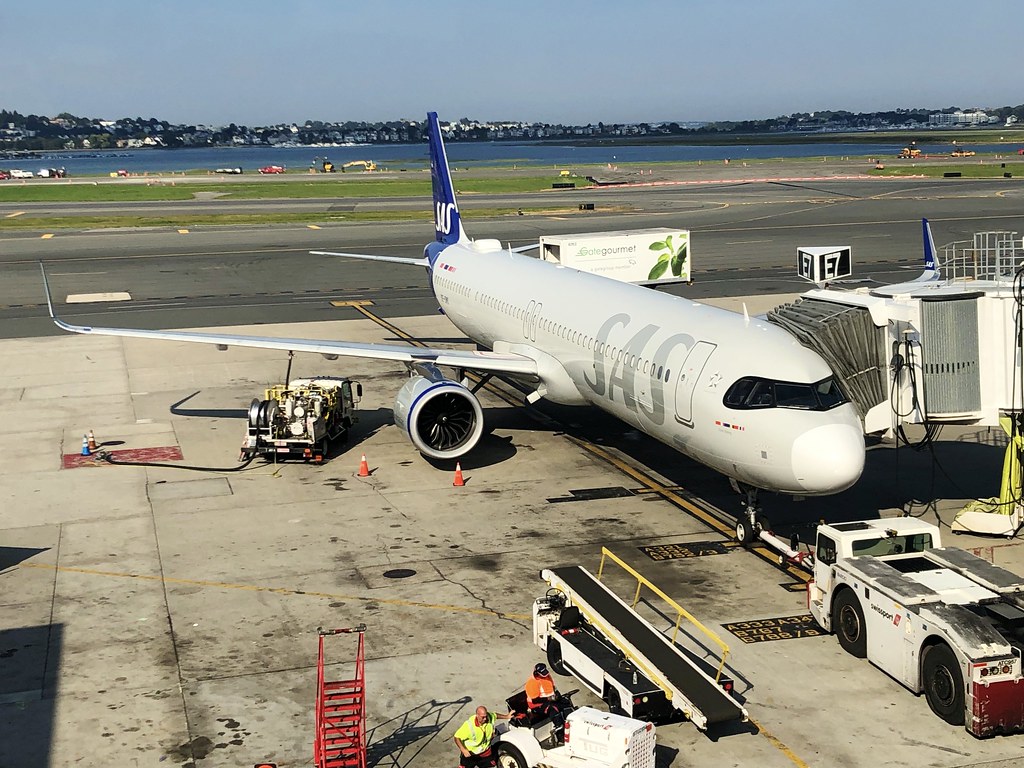
A SAS Scandinavian Airlines Airbus A321-200N, registration SE-DMS performing positioning flight SK-9228 from Copenhagen (Denmark) to Oslo (Norway) with 2 crew, was climbing through about FL200 when the crew felt an electrical smell, donned their oxygen masks, declared Mayday and returned to Copenhagen for a safe landing on runway 22L about 25 minutes after departure.

Denmark's Havarikommissionen (HCL) reported there was minor damage, the occurrence was rated a serious incident and is being investigated.

On Dec 16th 2024 the HCL released their interim statement describing the onsite examination:

Shortly after engine shut down, maintenance crew inspected the avionics compartment. In the contactor box 107VU, the maintenance crew noticed a GFI relay (124QH) with black soot and a burnt hole in the plastic housing.

The adjacent relay (17QA) had on parts of its casing black soot deposits from the GFI relay (124QH). There were no other damages to this relay (17QA).

For quarantine, the maintenance crew removed the GFI relay (124QH) and the adjacent relay (17QA).

There were no other damages to the GFI relay mating installation or wiring in the aircraft

No circuit breakers were in open position.

The AAIB summarized the sequence of events:

The flight was an IFR ferry flight from Copenhagen (EKCH) to Oslo (ENGM). The commander was Pilot Monitoring (PM), and the first officer was Pilot Flying (PF).

Prior to the flight additional fuel was uplifted as ballast.

Upon arriving in the cockpit, the flight crew noticed on the Electronic Centralized Aircraft Monitor (ECAM) display, that the fuel distribution in the fuel tanks was not as expected.

There was still fuel in the Additional Center Tanks (ACT), which the flight crew expected to be empty.

In addition, ECAM presented a fuel message “ACT XFR FAULT”. The flight crew performed the associated ECAM fuel message procedure to clear the fault by selecting on manual transfer of fuel from the ACT to the center tank.

After approximately five minutes, the ECAM fuel message “ACT XFR FAULT” disappeared. The flight crew switched off the “manual fuel transfer”.

During climb from EKCH and at approximately 5,000 feet (ft), the ECAM fuel message “ACT XRF FAULT” came on again, and the flight crew performed the associated ECAM fuel message procedure to clear the fault.

During climb when passing Flight Level (FL) 250, the first officer said “I smell electrical fire”.

The commander inhaled a few times and said, “You are right, oxygen mask on, divert back to Copenhagen”.

The commander transmitted to Sweden Control,” MAYDAY, immediate return and
descend to Copenhagen”. Sweden Control responded, “Turn right inbound LAMOX (approach waypoint for runway 22L), descend to FL 180”.

The first officer started the approach to EKCH, and the commander consulted the Quick Reference Handbook (QRH) “Abnormal and emergency procedures/Smoke/
Fumes/AVNCS smoke” checklist.

During the approach, the first officer set the transponder to code 7700.

The flight crew landed on runway 22L and vacated the runway via taxiway B5.

The flight crew stopped on the taxiway.

The onsite fire brigade did externally neither observe nor detect any fire or smoke.

Upon removing the commander’s oxygen mask, the smell of electrical fire/burning was now less noticeable.

The flight crew taxied the aircraft to a remote parking stand followed by the fire brigade.

The flight crew shut down both engines, and the fire brigade came on board.

The smell of electrical fire/burning was only present in the cockpit area and not in the passenger cabin.

Upon opening the door to the avionics compartment under the cockpit floor, a strong smell of electrical fire/burning was present.

There was no sign of neither smoke nor trace of fire.
Aircraft Registration Data
Registration mark
SE-DMS
Country of Registration
Sweden
Date of Registration
Fknmppkgqnblpg gi Subscribe to unlock
Manufacturer
AIRBUS
Aircraft Model / Type
A321-253NX
ICAO Aircraft Type
A21N
Year of Manufacture
Serial Number
Maximum Take off Mass (MTOM) [kg]
Engine Count
Main Owner
F dlA nkcbcgqhhfdAplhcpjAjbjebhnAnfmAhklmqqnmejgkmbn Subscribe to unlock
Incident Facts

Date of incident
Dec 20, 2023

Classification
Incident

Destination
Oslo, Norway

Aircraft Registration
SE-DMS

Aircraft Type
Airbus A321-Neo

ICAO Type Designator
A21N

This article is published under license from Avherald.com. © of text by Avherald.com.
Article source

You can read 2 more free articles without a subscription.

Subscribe now and continue reading without any limits!

Are you a subscriber? Login
Subscribe

Read unlimited articles and receive our daily update briefing. Gain better insights into what is happening in commercial aviation safety.

Send tip

Support AeroInside by sending a small tip amount.

Related articles

Newest articles

Subscribe today

Are you researching aviation incidents? Get access to AeroInside Insights, unlimited read access and receive the daily newsletter.

Pick your plan and subscribe

Partner

ELITE Logo

ELITE Simulation Solutions is a leading global provider of Flight Simulation Training Devices, IFR training software as well as flight controls and related services. Find out more.

SafetyScan Pro

SafetyScan Pro provides streamlined access to thousands of aviation accident reports. Tailored for your safety management efforts. Book your demo today

AeroInside Blog
Popular aircraft
Airbus A320
Boeing 737-800
Boeing 737-800 MAX
Popular airlines
American Airlines
United
Delta
Air Canada
Lufthansa
British Airways