Transavia France B738 at Nantes on Oct 1st 2022, both nose tyres damaged on landing
Last Update: December 24, 2024 / 20:07:36 GMT/Zulu time

Incident Facts
Date of incident
Oct 1, 2022
Classification
Accident
Airline
Transavia France
Flight number
TO-3943
Departure
Djerba, Tunisia
Destination
Nantes, France
Aircraft Registration
F-GZHA
Aircraft Type
Boeing 737-800
ICAO Type Designator
B738
Airport ICAO Code
LFRS
The BEA opened an investigation.
On Oct 7th 2022 the BEA reported the aircraft received substantial damage to the nose gear, fuselage and engines. The occurrence was rated an accident and is being investigated by the BEA.
On Dec 24th 2024 the BEA released their final report in French only (editorial note: to serve the purpose of global prevention of the repeat of causes leading to an occurrence an additional timely release of all occurrence reports in the only world spanning aviation language English would be necessary, a French only release does not achieve this purpose as set by ICAO annex 13 and just forces many aviators to waste much more time and effort each in trying to understand the circumstances leading to the occurrence. Aviators operating internationally are required to read/speak English besides their local language, investigators need to be able to read/write/speak English to communicate with their counterparts all around the globe).
Editorial note: The translation of the conclusions of the French report doesn't seem to make sense. As the BEA usually releases an English report in due time, The Aviation Herald is going to wait for the English version before covering the final report.
The BEA summarized the occurrence:
On the descent to Nantes, the co-pilot in line adaptation (AEL) reminded the captain instructor (TRI) of his difficulties with the flare and his apprehension of not reproducing the same type of firm landing as that carried out the day before in Nantes on runway 21. During the briefing, the non-axis approach to runway 21, the profile of this runway ("the hump") as well as the evolution of the weather conditions were discussed by the co-pilot. These threats were not taken up by the instructor. The visual perception caused by the rising part of the runway and the stress linked to the difficulty of landing in Nantes were not the subject of a particular strategy on the part of the instructor to manage them. The choice of the moment when the automatisms would be disconnected was also not discussed at that time.
During the approach, at around 2,500 ft, the co-pilot announced to the instructor that he would disconnect the automatics at an altitude of 2,000 ft, approximately two minutes before reaching the minima. The co-pilot wanted to take advantage of the instructor's presence to fly more manually and regain experience. The instructor was able to let the co-pilot do this to help him regain confidence. However, given the presence of a crosswind, the ceiling close to the minima and the co-pilot's limited recent experience, manual flying probably caused a high workload for the co-pilot.
At 1 NM from the MAPTS and at an altitude of approximately 800 ft, the co-pilot turned to the left to intercept the runway centreline. The approach was stabilized, the co-pilot maintained the glide path following the PAPI instructions and the speed remained close to the reference approach speed. The instructor's correction calls up to very low height show that his attention was focused primarily on maintaining the runway centreline.
After crossing the threshold of runway 21, the aircraft initially flew over the descending section. At a height of between 40 and 30 ft, the co-pilot began to apply nose-up input on the stick to flare, without reducing thrust, but this input was insufficient to change the aircraft's attitude. The aircraft then began to fly over the ascending section of the runway. Between the calls "thirty" and "ten", spaced one second apart and representing approximately 80 m of flight, the co-pilot applied a sharp and rapid nose-up input on the stick, pulling it to more than three-quarter travel, before placing the thrust levers on IDLE. At the same time, the instructor most likely became aware of the delay in the start of the flare and, by reflex, called "attention" to the co-pilot. These sharp and rapid actions at low height above the rising part of the runway did not reduce the aircraft's energy before contact with the runway.
It is very likely that the late flare resulted from an erroneous perception of the final part of the glide path due to the upward slope of the runway and the attention paid mainly until low height by both pilots to maintaining the runway axis.
The influence of the characteristics of the runway, descending then ascending, on the height announcements of the synthetic voice did not help the co-pilot to start the flare and the reduction of thrust sufficiently early given the upward slope before the bump.
Furthermore, the instructor did not consider taking back control during the rounding and most likely did not have time to do so.
The main landing gear touchdown on the uphill section of the runway was hard with a recorded load factor of 2.95 g, at a sink rate of approximately 12 ft/s. The spoilers deployed and the aircraft bounced.
The force of the impact on landing and the rebound surprised both crew members. The instructor reflexively applied a sharp nose-down input to the stick, up to the nose-down stop, which had the effect of rapidly reducing the aircraft's pitch attitude. This reduction in pitch attitude combined with the deployed spoilers led to a rapid reduction in the aircraft's lift. The nose gear and the right main gear simultaneously touched the runway. Under the violence of the impact suffered by the nose gear, both tires were ejected from it, and the aircraft continued the landing by rolling on its rims.
The instructor then maintained the runway centerline while the aircraft decelerated before turning left onto a taxiway to bring the aircraft to a stop and clear the runway.
The fact that the TRI was familiar with Nantes approach 21 and the characteristics of the runway may have minimised:
- his perception of the difficulty that landing on this runway in these conditions could represent for the co-pilot;
- his perception of the risks associated with the apprehensions mentioned by the co-pilot about landings.
The TRI may also have wanted to let the co-pilot do it without adding any additional stress, with a view to restoring the co-pilot's confidence after his period of interruption. The landing made by the co-pilot with a strong crosswind in Djerba may have strengthened the TRI's confidence and led to a drop in vigilance on his part during the approach and landing.
Metars:
LFRS 011300Z AUTO 26010KT 3400 -RADZ BR OVC006 18/18 Q1018 TEMPO BKN020 BECMG 9999 NSW=
LFRS 011230Z AUTO 25012KT 4300 DZ BR OVC007 19/18 Q1017 TEMPO 26015G25KT BKN020 BECMG 9999 NSW=
LFRS 011200Z AUTO 26014KT 9999 OVC009 19/17 Q1017 TEMPO 26015G25KT BKN020=
LFRS 011130Z AUTO 27013KT 9999 OVC008 18/17 Q1017 BECMG SCT012=
LFRS 011100Z AUTO 26012KT 9999 OVC006 18/18 Q1017 BECMG SCT012=
LFRS 011030Z AUTO 26013KT 230V290 4200 -RADZ BR OVC005 18/17 Q1017 BECMG 9999 NSW SCT012=
LFRS 011000Z AUTO 27012KT 3500 -RA BR OVC006 18/17 Q1016 BECMG 9999 NSW SCT012=
LFRS 010930Z AUTO 27013KT 9999 OVC007 18/17 Q1016 BECMG SCT012=
LFRS 010900Z AUTO 27012KT 9999 OVC006 18/17 Q1015 TEMPO 4000 -RADZ BECMG 25015G25KT SCT012=
LFRS 010830Z AUTO 27013KT 9000 2000 -RA OVC007 18/17 Q1015 TEMPO 4000 -RADZ BECMG 25015G25KT SCT012=
LFRS 010800Z AUTO 27013KT 9999 OVC007 18/17 Q1014 TEMPO 4000 -RADZ BECMG 25015G25KT=
Incident Facts
Date of incident
Oct 1, 2022
Classification
Accident
Airline
Transavia France
Flight number
TO-3943
Departure
Djerba, Tunisia
Destination
Nantes, France
Aircraft Registration
F-GZHA
Aircraft Type
Boeing 737-800
ICAO Type Designator
B738
Airport ICAO Code
LFRS
This article is published under license from Avherald.com. © of text by Avherald.com.
Article source
You can read 2 more free articles without a subscription.
Subscribe now and continue reading without any limits!
Read unlimited articles and receive our daily update briefing. Gain better insights into what is happening in commercial aviation safety.
Send tip
Support AeroInside by sending a small tip amount.
Related articles
 Fleet type match
Transavia B738 at Paris on Aug 11th 2022, yaw damper failure
A Transavia France Boeing 737-800, registration F-GZHA performing flight TO-7280 from Paris Orly (France) to Oran (Algeria), was climbing out of…
Fleet type match
Transat B738 near Hamilton on Feb 28th 2015, cabin pressure uncontrollable
An Air Transat Boeing 737-800, registration F-GZHA performing flight TS-832 from Hamilton,ON (Canada) to Varadero (Cuba), was climbing through 15,000…
 Fleet type match
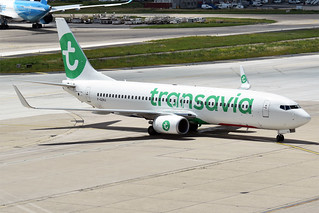
Transavia France B738 at Paris on Jul 24th 2026, smell of smoke in cockpit
A Transavia France Boeing 737-800, registration F-GZHJ performing flight TO-3510 from Paris Orly (France) to Mykonos (Greece), was climbing out of…
 Fleet type match
Transavia France B738 near Lyon on Jan 5th 2026, smoke in cockpit
A Transavia France Boeing 737-800, registration F-HTVY performing flight TO-8098 from Paris Orly (France) to Sfax (Tunisia), was enroute at FL390…
 Fleet type match
Transavia France B738 at Fuerteventura on Dec 26th 2025, smoke in cabin
A Transavia France Boeing 737-800, registration F-HTVT performing flight TO-4672 from Paris Orly (France) to Fuerteventura,CI (Spain), was descending…
 Fleet type match
Transavia France B738 near Barcelona on Sep 8th 2025, possible smoke problem in cabin
A Transavia France Boeing 737-800, registration F-GZHO performing flight TO-7305 from Oran (Algeria) to Nantes (France), was enroute at FL380 about…
 Fleet type match
Transavia France B738 near Porto on Apr 10th 2025, one iPad too many on board
A Transavia France Boeing 737-800, registration F-HTVP performing flight TO-7646 from Paris Orly (France) to Lisbon (Portugal), was enroute at FL370…
Newest articles
 Fleet type match
Tracep L410 at Kenge on Sep 25th 2026, crashed on landing
A Tracep Let L-410, registration 9S-GUC performing a flight from Kikwit to Kinshasa N'Dolo (DR Congo) with 13 people on board, diverted to Kenge due…
 Fleet type match
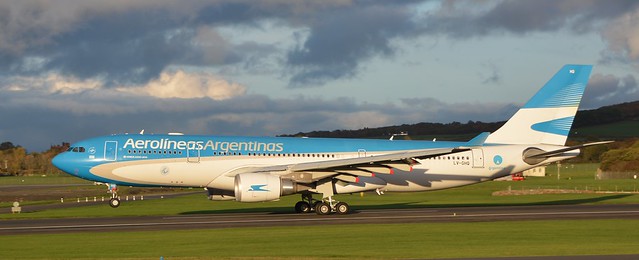
Argentinas A332 at Buenos Aires on Sep 24th 2026, engine compressor stalls
An Aerolineas Argentinas Airbus A330-200, registration LV-GHQ performing flight AR-1132 from Buenos Aires Ezeiza,BA (Argentina) to Madrid,SP (Spain),…
Subscribe today
Are you researching aviation incidents? Get access to AeroInside Insights, unlimited read access and receive the daily newsletter.
Pick your plan and subscribePartner

ELITE Simulation Solutions is a leading global provider of Flight Simulation Training Devices, IFR training software as well as flight controls and related services. Find out more.
SafetyScan Pro provides streamlined access to thousands of aviation accident reports. Tailored for your safety management efforts. Book your demo today
AeroInside Blog
Popular aircraft
Airbus A320Boeing 737-800
Boeing 737-800 MAX
Popular airlines
American AirlinesUnited
Delta
Air Canada
Lufthansa
British Airways