Aurela B733 at Birmingham on Sep 21st 2012, runway overrun
Last Update: June 13, 2013 / 15:42:33 GMT/Zulu time
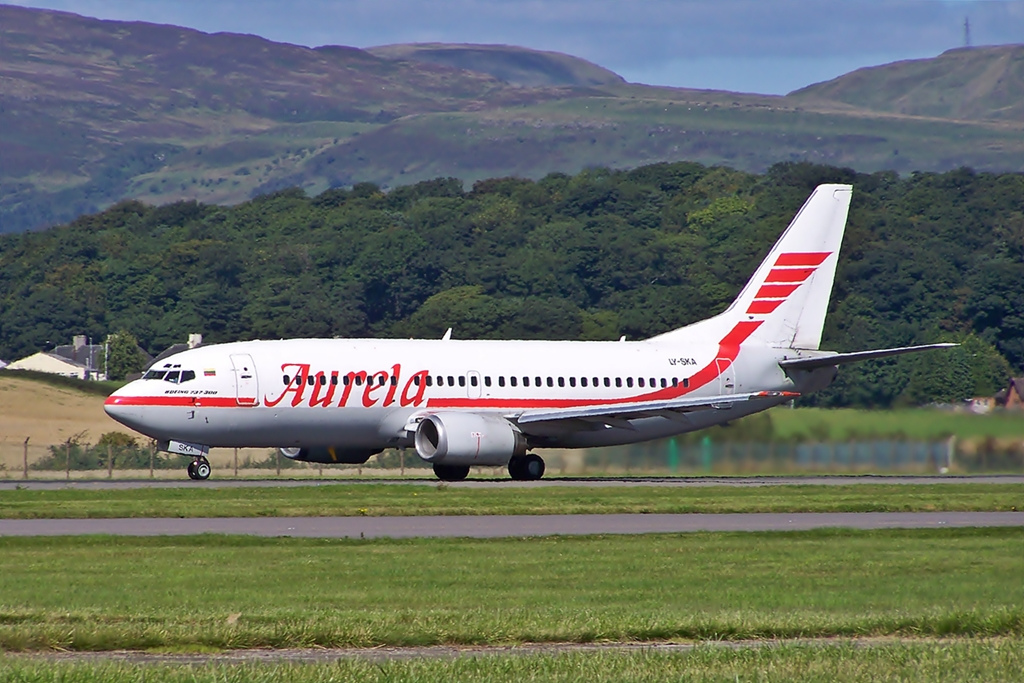
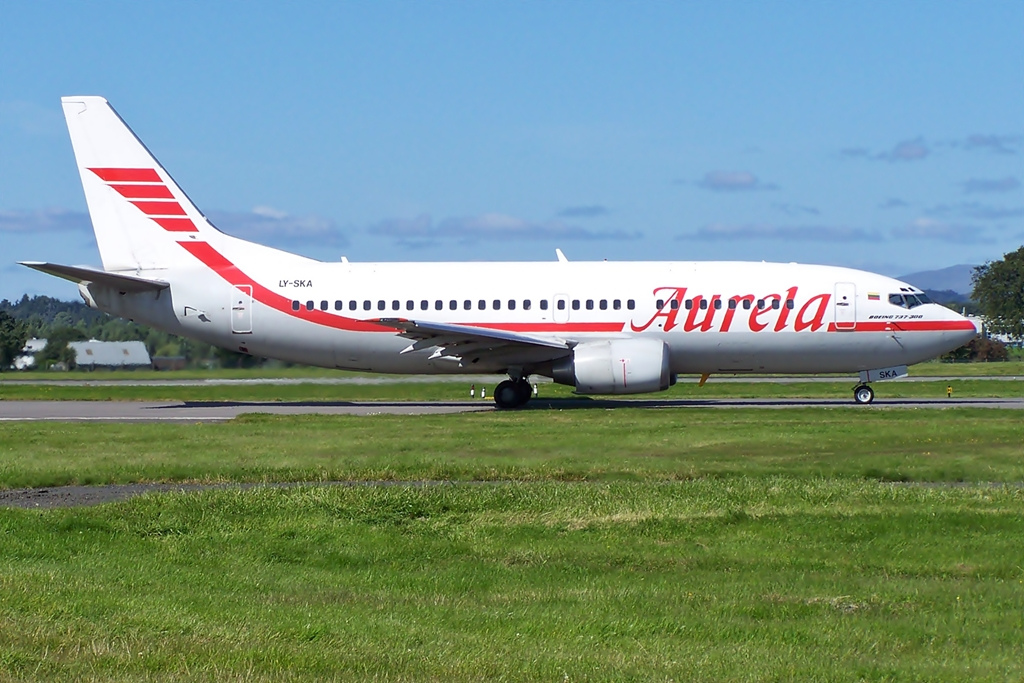
Incident Facts
Date of incident
Sep 21, 2012
Classification
Incident
Aircraft Registration
LY-SKA
Aircraft Type
Boeing 737-300
ICAO Type Designator
B733
The aircraft departed the paved surface of the taxiway because it turned to vacate the runway at a speed inappropriate for the conditions.
The AAIB reported that the captain (45, ATPL, 7,520 hours total, 4,500 hours on type) was pilot flying. The crew intended to land on wet runway 33 and vacate the runway via taxiway B. The aircraft touched down within the touch down zone of runway 33 at 137 KIAS and 132 knots over ground, according to automatic braking schedule the aircraft slowed at the deceleration target of 0.155G. During roll out when the aircraft approached the intersection with taxiway B the captain felt deceleration was insufficient to turn onto B, cancelled reverse thrust and automatic brakes and using manual braking let the aircraft roll towards the end of the runway to vacate via taxiway A.
Tower noticing the aircraft did not initiate the turn off onto taxiway B advised the next arrival to expect a late landing clearance as the preceding aircraft had "gone all the way to the end".
As the commander did not want to cause a go-around of the next aircraft he attempted to turn onto taxiway A "expeditiously" starting the turn, according to captain's account, at 12 knots (flight data recorder suggests the turn was initiated at 21 knots plus or minus 3 knots over ground). The aircraft initially responded as expected but then began to skid. The commander applied full brakes to no avail, the aircraft skidded straight off the taxiway, the nosewheel departed paved surface at a speed of 14 +/- 3 knots over ground.
Tower noticing the aircraft turned off onto taxiway A cleared the next flight to land, but when the Aurela crew advised they had skidded onto the grass, instructed the next arrival to go around, the arrival was at 600 feet AGL and 0.66nm before touch down at that point.
The Aurela crew started the APU, shut down both engines and established there were no injuries. The passenger disembarked via the right aft door via stairs onto the taxiway and were bussed to the terminal.
The AAIB reported that no other aircraft landing on wet runway 33 reported any difficulties taxiing off the runway that day.
An examination of the aircraft identified no technical defects. Immediately following the incident a runway friction measurement with 0.25mm of water below the measuring wheel was done with friction level values above 0.80, on taxiway A a measurement, employing non standard methods due to too short distances available for measurement runs, showed the friction level was generally above 0.70.
The AAIB annotated that the operating manual stated that turns onto taxiways, that are not high speed turn offs, should not be commenced at speeds greater than 10 knots on a dry runway, on a wet runway that speed would need to be suitably reduced.
Incident Facts
Date of incident
Sep 21, 2012
Classification
Incident
Aircraft Registration
LY-SKA
Aircraft Type
Boeing 737-300
ICAO Type Designator
B733
This article is published under license from Avherald.com. © of text by Avherald.com.
Article source
You can read 2 more free articles without a subscription.
Subscribe now and continue reading without any limits!
Read unlimited articles and receive our daily update briefing. Gain better insights into what is happening in commercial aviation safety.
Send tip
Support AeroInside by sending a small tip amount.
Newest articles
 Fleet type match
United B789 near Singapore on Apr 24th 2026, electrical smell on board
A United Boeing 787-9, registration N61101 performing flight UA-2 from Singapore (Singapore) to San Francisco,CA (USA), was climbing through FL330…
 Fleet type match
Alliance E190 at Cairns on Jul 25th 2025, retracted gear above maximum retraction speed
An Alliance Airlines Embraer ERJ-190 on behalf of Qantas, registration VH-A2T performing flight QF-1851 from Cairns,QL to Brisbane,QL (Australia)…
Subscribe today
Are you researching aviation incidents? Get access to AeroInside Insights, unlimited read access and receive the daily newsletter.
Pick your plan and subscribePartner

ELITE Simulation Solutions is a leading global provider of Flight Simulation Training Devices, IFR training software as well as flight controls and related services. Find out more.
SafetyScan Pro provides streamlined access to thousands of aviation accident reports. Tailored for your safety management efforts. Book your demo today
AeroInside Blog
Popular aircraft
Airbus A320Boeing 737-800
Boeing 737-800 MAX
Popular airlines
American AirlinesUnited
Delta
Air Canada
Lufthansa
British Airways