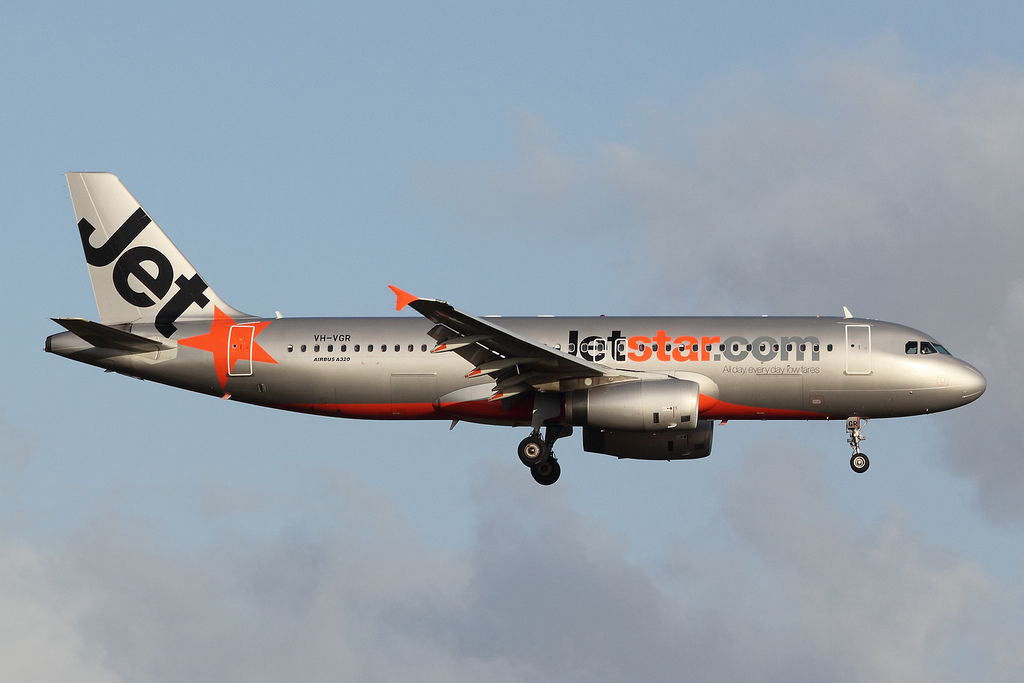
Jetstar A320 at Queenstown on Jul 16th 2012, descended below minimum safe height
Last Update: March 13, 2014 / 14:19:17 GMT/Zulu time
Incident Facts
Date of incident
Jul 16, 2012
Classification
Incident
Airline
Jetstar Airways
Aircraft Registration
VH-VGR
Aircraft Type
Airbus A320
ICAO Type Designator
A320
Contributing factors
- Contrary to their intent, and consistent with the limitations of prospective memory, the flight crew did not switch from open descent mode to managed descent mode when the approach mode and the Vertical Intercept Point altitude were selected.
- The crew did not detect that descent continued in the unintended open descent mode beyond the point at which the captain intended to switch to managed descent mode and did not maintain awareness of the aircraft’s descent profile in relation to the instrument approach procedure’s segment minimum safe altitudes.
- The crew did not strictly adhere to the operator’s sterile flight deck procedures.
- The operator’s procedures did not require the flight crew to specifically check the active auto-flight mode during descent, and allowed the crew to select the Vertical Intercept Point altitude when cleared for the approach by air traffic control. This combination of procedures provided limited protection against descent through an instrument approach procedure’s segment minimum safe altitudes. [Safety issue]
The ATSB reported the captain (14,000 hours total, 6,000 hours on type) was pilot flying on approach into Queenstown. While descending through FL180 the crew was cleared for the RNP Procedure Z, the captain selected 6300 feet MSL, the vertical intercept point CRNET's crossing altitude, into the altitude window of the flight control unit, activated the approach mode and announced "approach nav, final blue" in accordance with operator procedures. The captain further intended to change the vertical mode from open descent to managed descent, but that was unintentionally omitted. As result the aircraft descended below MSA of 8000 feet between waypoints CRIFL and QN436 and the MSA of 7300 feet between QN436 and VANGA.
Nearing 6300 feet the first officer (9,500 hours total, 2,500 hours on type) was alerted by a sensation of being too fast, the aircraft was about 2300 feet above ground descending at 2100 feet per minute. The first officer alerted the captain, initiated a climb to 7300 feet MSL using vertical speed mode, the autopilot briefly captured altitude at 7300 feet before approach mode engaged and the aircraft continued for a safe landing.
The ATSB analysed: "Although descent continued beneath the two segment minimum safe altitudes for just over 2 minutes, a collision with terrain was highly unlikely given the fine and clear in-flight conditions and other risk controls such as the aircraft’s Enhanced Ground Proximity Warning System (EGPWS). Nevertheless, the occurrence highlighted important information regarding auto-flight mode selection during descent, mode awareness and related procedures."
The ATSB analysed that the operator had discussed with Australia's Civil Aviation Safety Authority whether they should mandate the use of managed descent modes into Queenstown, following the discussion the operator settled to "strongly recommend" managed descent modes to their crews.
The ATSB analysed: "During the occurrence flight, the captain was conscious of a 40 kt tailwind early in the descent and was concerned with the importance of arriving at the Vertical Intercept Point (VIP) on the correct profile to intercept the final descent path." The ATSB continued however: "The aircraft manufacturer noted that the managed descent profile takes into account the wind data entered by the crew into the Multi-purpose Control and Display Unit. Entering the 40 kt tailwind and using managed descent would allow the flight management system to guide the aircraft to the VIP while respecting any relevant altitude constraints."
The ATSB continued analysis with respect to human performance: "The crew’s omissions on the occurrence flight were consistent with prospective memory failure, which is recognised as normal variance in human behaviour."
The ATSB stated: "Non-adherence to the operator’s sterile flight deck procedures probably allowed the crew to be distracted and contributed to ineffective monitoring of the status of the auto-flight system and the aircraft’s vertical position. This distraction, combined with an expectation that the auto-flight system was in managed descent mode, probably also explains why the crew did not detect the infringement of the instrument approach procedure’s segment minimum safe altitudes. The crew’s non-adherence to sterile flight deck procedures was probably due in part to the fine in-flight conditions, routine nature of the operational environment at the time, and the first officer’s familiarity with Queenstown operations. Had the aircraft been in less favourable in-flight conditions, the crew would probably have been more focused on auto-flight system management, and the descent profile and segment minimum safe altitudes, and less likely to have been engaged in conversation of a non-operational nature."
The ATSB continued that during the 7 minutes, that elapsed between the point the captain intended to activate managed descent and the infringement of minimum safe altitude, "the FMA would have been displaying open descent mode as the active vertical auto-flight mode, instead of the intended managed descent mode. Other less prominent displays provided an indirect indication that descent was continuing in the unintended open descent mode, but none of these attracted the attention of either pilot."
With respect to the altitude constraint selection in the flight control unit the ATSB analysed: "The operator’s procedures allowed the crew to select the VIP altitude on the FCU altitude selector during descent into Queenstown for the RNAV (RNP) approach when cleared for the approach by ATC, irrespective of the intervening altitude constraints. This approach to FCU altitude selector management is founded on a principle of setting the auto-flight system appropriately, then monitoring auto-flight system performance during descent. This procedure is therefore vulnerable unless underpinned by consistently effective auto-flight system management and attention to the descent profile."
The operator took two safety actions as result of the occurrence.
Aircraft Registration Data
Incident Facts
Date of incident
Jul 16, 2012
Classification
Incident
Airline
Jetstar Airways
Aircraft Registration
VH-VGR
Aircraft Type
Airbus A320
ICAO Type Designator
A320
This article is published under license from Avherald.com. © of text by Avherald.com.
Article source
You can read 2 more free articles without a subscription.
Subscribe now and continue reading without any limits!
Read unlimited articles and receive our daily update briefing. Gain better insights into what is happening in commercial aviation safety.
Send tip
Support AeroInside by sending a small tip amount.
Related articles
 Fleet type match
Jetstar A320 near Rockhampton on Jun 8th 2015, fumes in cabin
A Jetstar Airbus A320-200, registration VH-VGR performing flight JQ-888 from Brisbane,QL to Mackay,QL (Australia), was enroute at FL360 about 130nm…
 Fleet type match
Jetstar A320 at Christchurch on May 31st 2024, temporary runway excursion on landing
An Jetstar Airbus A320-200, registration VH-VFF performing flight JQ-225 from Auckland to Christchurch (New Zealand), landed on Christchurch's runway…
 Fleet type match
Jetstar A320 near Adelaide on Feb 24th 2026, fumes on board
A Jetstar Airways Airbus A320-200, registration VH-VGN performing flight JQ-782 from Melbourne,VI to Adelaide,SA (Australia), was descending towards…
 Fleet type match
Jetstar A20N at Hamilton on Nov 8th 2025, during backtracking overflown by landing aircraft
A Jetstar Airbus A320-200N, registration VH-A5E performing flight JQ-166 from Hamilton (New Zealand) to Sydney,NS (Australia), was backtracking…
 Fleet type match
Jetstar A21N over Pacific on Jan 30th 2026, engine problem
A Jetstar Airbus A321-200N, registration VH-OLQ performing flight JQ-120 from Nadi (Fiji) to Sydney,NS (Australia), was enroute at FL340 about 250nm…
 Fleet type match
Jetstar A321 at Sydney on Jun 25th 2025, dual input on go around
A Jetstar Airbus A321-200, registration VH-OYF performing flight JQ-38 from Denpasar (Indonesia) to Sydney,NS (Australia) with 234 passengers and 8…
Newest articles
 Fleet type match
Swiss A320 at Zurich on Mar 29th 2026, rejected takeoff due to suspected bird strikee
A Swiss International Airlines Airbus A320-200, registration HB-JLP performing flight LX-370 from Zurich (Switzerland) to Larnaca (Cyprus) with 149…
 Fleet type match
Serbia A319 at Helsinki on Mar 28th 2026, rejected takeoff due to engine trouble
An Air Serbia Airbus A319-100, registration YU-APD performing flight JU-4125 from Helsinki (Finland) to Belgrade (Serbia), was accelerating for…
Subscribe today
Are you researching aviation incidents? Get access to AeroInside Insights, unlimited read access and receive the daily newsletter.
Pick your plan and subscribePartner

ELITE Simulation Solutions is a leading global provider of Flight Simulation Training Devices, IFR training software as well as flight controls and related services. Find out more.
SafetyScan Pro provides streamlined access to thousands of aviation accident reports. Tailored for your safety management efforts. Book your demo today
AeroInside Blog
Popular aircraft
Airbus A320Boeing 737-800
Boeing 737-800 MAX
Popular airlines
American AirlinesUnited
Delta
Air Canada
Lufthansa
British Airways