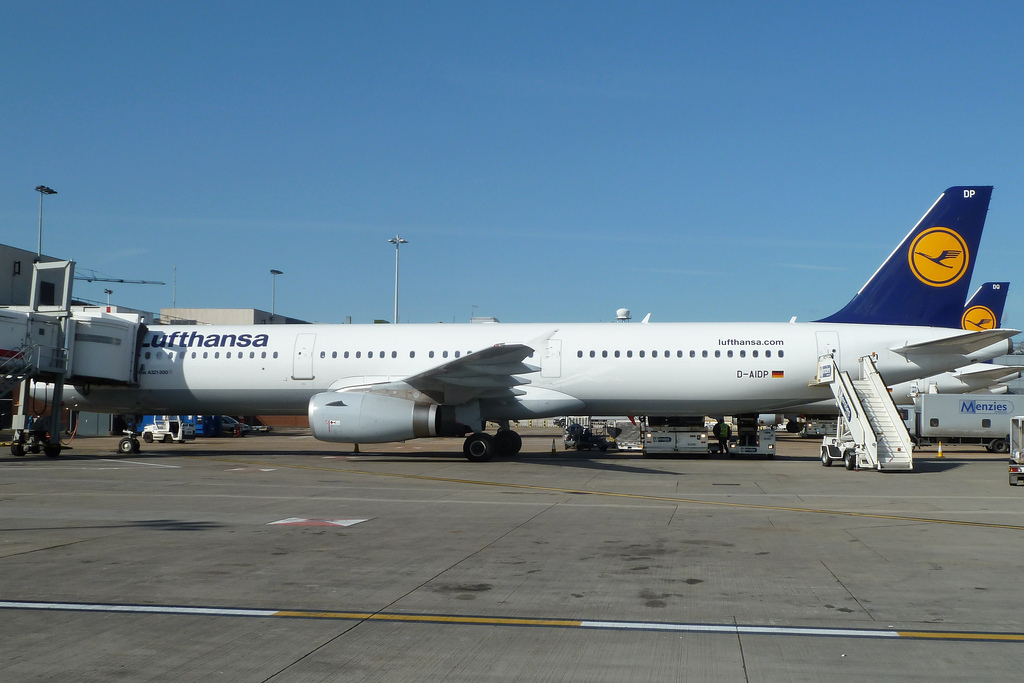
Lufthansa A321 near Bilbao on Nov 5th 2014, loss of 4000 feet of altitude
Last Update: March 24, 2015 / 20:43:43 GMT/Zulu time
Incident Facts
Date of incident
Nov 5, 2014
Classification
Incident
Airline
Lufthansa
Aircraft Registration
D-AIDP
Aircraft Type
Airbus A321
ICAO Type Designator
A321
The BFU reported Spain's CIAIAC delegated the investigation to the BFU on Nov 11th 2014.
The BFU reported that according to flight data and cockpit voice recorder the first officer (35, ATPL, 6,473 hours total, 5,179 hours on type) was pilot flying, the captain (52, ATPL, 16,384 hours total, 12,414 hours on type) pilot monitoring. After the aircraft climbed clear of top of clouds at about FL200 the flight data recorder recorded a fixed value of +4.2 degrees for the left hand AoA sensor, less than a minute later the FDR began to record a fixed value of +4.6 degrees for the right hand AoA sensor. The aircraft subsequently turned to fly direct to LATEK waypoint, during this turn the captain noticed the Alpha Protection Band had unusually and significantly increased. The first officer therefore reduced the climb rate from 800 to 500 feet per minute to enable the aircraft to accelerate. A short time later the first officer disengaged the autopilot and gave a brief nose down input.
The aircraft however continued to pitch down, inputs to counter the pitch down remained without effect. About 45 seconds after the nose down began the first officer alerted the captain who took control of the aircraft, that at this time had reached a rate of descent of 4000 feet per minute and a pitch of -3.5 degrees. The captain provided a maximum nose up input which caused the aircraft to pitch up again and the rate of descent decreased and the aircraft entered level flight.
The captain was able to maintain altitude by providing a continuous nose up input deflecting the side stick about 50% of its travel. The autopilot could not be engaged again, and a manual nose up trim was not possible.
The crew checked for related checklists but did not find any. The crew reset the Flight Augmentation Computers 1 and 2 in sequence with no effect.
8 minutes after the aircraft began its descent the Aircraft Communications Addressing and Reporting System (ACARS) issued an automated information to dispatch showing the three AoA sensor values amongst other data.
21 minutes after the aircraft began its descent the crew sent a message to maintenance checking whether a simultaneous reset of all FACs would be possible. Maintenance replied in the positive stating that the aircraft would revert to alternate law as result. Another 7 minutes later the crew reported they needed to constantly pull on the sidestick, trim was inoperative and autopilot could not be engaged and the Alpha Prot Band came up extremely quick. In addition the crew received a message "PH6 AOA3" on the centralized fault display system (CFDS). Upon suggestion by maintenance the crew switched off the air data reference unit (ADR3), however, without effect. ADR3 was reengaged. Another 12 minutes later maintenance wrote a message to the cockpit along the lines "after review of the data we found the values for AoA 1 and AoA2 appear to be frozen and report too high an angle of attack. If the problem persists, disengage ADR1 and ADR2 which will cause the aircraft to revert to Alternate Law however." then followed up "perhaps it is sufficient to just disengage ADR2".
The crew disengaged ADR2 which immediately prompted the aircraft to revert to Alternate Law and it was no longer necessary to pull the nose up.
The crew decided to use the remaining hour of flight time to verify the system status and to prepare for landing and landed safely at the destination.
The BFU reported that the aircraft features three Angle of Attack sensors consisting of a heated movable vane, the movement of the vanes is converted into electrical signals and the actual angle of attack computed by the related air data reference unit.
If the measured/computer Angle of Attack exceeds the value of Alpha Prot by one degrees, the autopilot is automatically being disengaged. In manual flight if the Alpha Prot Angles is exceeded, the Alpha Protection activates, the position of trim is stored and used as maximum nose up trim, the function of the side stick changes to command a specific pitch angle with the most nose up angle being Alpha Max which can be reached by full nose up deflection of the side stick.
The BFU reported that all three AoA sensors were examined by the manufacturer, no damage, malfunction or anomaly was identified with either of the sensors.
Airbus analysed the data and stated: "all three sensors worked normally until about 8 minutes into the flight, when the aircraft climbed through FL195. At that point, at an ambient temperature of -35 degrees C, AoA sensors 1 and 2 froze up at a position of approximately 4.5 degrees nose up and remained in this position until the aircraft descended towards the destination airport. At the time, when the autopilot disengaged the aircraft was flying at 0.675 mach, the Alpha Prot angle was 4.2 degrees, the Alpha Max 5.8 degrees. Within 15 seconds the first officer made increasing nose up input until reaching 75% of the maximum travel of the side stick, the attitude however changed from 4.5 degrees to -3.5 degrees against this input. The system disregarded/turned off the AoA 3 sensor because it disagreed more than the permitted value with the other 2 sensors.
When later ADR2 was disengaged, the system immediately reverted to Alternate Law because ADR3 had already been disengaged by the system and now two ADRs were offline.
The BFU reported that they are working to establish how reliable AoA sensors are but annotated: "The algorithms and boundary conditions differ from each other and are not entirely known to the BFU. The investigation is aiming to establish the probability of a repeat of this occurrence."
Incident Facts
Date of incident
Nov 5, 2014
Classification
Incident
Airline
Lufthansa
Aircraft Registration
D-AIDP
Aircraft Type
Airbus A321
ICAO Type Designator
A321
This article is published under license from Avherald.com. © of text by Avherald.com.
Article source
You can read 2 more free articles without a subscription.
Subscribe now and continue reading without any limits!
Read unlimited articles and receive our daily update briefing. Gain better insights into what is happening in commercial aviation safety.
Send tip
Support AeroInside by sending a small tip amount.
Related articles
 Fleet type match
Eurowings A321 near Lisbon on Feb 22nd 2025, smoke in cabin
An Eurowings Airbus A321-200, registration D-AIDP performing flight EW-7526 from Hamburg (Germany) to Fuerteventura,CI (Spain), was enroute at FL350…
Fleet type match
Eurowings A321 in Dusseldorf on Sep 21st 2023, rejected takeoff due to NAV fault
A Eurowings Airbus A321-200, registration D-AIDP performing flight EW-9642 from Dusseldorf (Germany) to Faro (Portugal) with 206 passengers and 7…
 Fleet type match
Lufthansa A321 near Munich on Jun 29th 2017, fumes in cabin
A Lufthansa Airbus A321-200, registration D-AIDP performing flight LH-2045 from Berlin Tegel to Munich (Germany), was descending towards Munich, the…
 Fleet type match
Lufthansa B748 near Tokyo on Jul 22nd 2026, strange smell on board
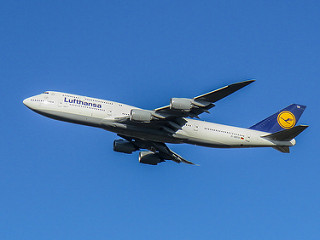
A Lufthansa Boeing 747-800, registration D-ABYQ performing flight LH-717 from Tokyo Haneda (Japan) to Frankfurt/Main (Germany) with 341 passengers…
 Fleet type match
Lufthansa B748 at Newark on Jul 20th 2026, rejected takeoff due to twisted nose gear
A Lufthansa Boeing 747-800, registration D-ABYR performing flight LH-403 from Newark,NJ (USA) to Frankfurt/Main (Germany), was accelerating for…
 Fleet type match
Lufthansa B789 at Frankfurt on Jun 4th 2026, nose gear collapse at gate
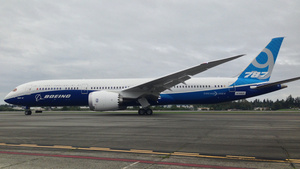
A Lufthansa Boeing 787-9, registration D-ABPQ performing flight LH-450 from Frankfurt/Main (Germany) to Los Angeles,CA (USA), was preparing for…
 Fleet type match
Lufthansa B748 near Frankfurt on Jun 27th 2026, burning odour on board
A Lufthansa Boeing 747-8, registration D-ABYP performing flight LH-402 from Frankfurt/Main (Germany) to Newark,NJ (USA), was climbing out of…
 Fleet type match
Lufthansa A320 at Munich on Jun 18th 2026, door indication
A Lufthansa Airbus A320-200, registration D-AIUD performing LH-2194 from Munich to Bremen (Germany), was climbing out of Munich's runway 08L when the…
Newest articles
 Fleet type match
Kenya B738 at Cape Town on Aug 4th 2026, burst tyres on landing
A Kenya Airways Boeing 737-800, registration 5Y-CYC performing flight KQ-784 from Port Elizabeth to Cape Town (South Africa), landed on Cape Town's…
 Fleet type match
SAS A359 near Krakow on Aug 3rd 2026, engine shut down in flight
A SAS Scandinavian Airlines Airbus A350-900, registration SE-RSF performing flight SK-983 from Copenhagen (Denmark) to Tokyo Haneda (Japan), was…
Subscribe today
Are you researching aviation incidents? Get access to AeroInside Insights, unlimited read access and receive the daily newsletter.
Pick your plan and subscribePartner

ELITE Simulation Solutions is a leading global provider of Flight Simulation Training Devices, IFR training software as well as flight controls and related services. Find out more.
SafetyScan Pro provides streamlined access to thousands of aviation accident reports. Tailored for your safety management efforts. Book your demo today
AeroInside Blog
Popular aircraft
Airbus A320Boeing 737-800
Boeing 737-800 MAX
Popular airlines
American AirlinesUnited
Delta
Air Canada
Lufthansa
British Airways