Delta B753 at Atlanta on Jan 10th 2025, rejected takeoff due to engine failure
Last Update: October 10, 2025 / 11:28:57 GMT/Zulu time


Incident Facts
Date of incident
Jan 10, 2025
Classification
Accident
Airline
Delta Airlines
Flight number
DL-2668
Departure
Atlanta, United States
Destination
Minneapolis, United States
Aircraft Registration
N589NW
Aircraft Type
Boeing 757-300
ICAO Type Designator
B753
The FAA reported: "The crew of Delta Air Lines Flight 2668 aborted takeoff at Hartsfield-Jackson Atlanta International Airport around 9:05 a.m. local time on Friday, Jan. 10, due to a reported engine issue. Passengers exited the aircraft on the runway. The FAA will investigate."
On Oct 10th 2025 the NTSB published their final report and investigation docket concluding the probable cause of the accident was:
Substantial injury to a passenger sustained during evacuation.
The NTSB analysed:
Delta Air Lines flight 2668, a Boeing 757-300, performed a rejected takeoff due to a failure of the number two (right) engine during takeoff from runway 9L at Hartsfield-Jackson Atlanta International Airport (ATL). An emergency evacuation was initiated after the airplane stopped on the runway. One passenger sustained a serious injury, and seven passengers sustained minor injuries during the evacuation.
The flight crew stated that after completing all required preflight briefings and checklists, they were pushed back from the gate and taxied to the Ramp 6 South de-ice pad. The aircraft received Type I and Type IV fluid treatments, but due to reaccumulated contaminants, the deicing process had to be restarted. Following a second round of de-icing, both engines were shut down and inspected for ice. The de-ice crew confirmed the aircraft and engines were clear of contaminants, and the engines were restarted.
The aircraft then taxied to Runway 9L and was cleared for takeoff. The crew initiated takeoff, and at around 100 knots, the captain observed a directional control issue and decided to abort the takeoff. The First Officer notified air traffic control (ATC), and the aircraft was brought to a stop, and the parking brake was set. A public announcement was made for the passengers to remain seated.
After the airplane was stopped, the flight crew noted multiple engine indication and crew alerting system (EICAS) messages indicated a failure of the number two engine. The captain requested aircraft rescue and fire fighting (ARFF) assistance, and the flight crew initiated the engine failure checklist. During this time, an airport operations vehicle reported flames coming from the right engine, although there were no cockpit indications of an engine fire. Additionally, flight attendants were informed by passengers of a fire near the right engine.
While the crew continued the engine shut down checklist, flight attendants contacted the cockpit to report the visible fire on the wing. The captain then initiated the evacuation checklist and called for an evacuation. The cabin evacuation procedures were executed by the flight attendants, and the passengers and crew exited using the emergency slides. After evacuating the airplane, the passengers were grouped on both sides of the aircraft and waited for buses to return them to the terminal. Eight passengers reported minor injuries, and two of those were transported to the hospital for further examination. One was treated and released, and the other was diagnosed with a compression fracture to one of their vertebrae.
Aircraft Registration Data
Incident Facts
Date of incident
Jan 10, 2025
Classification
Accident
Airline
Delta Airlines
Flight number
DL-2668
Departure
Atlanta, United States
Destination
Minneapolis, United States
Aircraft Registration
N589NW
Aircraft Type
Boeing 757-300
ICAO Type Designator
B753
This article is published under license from Avherald.com. © of text by Avherald.com.
Article source
You can read 2 more free articles without a subscription.
Subscribe now and continue reading without any limits!
Read unlimited articles and receive our daily update briefing. Gain better insights into what is happening in commercial aviation safety.
Send tip
Support AeroInside by sending a small tip amount.
Related articles
 Fleet type match
Delta B753 at Atlanta on May 27th 2025, lightning strike
A Delta Airlines Boeing 757-300, registration N589NW performing flight DL-1554 from Fort Lauderdale,FL to Atlanta,GA (USA) with 228 passengers and 6…
 Fleet type match
Delta A319 at Minneapolis on Oct 4th 2026, landing gear situation on departure
A Delta Airlines Airbus A319-100, registration N355NB performing flight DL-2692 from Minneapolis,MN to New York JFK,NY (USA) with 120 people on…
 Fleet type match
Delta A333 over Atlantic on Sep 27th 2026, smoke on board
A Delta Airlines Airbus A330-300, registration N824NW performing flight DL-251 from Barcelona,SP (Spain) to Boston,MA (USA) with 296 people on board,…
 Fleet type match
Delta A333 at Barcelona on Sep 25th 2026, engine compressor stall
A Delta Airlines Airbus A330-300, registration N813NW performing flight DL-195 from Barcelona,SP (Spain) to Atlanta,GA (USA), was climbing out of…
 Fleet type match
Delta A21N at Kahului on Sep 19th 2026, fuel fumes on board
A Delta Airlines Airbus A321-200N, registration N530DE performing flight DL-394 from Kahului,HI to Seattle,WA (USA), was climbing out of Kahului's…
 Fleet type match
Delta A319 at Atlanta on Aug 29th 2026, nose wheel steering failure
A Delta Airlines Airbus A319-100, registration N343NB performing flight DL-1136 from Omaha,NE to Atlanta,GA (USA), was on approach to runway 09R when…
Newest articles
 Fleet type match
Volotea A319 at Paris on Oct 7th 2026, rejected takeoff due to go around
A Volotea Airbus A319-100, registration EC-MUU performing flight V7-2797 from Paris Orly to Rodez (France), was accelerating for takeoff from Orly's…
 Fleet type match
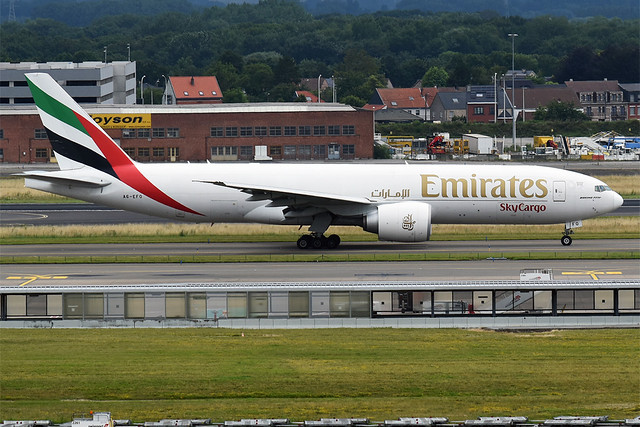
Emirates B772 at Amsterdam on Oct 8th 2026, gear disagrees
An Emirates Boeing 777-200 freighter, registration A6-EFO performing flight EK-9648 from Nairobi (Kenya) to Amsterdam (Netherlands), was on final…
Subscribe today
Are you researching aviation incidents? Get access to AeroInside Insights, unlimited read access and receive the daily newsletter.
Pick your plan and subscribePartner

ELITE Simulation Solutions is a leading global provider of Flight Simulation Training Devices, IFR training software as well as flight controls and related services. Find out more.
SafetyScan Pro provides streamlined access to thousands of aviation accident reports. Tailored for your safety management efforts. Book your demo today
AeroInside Blog
Popular aircraft
Airbus A320Boeing 737-800
Boeing 737-800 MAX
Popular airlines
American AirlinesUnited
Delta
Air Canada
Lufthansa
British Airways