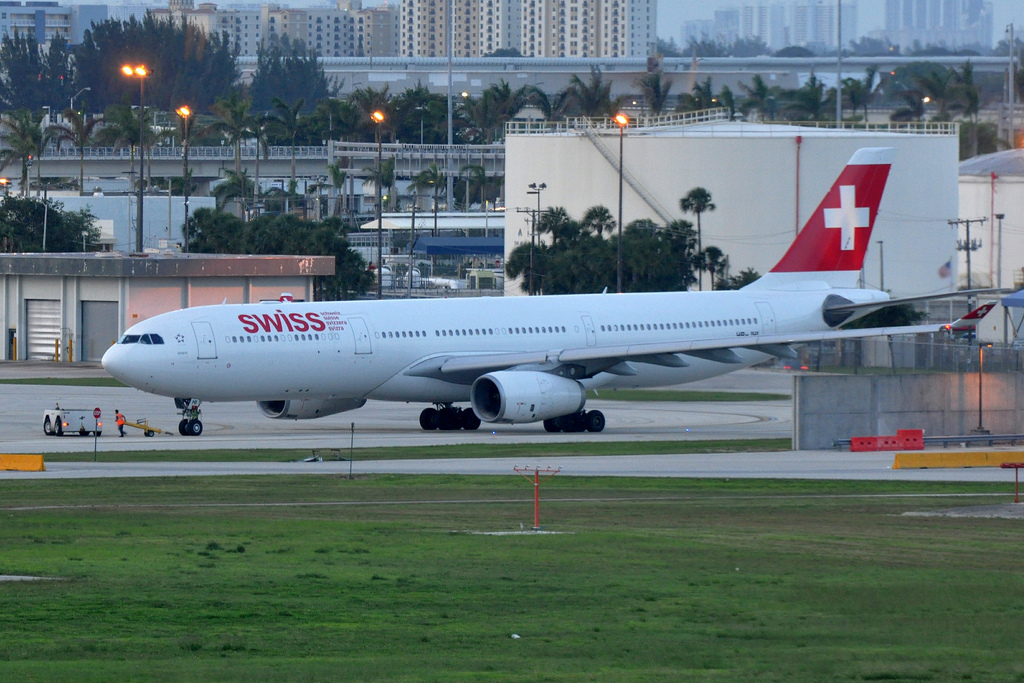
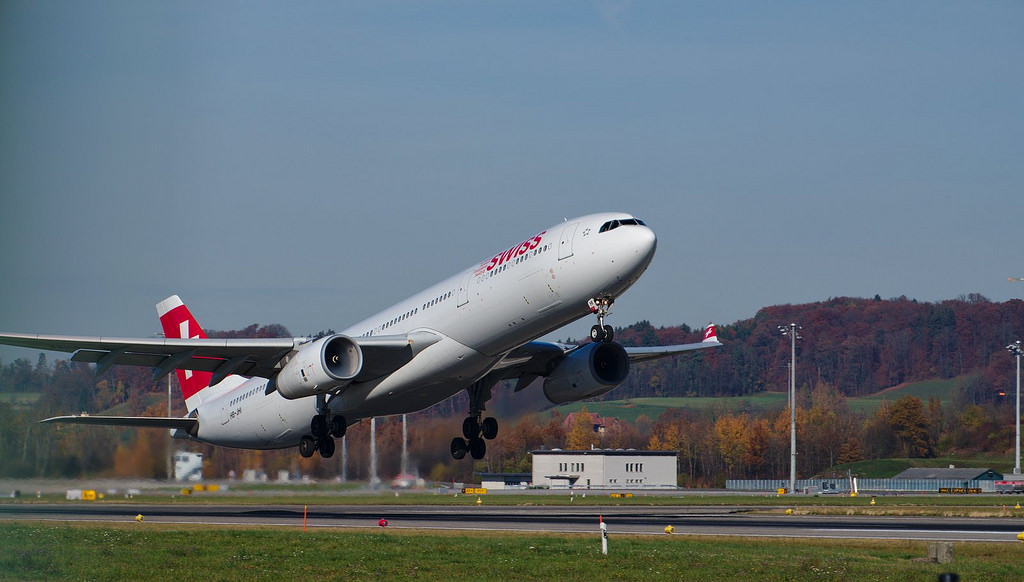
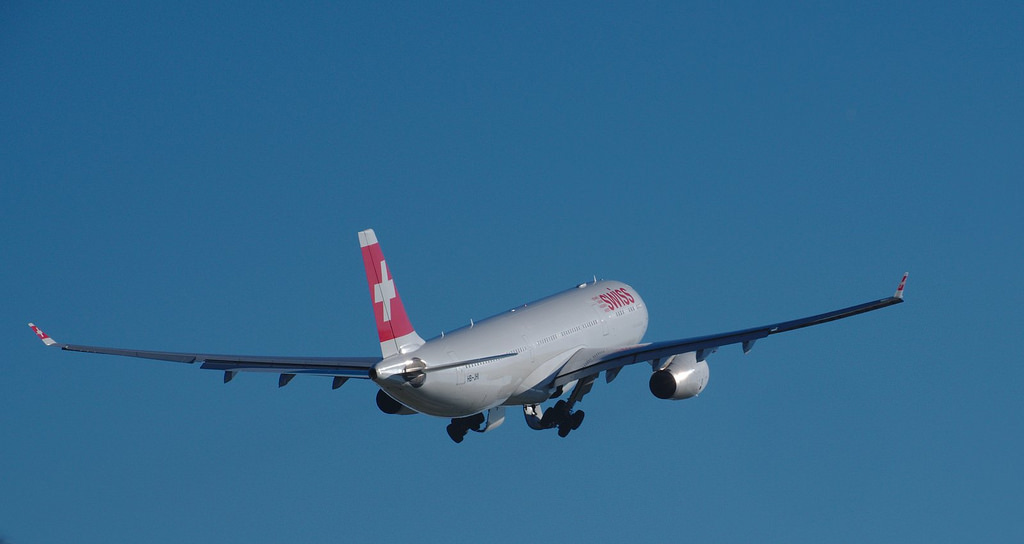
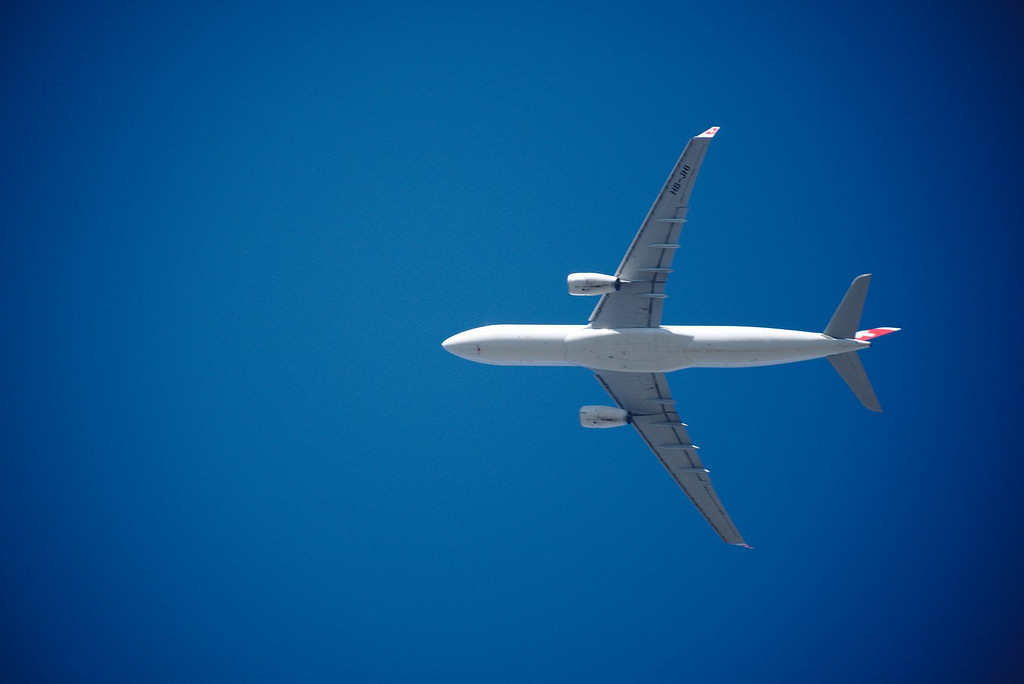
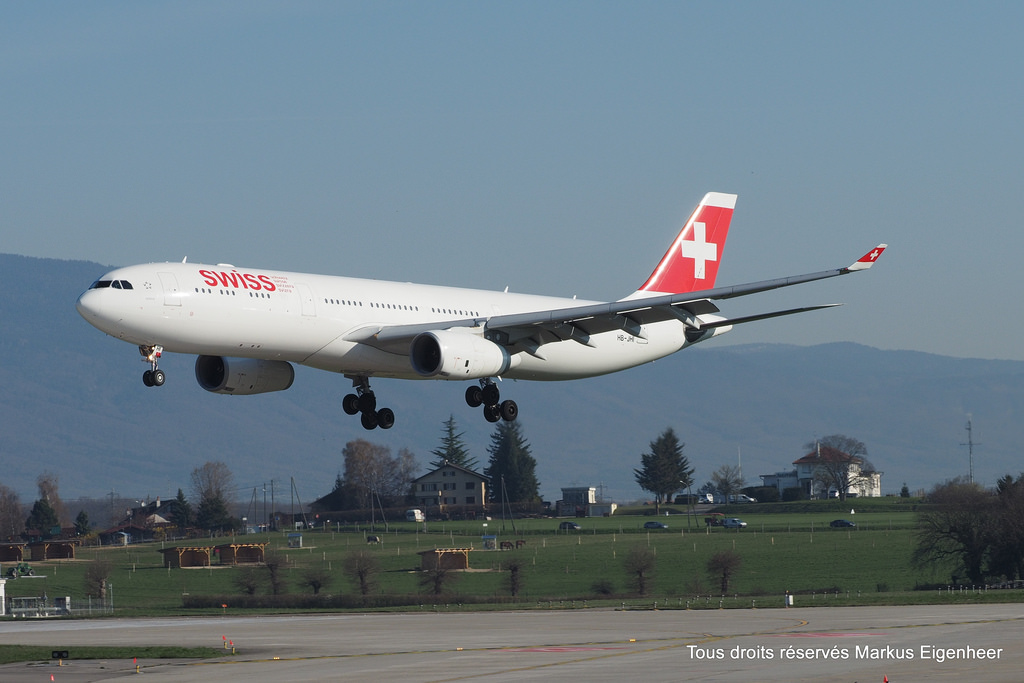
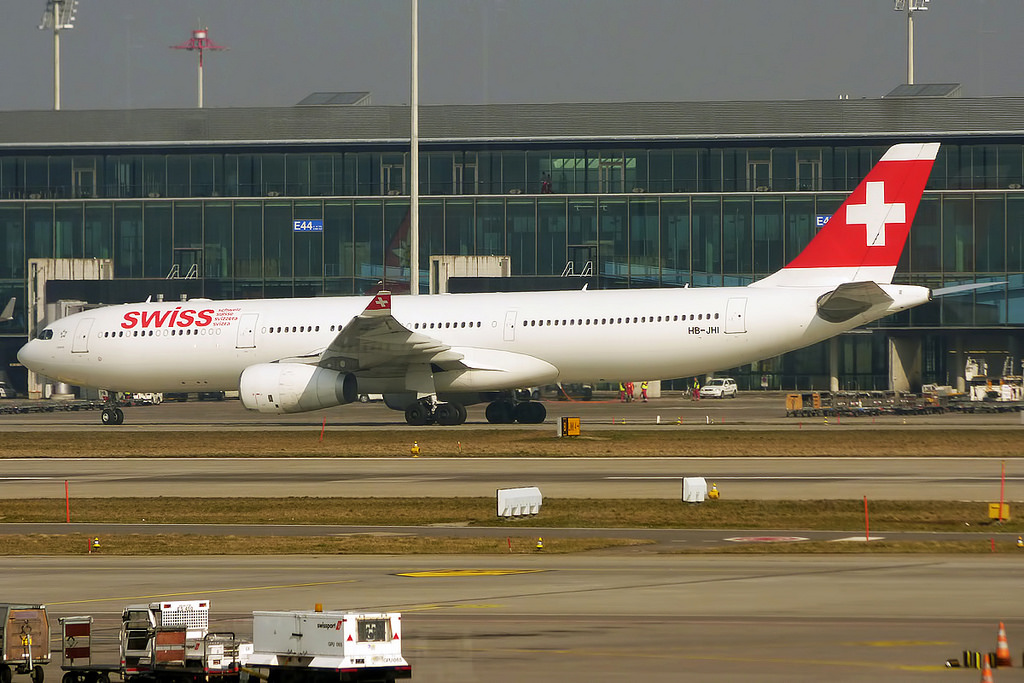
Swiss A333 at Zurich on Sep 13th 2024, loss of cabin pressure
Last Update: January 19, 2026 / 21:51:50 GMT/Zulu time
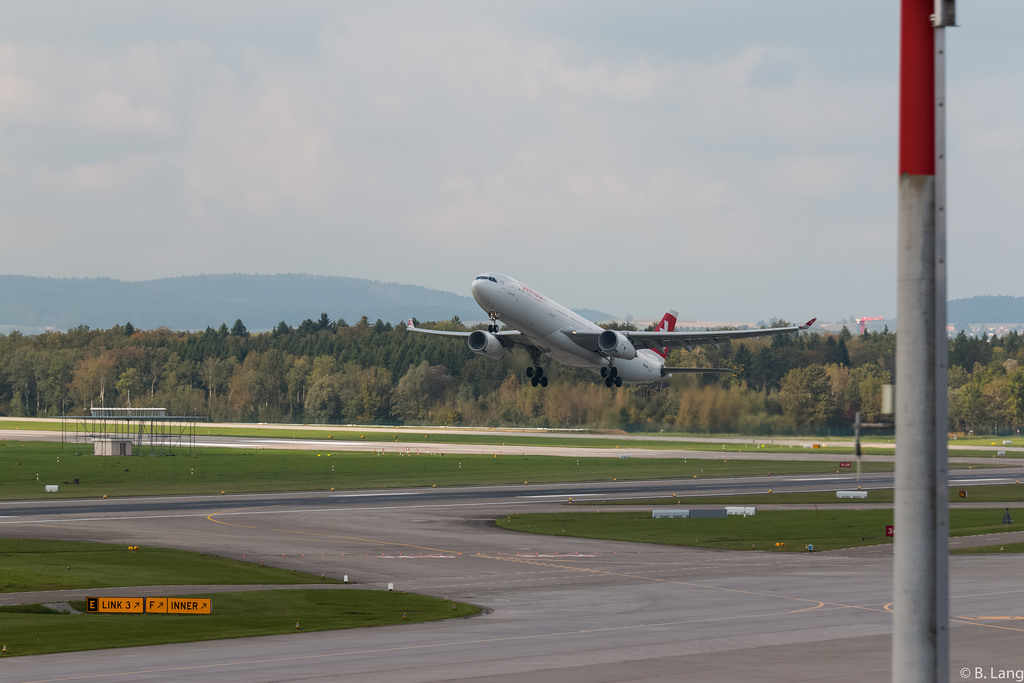
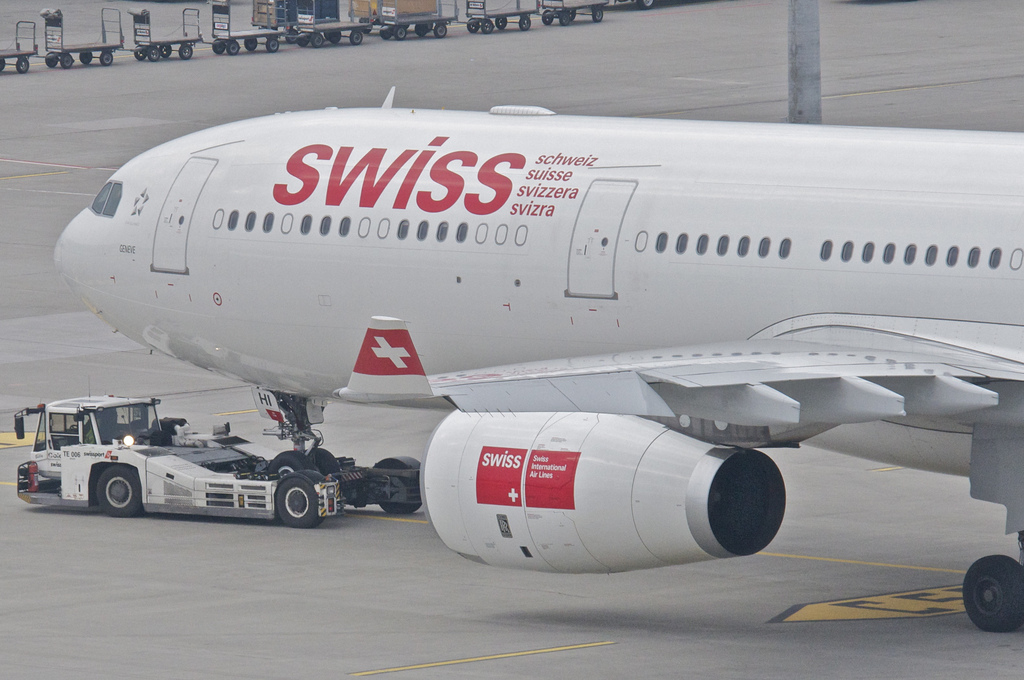
Incident Facts
Date of incident
Sep 13, 2024
Classification
Incident
Cause
Loss of cabin pressure
Airline
Swiss International Airlines
Flight number
LX-18
Departure
Zurich, Switzerland
Destination
Newark, United States
Aircraft Registration
HB-JHI
Aircraft Type
Airbus A330-300
ICAO Type Designator
A333
The rotation was cancelled.
The aircraft was still on the ground in Zurich about 14 hours after landing back.
The airline reported the pilots initiated a standard operating procedure to reduce altitude and release passenger oxygen masks due to irregularities with the cabin pressure. The aircraft needed to land with a higher weight than normal, therefore emergency services were attending to the landing due to brakes possible heating up.
On Oct 6th 2024 the Swiss SUST reported the maximum cabin altitude was exceeded, the crew donned their oxygen masks and released the passenger oxygen masks, initiated an emergency descent and returned to Zurich. The occurrence was rated a serious incident and is being investigated by the SUST.
On Jan 19th 2026 the SUST released their final report concluding the probable causes of the serious incident were:
The serious incident, in which the cabin pressure exceeded 10,000 ft during the commercial aircraft’s climb and the cockpit crew had to initiate an emergency descent, was caused by a defective skin check valve, which prevented the cabin pressure system from building up sufficient cabin differential pressure.
A service bulletin published by the aircraft manufacturer in 2016 recommending the earliest possible replacement of the skin check valve with a modified skin check valve had not been implemented, which was causal for the serious incident.
The SUST summarized the sequence of events:
During the climb, the flight crew received the ECAM message CAB ALT at flight level (FL) 220, followed by the ECAM warning CAB PR EXCESS CAB ALT. Although both outflow valves were indicated as fully closed, the cabin pressure system was unable to build up sufficient cabin differential pressure.
The cockpit crew donned their oxygen masks and initiated an emergency descent. They also manually activated the oxygen masks in the cabin for passengers and cabin crew and decided to return to Zurich, where the aircraft landed without incident.
The passengers and crew were able to leave the aircraft in the normal manner. No one was injured.
The SUST analysed:
Due to the defective skin check valve, which remained in the open position, the cabin pressure could not build up as planned during the HB-JHI’s climb. The two outflow valves, which normally remain in a slightly open position during flight to regulate the cabin pressure, moved continuously towards the closed position and were already completely closed at an altitude of approximately 12,000 ft AMSL.
However, cabin air continued to escape via the mixer unit and through the open skin check valve into the low-pressure manifold. No pressure could build up here either, as the damaged sleeve between the low-pressure manifold and the check valve of the emergency ram air inlet was missing and air was escaping there. As a result, the cabin pressure continued to rise at an increased rate of around 750 ft/min until it exceeded the limit values, and the cockpit crew initiated the emergency descent. The defect in the skin check valve was therefore the causal factor for the serious incident.
Skin check valve
A severely damaged and non-functional skin check valve was found in the aircraft. The first signs of damage are likely to have been present for some time. However, it is probable that this skin check valve was still functional and closed during the last flight before the serious incident, enabling the cabin pressure system to build up sufficient cabin pressure.
When the aircraft was supplied with air at the gate by means of a preconditioned air unit (PCA), the skin check valve opened. However, after the air hoses were disconnected, the skin check valve remained open due to a defective flap hinge and a broken spring, which went unnoticed. A defective or open skin check valve is not visible from the outside due to the closed check valves of the two ground connectors. An open skin check valve can only be detected by pressing one of these check valves by hand. However, there was no procedure for such a check.
Similar incidents involving defective skin check valves had been known to the aircraft manufacturer for some time. For this reason, the manufacturer published in 2016 service bulletins for all aircraft models equipped with this component, recommending that the skin check valve be replaced with a modified skin check valve.
The service bulletins point out that a defective skin check valve can lead to damage of the emergency ram check valve and ducting downstream to low pressure ground cart connector, resulting in cabin depressurization and in-flight turn back. For this reason, the aircraft manufacturer recommends that the service bulletins be implemented as soon as possible to avoid significant operational disruptions.
The service bulletin had not been carried out on the HB-JHI. This decision is incomprehensible from a safety perspective, as failure to carry out this service bulletin can also affect flight safety and the skin check valve had to be removed and reinstalled every 24 months for inspection anyway, i.e. at least three times on the HB-JHI. The skin check valve could have been replaced by a modified skin check valve on one of these occasions without significant additional effort.
Sealing sleeve on the low-pressure distributor
The sealing sleeve at the connection between the low-pressure manifold to the check valve of the emergency ram air inlet was found to be severely damaged inside the aircraft. Furthermore, one screw clamp was loose and the second was missing and could not be found inside the aircraft. The torn sealing sleeve can be attributed to the defective skin check valve, as the sealing sleeve was no longer able to withstand the air pressure. The service bulletin refers to this possible damage. The escaping air meant that the cabin pressure could no longer be maintained.
It could not be determined why one screw clamp was loose and the second clamp was completely missing. It is presumed that the necessary work was not completely carried out during the last maintenance work on the low-pressure manifold.
Human and operational aspects
Until the CAB ALT warning appeared on the ECAM, it was hardly noticeable to the cockpit crew from the cockpit displays that the cabin pressure was not rising as usual. Due to the moderate rate of climb of the cabin pressure altitude of 750 ft/min, there were no physical symptoms, such as unusual pressure equalisation in the ears. Such a slow loss of pressure is also known as subtle decompression 14. It is therefore understandable that the cockpit crew was surprised by the CAB ALT warning message and the subsequent CAB PR EXCESS CAB ALT warning message and was unable to explain the technical problem based on the system displays available to them.
The subsequent reaction to interrupt the climb and initiate an emergency descent shortly afterwards was in accordance with the applicable regulations and was carried out promptly and correctly. As a result, the cabin pressure did not exceed 10,800 ft.
Past incidents and accidents15 have shown that it can sometimes be difficult for cockpit crews to detect a slow loss of pressure (subtle decompression), especially during the initial climb.
Aircraft Registration Data
Incident Facts
Date of incident
Sep 13, 2024
Classification
Incident
Cause
Loss of cabin pressure
Airline
Swiss International Airlines
Flight number
LX-18
Departure
Zurich, Switzerland
Destination
Newark, United States
Aircraft Registration
HB-JHI
Aircraft Type
Airbus A330-300
ICAO Type Designator
A333
This article is published under license from Avherald.com. © of text by Avherald.com.
Article source
You can read 2 more free articles without a subscription.
Subscribe now and continue reading without any limits!
Read unlimited articles and receive our daily update briefing. Gain better insights into what is happening in commercial aviation safety.
Send tip
Support AeroInside by sending a small tip amount.
Related articles
 Fleet type match
Swiss A333 near Mumbai on Jun 5th 2026, electrical problems
A Swiss International Airlines Airbus A330-300, registration HB-JHI performing flight LX-155 from Mumbai (India) to Zurich (Switzerland) with 231…
Fleet type match
Swiss A333 at Geneva on Aug 3rd 2023, hydraulic problems
A Swiss International Airlines Airbus A330-300, registration HB-JHI performing flight LX-22 from Geneva (Switzerland) to New York JFK,NY (USA), was…
 Fleet type match
Swiss A333 near Shannon on Jul 18th 2016, engine oil problem
A Swiss Global Airlines Airbus A330-300, registration HB-JHI performing flight LX-18 from Zurich (Switzerland) to Newark,NJ (USA) with 233…
 Fleet type match
Swiss A320 at Valencia on Sep 25th 2026, hydraulic failure
A Swiss International Airlines Airbus A320-200, registration HB-IJQ performing flight LX-2142 from Zurich (Switzerland) to Valencia,SP (Spain) with…
 Fleet type match
Swiss B773 over Atlantic on Aug 25th 2026, odour on board
A Swiss International Airlines Boeing 777-300, registration HB-JNF performing flight LX-9 (dep Aug 24th) from Chicago O'Hare,IL (USA) to Zurich…
 Fleet type match
Swiss A333 near Boston on Aug 14th 2026, hydraulic problems
A Swiss International Airlines Airbus A330-300, registration HB-JHA performing flight LX-19 from Newark,NJ (USA) to Zurich (Switzerland), was enroute…
 Fleet type match
Swiss A333 over Atlantic on Aug 9th 2026, smoke in cabin
A Swiss International Airlines Airbus A330-300, registration HB-JHN performing flight LX-52 from Zurich (Switzerland) to Boston,MA (USA) with 206…
 Fleet type match
Swiss A20N at Ljubljana on Aug 5th 2026, sensor problem at emergency exit
A Swiss International Airlines Airbus A320-200N, registration HB-JDA performing positioning flight LX-5225 from Ljubljana (Slovenia) to Zurich…
Newest articles
Gol B738 at Recife on Oct 5th 2026, engine compressor stalls
A Gol Transportes Aereos Boeing 737-800, registration PR-GXL performing flight G3-1587 from Recife,PE to Sao Paulo Guarulhos,SP (Brazil), was…
United B738 at Santa Ana on Oct 5th 2026, rejected takeoff due to smoke on board
A United Boeing 737-800, registration N78540 performing flight UA-653 from Santa Ana,CA to San Francisco,CA (USA), was accelerating for takeoff from…
Subscribe today
Are you researching aviation incidents? Get access to AeroInside Insights, unlimited read access and receive the daily newsletter.
Pick your plan and subscribePartner

ELITE Simulation Solutions is a leading global provider of Flight Simulation Training Devices, IFR training software as well as flight controls and related services. Find out more.
SafetyScan Pro provides streamlined access to thousands of aviation accident reports. Tailored for your safety management efforts. Book your demo today
AeroInside Blog
Popular aircraft
Airbus A320Boeing 737-800
Boeing 737-800 MAX
Popular airlines
American AirlinesUnited
Delta
Air Canada
Lufthansa
British Airways