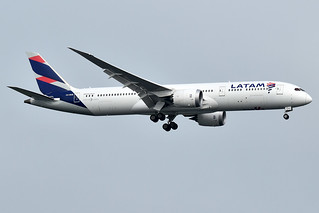
LATAM Chile B789 over Tasman Sea on Mar 11th 2024, upset injures 12
Last Update: February 22, 2026 / 16:26:43 GMT/Zulu time
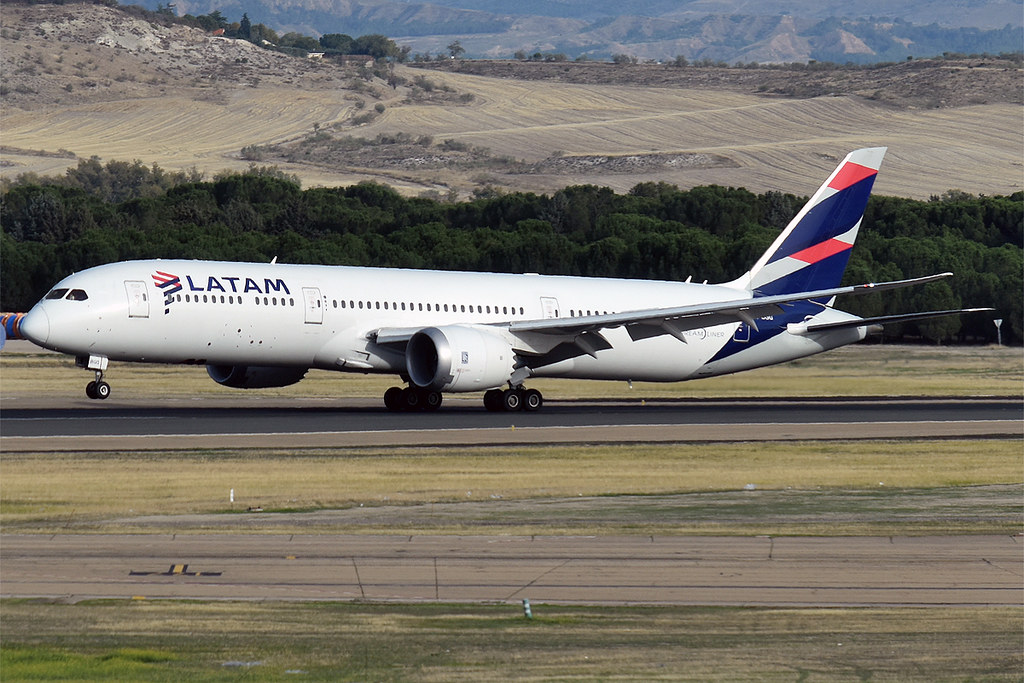
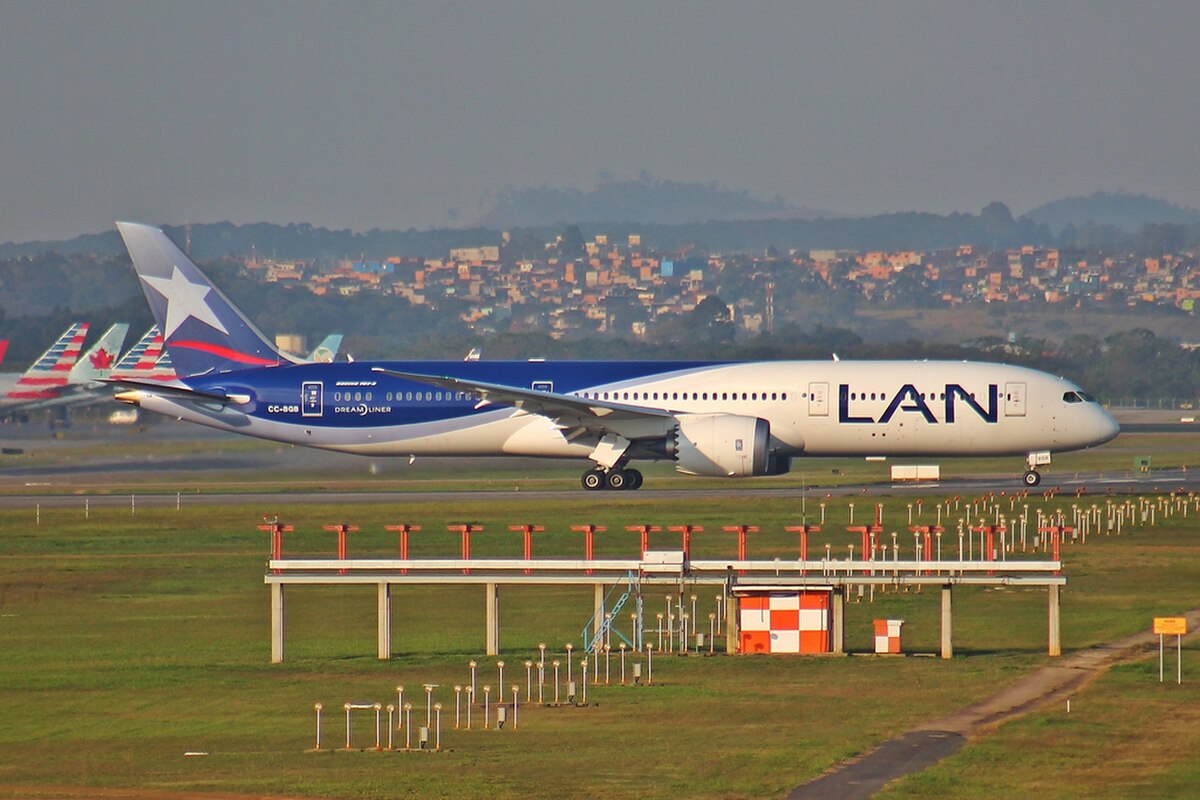
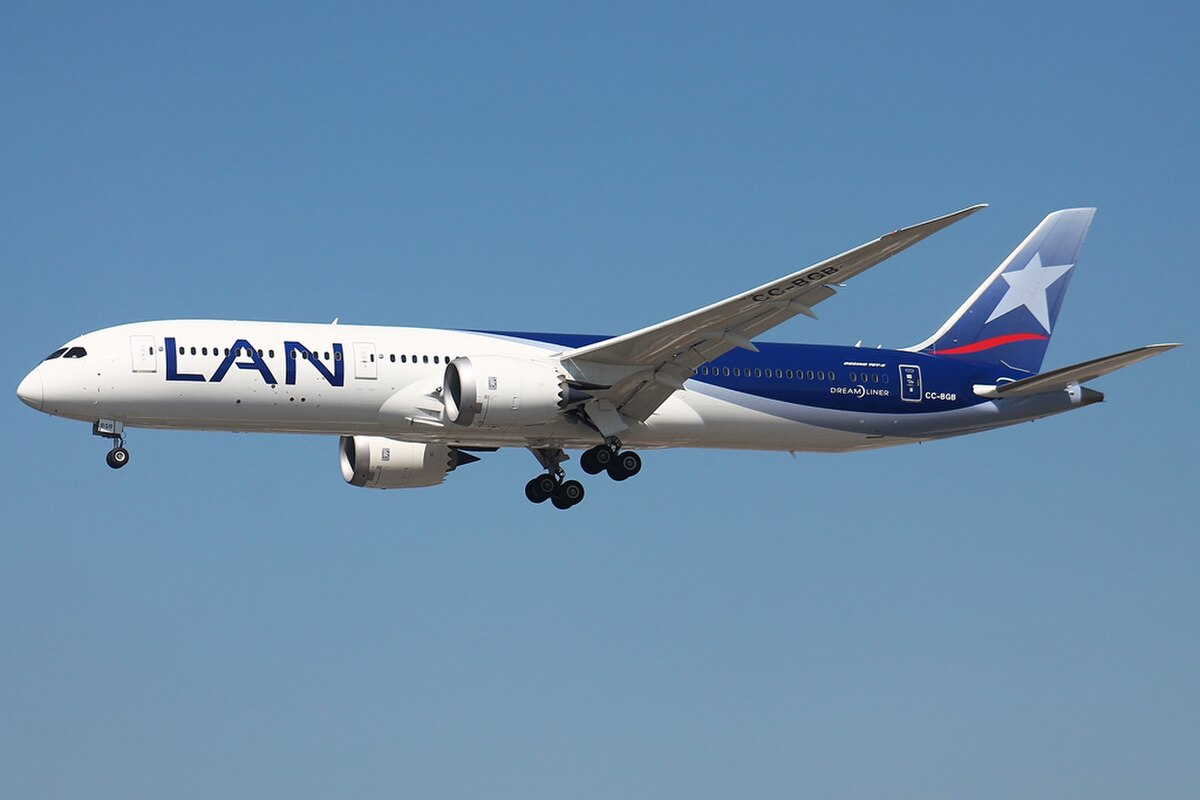
Incident Facts
Date of incident
Mar 11, 2024
Classification
Accident
Airline
LATAM Airlines Chile
Flight number
LA-800
Departure
Sydney, Australia
Destination
Auckland, New Zealand
Aircraft Registration
CC-BGG
Aircraft Type
Boeing 787-9 Dreamliner
ICAO Type Designator
B789
The airline reported the aircraft encountered a technical incident causing strong movement of the aircraft.
Local emergency services reported they assessed about 50 people at the airport and took 12 people to a hospital. One person was in a serious condition.
Passengers reported the aircraft encountered a sudden dive causing passengers to feel weightless and everything not fastened to hit the cabin ceiling about 50 minutes before landing, there was blood at the ceiling. The captain later said they had briefly lost their instrumentation, then it came back all of the sudden.
New Zealand's TAIC as well as Australia's ATSB reported that the investigation will be conducted by Chile's Direccion General de Aeronautica Civil because the accident occurred over international waters. Australian media report that the ATSB sees the accident linked to the risk of flight systems resetting simultaneously.
On Dec 2nd 2016 the FAA had issued their airworthiness directive AD 2016–24–09 summarizing: "We are adopting a new airworthiness directive (AD) for all The Boeing Company Model 787–8 and 787–9 airplanes. This AD requires repetitive cycling of either the airplane electrical power or the power to the three flight control modules (FCMs). This AD was prompted by a report indicating that all three FCMs might simultaneously reset if continuously powered on for 22 days. We are issuing this AD to address the unsafe condition on these products."
On Mar 15th 2024 Boeing released a message to operators of all Boeing 787 variants referencing another message sent out in 2017 advising operators to apply adhesives to the rocker (pilot seat movement) switch caps to prevent them from coming loose. The new message states:
Boeing and Flight Deck seat supplier, Ipeco, advise the 787 fleet of a known condition related to a loose/detached rocker switch cap on the fore/aft auxiliary rocker switch. This rocker switch is located on the seat back of both Captain and First Officer seats. Closing the spring-loaded seat back switch guard onto a loose/detached rocker switch cap can potentially jam the rocker switch, resulting in unintended seat movement.
Unintended fore/aft seat movement (due to a jammed seat back rocker switch) can be stopped with the emergency power cutoff switch, or by holding depressed the fore/aft rocker switch located on the inboard side of the seat pan in the direction opposite to the seat movement, or by holding depressed the manual fore/aft control lever on the inboard side of the seat pan to declutch the horizontal actuator. Please note that inputting an opposing fore/aft switch command will stop powered movement only for the duration that the seat software sees opposing commands. As soon as one of the fore/aft switches is released, the seat will resume movement following the remaining command. The preferred option is to shut off power using the power cut-off switch, but if the occupant is not able to reach that switch, the other options will halt the seat powered movement until power can be shut off. Boeing is evaluating potential updates to the appropriate Flight Crew Manual.
On Apr 19th 2024 Chile's DGAC released their preliminary report in Spanish summarizing the sequence of events:
The aviation event that occurred on March 11, 2024, at 4:00 p.m. local time in NZ and according to the information collected in Auckland NZ and later in Santiago de Chile, the flight crew was composed of a pilot in command (Captain) and a First Officer, along with 7 cabin crew and 263 passengers, on board the aircraft Boeing, model 787-916, registration CC-BGG which took off from the Airport Sydney Kingsford Smith International (YSSY), Australia, to the Airport Auckland International (NZAA), New Zealand. Then, while the aircraft was en route with flight level 410, in international airspace and for reasons which are the subject of investigation, had a sudden unintentional decrease, which could have been recovered by the flight crew.
As a result of the above, 3 auxiliary cabin crew and 10 passengers were with injuries of varying degrees (1 auxiliary cabin crew member, 1 passenger Chilean nationality and a passenger of Australian nationality, were hospitalized for the severity of their injuries).
The DGAC stated following facts were proven:
- At the time of the event, the aircraft was established at flight level 041 (41,000 feet) (editorial comment: typo in the Spanish original indeed).
- The seat on the left side of the cabin, with the captain in his position, began a involuntary forward movement.
- The recovery of the aircraft by the flight crew from a condition of involuntary descent of approximately 400 feet, did not exceed the loads positive or negative permitted by the manufacturer for this type of flight condition.
- The weather conditions and the lack of turbulence on the route at the time of the event, were not causal or contributing factors in the operation.
In February 2026 Chile's DGAC released their final report concluding the probable causes of the accident were:
During a public transport flight, the aircraft made a sudden and involuntary descent, as a result of pressure exerted by the Captain's body, against the COLUMN FORCE SENSOR, as a result of an uncontrolled movement of his seat forward. This pressure exceeded the permitted limits of the autopilot, which resulted in its inadvertent disconnection, causing a momentary loss of control of the flight.
Contributing Factors
A cabin crew inadvertently activated the rocker switch, which had detached from the structure of the "ROCKER SWITCH" of the Captain's seat.
During the uncontrolled displacement of the seat, the Captain was seated and turned to the right with his left leg on his right leg, leaving both legs trapped against the aircraft's control column, which caused an overpressure to the autopilot sensor, exceeding its limits and causing it to disconnect.
The absence of previous experiences, with respect to the effects that can be generated by an uncontrolled movement of a seat, would have influenced the captain not to leave a note in the logbook, and with it, that the failure had been detected previously.
Failures in the design, operation, functionality and manufacturing material of the components of the "ROCKER SWITCH".
The DGAC analysed:
CREW AND ORGANIC INFORMATION OF THE OPERATING COMPANY
With respect to the verification of the licenses, ratings of the Captain and the First Officer, it was established that they had the requirements required by regulations to operate the aircraft on an international passenger transport flight, and there were no observations.
With respect to the verification of the licenses and ratings of the cabin crew, it was established that they had the regulatory requirements to carry out this activity in the aircraft, and there were no observations.
With respect to the crews and the aircraft, it was established that they were registered in the respective Operations Manuals of the operating company, which allowed them to carry out this activity, and there were no observations.
AIRCRAFT BACKGROUND
With respect to the review of the airworthiness records, which were kept in view during the investigation, it was established that, on the date of the event, the operator was carrying out maintenance at an Aeronautical Maintenance Center (AMC), duly authorized and authorized in the type and model of aircraft, in accordance with the frequency established in the maintenance program. which was approved by the aeronautical authority.
With respect to the condition of maintenance and airworthiness of the aircraft involved in the event, no records of discrepancies were observed, nor were there any reports in the maintenance area, as recorded in the FLIGHT LOG BOOK (FLIGHT LOG BOOK) and in the MAINTENANCE LOG BOOK.
From another point of view, in the result of the inspections carried out on the seat involved in the event, at the premises of the aircraft manufacturing company, in conjunction with the seat manufacturer, where other new findings were observed, such as non-standardized modifications, the poor assembly of parts and pieces of the seat, use of hardware other than that of the manufacturers, among others, these findings were not causal or contributing factors to the event investigated.
HISTORY OF INSPECTIONS AND PROCEEDINGS
With respect to the inspections carried out by the investigating team, together with the maintenance technicians of the operating company, at the premises of Auckland NZ Airport, it was possible to establish that the aircraft's systems did not have faults of previous origin, which had been present or were a contributing factor in the event investigated.
With respect to SERVICE BULLETIN (SB) N2 °380-25-06 ISSUE 2, which corresponds to a reliability improvement and does not have mandatory priority, it was issued by the seat manufacturer for the operators of the B787, which was aimed at improving the attachment of the CAP SWITCH to the ROCKER SWITCH by using a glue applied to the structure, which would not have been applied to the seat involved in the event, by the aircraft operator.
With respect to the application of the mandatory SERVICE BULLETIN (SB), 380-25-06 ISSUE 3, which was issued by the manufacturer of the seat for the operators of the B787, which was aimed at improving the attachment of the CAP SWITCH to the ROCKER SWITCH through the use of glue and the implementation of periodic inspections, these were complied with by the operating company.
Likewise, the operating company implemented AD 2024-16-14 of the Federal Aviation Administration Agency (FAA), which issued an airworthiness directive, which is mandatory and addresses the unsafe condition of the affected product and provides for periodic inspections of the Captain's and First Officer's seats of the B787, in order to detect in the covers of the ROCKER SWITCH, missing or cracked parts and in the ROCKER SWITCH CUP, cracked or non-functional parts.
The results of these inspections have shown that even after the modifications made to the seat switches, they continue to present the same type of damage, which forced the operating company to send 22 switches out of service, for analysis, to the address provided by the aircraft manufacturer.
BACKGROUND TO THE DAY OF THE EVENT
With respect to the background information collected on the day of the event, it can be confirmed that the aircraft made the first flight of the day, according to schedule, from Auckland International Airport (NZAA), New Zealand, to Kingsford Smith International Airport in Sydney (YSSY), Australia, for the transfer of passengers and cargo, which took place without observations and without leaving any record of any anomaly.
Upon arrival at Kingsford Smith International in Sydney (YSSY), Australia, the Captain of the aircraft reported that while sitting in his seat, preparing and checking the aircraft's systems with the intention of making the flight back to Auckland (NZAA), he had the feeling that his seat made an involuntary forward movement. before which he verified that the switches that are located on the right side of his seat, were working according to their function and operation, so he did not leave a record of what happened.
It is necessary to point out that on the day of the event and at the time of testing the functionality of the switches described in the previous paragraph, the Captain did not check his seat, the operation or the operation of the rocker switch (SWITCH CAP) of the ROCKER SWITCH.
Moments before the accident, the aircraft was fulfilling its flight itinerary to Auckland International Airport, New Zealand Auckland (NZAA). On the flight deck, the First Officer served as the pilot in charge of this flight leg "PILOT FLYING" (PF), using the autopilot (AP) for control of the aircraft and maintaining a flight level FL 410, with no observations.
Subsequently, the Cabin Manager entered the COCKPIT (flight deck) to coordinate with the Captain, to finally enter the COCKPIT a crew member, whose objective was to remove the trays from the food service, it was at that moment that the crew member involuntarily began to wear the cover of the SWITCH COVER (cover that protects ROCKER SWITCH). initiating an uncontrolled forward displacement of the Captain's seat.
It is necessary to emphasize that the cover of the SWITCH COVER of the Captain's seat, at the time of the accident, was in an abnormal position (superimposed) because the rocker switch (SWITCH CAP) had detached from its structure (ROCKER SWITCH), losing its functionality. The consequence of this was that any pressure exerted on the deck (SWITCH COVER) would trigger the uncontrolled movement of the Captain's seat forward.
At the moment the seat was moved, the Captain was seated and turned to the right, talking to the cabin manager; It is at this moment that he was bewildered, not immediately understanding what was happening and being trapped, exerting a pressure of his left leg (crossed over his right leg), against the flight control column of the aircraft.
The progressive increase in this pressure, against the COLUMN FORCE SENSOR, exceeded the permissible limits of the autopilot, resulting in the inadvertent disengagement of the autopilot (AP).
The disconnection of the autopilot (AP) resulted in the aircraft initiating a sudden and involuntary descent, where the flight crew lost control of the flight momentarily.
Faced with this situation, the First Officer managed clear and timely communication with the Captain, making the appropriate decisions and making efficient use of all available resources, including automatic systems to regain control of the aircraft and control of the pitch.
He simultaneously disconnected the power to the Captain's seat electrically, so that he could pull out his trapped legs and not continue to put pressure on the aircraft's control column.
Finally, when the First Officer, together with the Captain, managed to regain control of the flight, they reconnected the autopilot (AP) of the aircraft, recovering the altitude lost during the abrupt and involuntary descent and maintaining navigation, as planned.
Incident Facts
Date of incident
Mar 11, 2024
Classification
Accident
Airline
LATAM Airlines Chile
Flight number
LA-800
Departure
Sydney, Australia
Destination
Auckland, New Zealand
Aircraft Registration
CC-BGG
Aircraft Type
Boeing 787-9 Dreamliner
ICAO Type Designator
B789
This article is published under license from Avherald.com. © of text by Avherald.com.
Article source
You can read 2 more free articles without a subscription.
Subscribe now and continue reading without any limits!
Read unlimited articles and receive our daily update briefing. Gain better insights into what is happening in commercial aviation safety.
Send tip
Support AeroInside by sending a small tip amount.
Related articles
 Fleet type match
LATAM Chile A320 at Bogota on Feb 20th 2026, rejected takeoff due to runway incursion
A LATAM Chile Airbus A320-200, registration CC-COF performing flight LA-4278 from Bogota to San Andres Island (Colombia) with 157 people on board,…
 Fleet type match
LATAM Chile B763 at Atlanta on Jan 6th 2026, blew all main tyres on landing
A LATAM Chile Boeing 767-300, registration CC-CXF performing flight LA-2482 from Lima (Peru) to Atlanta,GA (USA), landed on Atlanta's runway 26R but…
 Fleet type match
LATAM Chile A320 at Bogota on Sep 14th 2025, rejected takeoff due to engine failure
A LATAM Chile Airbus A320-200, registration CC-COE performing flight LA-4234 from Bogota to San Andres Island (Colombia), was accelerating the…
 Fleet type match
LATAM Chile B789 at Sao Paulo on Feb 22nd 2024, technical problem
A LATAM Chile Boeing 787-9, registration CC-BGE performing flight LA-8058 from Sao Paulo Guarulhos,SP (Brazil) to Johannesburg (South Africa), was…
 Fleet type match
LATAM B763 near Chiclayo on Jan 21st 2024, engine shut down in flight
A LATAM Chile Boeing 767-300, registration CC-CXI performing flight LA-2480 from Lima (Peru) to Miami,FL (USA), was enroute at FL340 about 100nm…
Newest articles
 Fleet type match
United B789 near Singapore on Apr 24th 2026, electrical smell on board
A United Boeing 787-9, registration N61101 performing flight UA-2 from Singapore (Singapore) to San Francisco,CA (USA), was climbing through FL330…
 Fleet type match
Alliance E190 at Cairns on Jul 25th 2025, retracted gear above maximum retraction speed
An Alliance Airlines Embraer ERJ-190 on behalf of Qantas, registration VH-A2T performing flight QF-1851 from Cairns,QL to Brisbane,QL (Australia)…
Subscribe today
Are you researching aviation incidents? Get access to AeroInside Insights, unlimited read access and receive the daily newsletter.
Pick your plan and subscribePartner

ELITE Simulation Solutions is a leading global provider of Flight Simulation Training Devices, IFR training software as well as flight controls and related services. Find out more.
SafetyScan Pro provides streamlined access to thousands of aviation accident reports. Tailored for your safety management efforts. Book your demo today
AeroInside Blog
Popular aircraft
Airbus A320Boeing 737-800
Boeing 737-800 MAX
Popular airlines
American AirlinesUnited
Delta
Air Canada
Lufthansa
British Airways