Northwestern JS32 at Fort Smith on Jan 23rd 2024, lost height after takeoff
Last Update: March 5, 2026 / 17:30:20 GMT/Zulu time
Incident Facts
Date of incident
Jan 23, 2024
Classification
Crash
Airline
Northwestern Air
Departure
Fort Smith, Canada
Destination
Diavik Diamond Mine, Canada
Aircraft Registration
C-FNAA
Aircraft Type
BRITISH AEROSPACE Jetstream Super 31
ICAO Type Designator
JS32
Airport
Fort Smith Airport, Fort Smith
Airport ICAO Code
CYSM
Canadian Authorities reported on Jan 23rd and early Jan 24th, there have been a so far unknown number of fatilities, initial reports 10 of the occupants may have been killed with the 11th being critically injured, were retracted.
Authorities reported rescuers were parachuted to the accident site.
The local Coroner confirmed there have been fatalities.
The airline reported one of their Jetstreams was involved in the accident causing a number of fatalities.
According to the operator of the Diavik Diamond Mine, Rio Tinto, the aircraft was carrying Rio Tinto workers to their mine.
The Canadian TSB have deployed an investigation team.
The local hospital reported they activated the mass casualty protocol at about 08:50L.
In the afternoon of Jan 24th 2024 the chief coroner reported, both crew and 4 passengers died in the accident, one surviving passenger was taken to a hospital in Yellowknife, the families have been informed.
According to the airline's website they operate 6 Jetstream 3100 and 5 Jetstream 3200 aircraft, all aircraft able to carry 19 passengers.
According to ADS-B data Jetstream 3200 JS32 registration C-FNAA was operating in and out of Fort Smith during January 2024, however, the tail number of the accident aircraft is currently unknown.
On Jan 26th 2024 the Canadian TSB reported mentioning the tail number C-FNAA: "On 23 January 2024, a BAE Jetstream 3212 aircraft operated by Northwestern Air Lease Ltd. was conducting a flight from Fort Smith Airport, Northwest Territories to Diavik Mine Airport, Northwest Territories, with 2 flight crew and 5 passengers on board. Shortly after takeoff on Runway 30, the aircraft collided with terrain. There was a post-impact fire, and the aircraft was destroyed. Six occupants were fatally injured, and one sustained serious injuries. The TSB is investigating."
On Mar 5th 2026 the TSB released their final report concluding the probable causes of the crash weree:
- During departure, the captain intentionally kept a low pitch attitude and a high airspeed to remove possible snow accumulation on the aircraft. As a result, the aircraft’s departure profile was closer to the ground than it would be on a standard departure.
- When the captain and first officer attempted to raise the landing gear, the combination of an outside air temperature colder than approximately −20 °C and the air load on the landing gear from the increased speed resulted in 1 of the main landing gear units, likely the left unit, not fully retracting.
- Following the first officer’s call to reduce airspeed, the captain reduced engine power to reduce the aircraft’s speed and allow the main landing gear to fully retract. As a result of the decreased power, the aircraft entered an inadvertent descent at 140 feet above ground level.
- The captain and first officer were likely preoccupied with the abnormal main landing gear indication and the aircraft’s airspeed and did not notice the aircraft’s loss of altitude until immediately before impact. As a result, the aircraft impacted trees and terrain 10 seconds after the descent began.
Findings as to risk:
- If pilots do not record all aircraft defects in the aircraft’s technical records, maintenance personnel may not address them, increasing the risk that the aircraft will be dispatched for flight in an unsafe condition.
- If pilots do not ensure that an aircraft’s critical surfaces are clear of contaminants before flight, there is a risk that aircraft performance will be degraded.
- If the roles and responsibilities of the pilot flying and pilot monitoring are not well defined, their monitoring of the aircraft may not be effective, increasing the risk that they will not observe and correct deviations from the intended flight path.
- If pilots do not follow the procedures recommended by the aircraft manufacturer, there is a risk that an aircraft will enter an undesired state due to inappropriate or incorrect actions being performed.
- If adaptations of standard operating procedures are accepted and normalized, but are not formally implemented within a company, there is a risk that inconsistent interpretation of procedures between pilots could impair shared situational awareness and crew resource management effectiveness.
Other findings:
- The terrain awareness and warning system operated within the expected parameters based on the requirements of Technical Standard Order TSO-C151b.
- A review of the company produced guidance material for the occurrence aircraft found that it did not reflect the latest procedures published by the aircraft manufacturer.
The TSB analysed: "An aircraft take-off performance analysis completed by the TSB laboratory indicated that the occurrence aircraft’s flight performance was not significantly degraded by negative aerodynamic factors related to critical surface contamination. Critical surface contamination therefore did not contribute to the aircraft’s collision with the trees."
The TSB further analysed:
In the 12 months preceding the accident, the aircraft’s landing gear had been functionally checked by Northwestern Air Lease Ltd. (Northwestern Air Lease) maintenance personnel in the company hangar on 5 separate occasions as part of various unrelated maintenance actions. On all recorded occasions, no faults were observed, and the aircraft was released back into service. It was determined over the course of the investigation that the maintenance department at Northwestern Air Lease had been aware of the intermittent problem related to the left main landing gear unit, but the maintenance department had not rectified the issue because of the difficulty of replicating the environmental conditions in which pilots experienced it during aircraft operations.
It was found that Northwestern Air Lease company management, maintenance personnel, and Jetstream pilots did not perceive the main landing gear retraction issue to be a significant safety concern. This was due to the fact that the issue arose infrequently and inconsistently, and the operational solution was simply to increase the aircraft’s pitch attitude to reduce its airspeed and thus allow the main landing gear to lock into the up position. As a result of these factors, Jetstream pilots did not record the issue in the occurrence aircraft’s journey log.
With respect to the aircraft performance data the TSB analysed:
A concern for both the captain and the FO was the apparent increase in the intensity of the falling snow shortly before departure in instrument flight rules (IFR) conditions. The captain believed that the snow was not sticking to the wings and would blow off as the aircraft accelerated during the take-off roll. As a result, the captain elected to maintain a shallow climb angle/profile in an effort to keep the aircraft’s speed up and therefore cause the snow to blow off the aircraft’s critical surfaces. This is consistent with the occurrence flight data analyzed by the aircraft manufacturer.
The analysis determined that, during the occurrence takeoff, the aircraft had attained a positive pitch attitude of approximately 5°. In contrast, Northwestern Air Lease’s standard operating procedures (SOPs) manual, titled Standard Operating Procedures Jetstream 3200, states that the aircraft should attain a take-off pitch attitude of 8° to 10°.
The captain’s departure with a non-standard take-off profile resulted in the aircraft quickly accelerating to a speed above 140 knots indicated airspeed (KIAS), up to approximately 165 KIAS. This had the unintended consequence of causing the main landing gear (likely the left main landing gear unit) to not lock in the retracted position when the landing gear was selected up. Additionally, the shallow climb profile during the initial climb reduced the height above terrain that the aircraft could gain over a given distance. As a result, the aircraft attained an approximate maximum height of only 140 feet above ground level (AGL). When the engine power was subsequently reduced by the captain, in an effort to reduce the speed of the aircraft and allow the main landing gear to fully retract, the aircraft entered a shallow descent that went unnoticed and uncorrected.
Due to the extent of the post-impact fire, the investigation was unable to definitively determine which landing gear unit did not fully retract when the landing gear system was selected up after departure on the occurrence flight. Data collected over the course of the investigation indicated that the left main landing gear unit was the one that had historically malfunctioned. The issue presented itself sporadically and only in the presence of a combination of cold outside air temperature (below approximately −20 °C) and a sufficiently high air load from an airspeed above approximately 140 KIAS. Although this recurring landing gear issue was known to company pilots, it was not reflected in any company or aircraft documentation.
With respect to distractions during critical phases of flight the TSB analysed:
Distractions in the cockpit during critical phases of flight pose significant risks to aviation safety. When pilots are focused on non-essential tasks or communications, their attention can be diverted away from essential flight operations. This diversion can lead to slower reaction times, missed vital information, and impaired decision making, particularly during critical phases of flight, such as takeoffs, landings, or abnormal situations and emergencies.
The complexity of modern cockpits, with their array of instruments and systems, can further exacerbate the risks associated with distractions, increasing the potential for adverse events.
Given that attention is a limited cognitive resource that must be carefully managed, particularly in high-workload conditions, the ability of pilots to divide the task workload among themselves can reduce the attentional demands on each pilot. For example, during a takeoff in instrument meteorological conditions, the pilot flying (PF) can focus on critical tasks, such as maintaining an effective instrument scan, while the pilot monitoring (PM) carefully monitors the flight profile and, as required, tends to secondary tasks. When something unexpected occurs, such as the illumination of a landing gear warning light, the pilots may divert their attention to it and become distracted. During a critical phase of flight, pilots must carefully manage such distractions by effectively communicating with each other and delegating duties according to the “aviate, navigate, communicate, and manage” principle.
The captain and FO experienced an abnormality when the main landing gear did not lock in the retracted position. The aircraft manufacturer had determined that this is an abnormal situation and had published a procedure in its aircraft flight manual and quick reference handbook for pilots to follow. As with other abnormal situations, this one was not an emergency: it did not present a malfunction that was serious enough to require immediate action for the flight to continue safely.
Immediately after takeoff, when the FO observed the abnormal main landing gear indication, he called for the airspeed to be reduced; the captain then diverted his attention to the landing gear indication and away from his responsibility to maintain the aircraft’s climb while the aircraft was still at low height. This responsibility was particularly critical because of the non-standard take-off profile that the captain had elected to execute in complex conditions. Likely because of the preoccupation with the abnormal landing gear indication, the captain’s instrument scan was ineffective in identifying the descent into which the aircraft entered.
The FO, who was the pilot not flying (PNF), made all of the standard calls during the take-off roll in accordance with the procedures outlined in Northwestern Air Lease’s SOPs. However, given that he was likely paying attention to the main landing gear’s position and the airspeed indicator once the aircraft was airborne and in the climb, he was not monitoring the aircraft’s altitude and vertical speed. As a result, he did not observe the aircraft’s loss of altitude and was therefore unable to help the captain, who was the PF, correct the deviation in the flight path immediately after takeoff.
Metars:
CYSM 231900Z 31006KT 290V360 12SM -FZDZ -SN SCT014 OVC046 M19/M22 A2982 RMK SC4SC4 RIME ON INDICATOR SLP124=
CYSM 231800Z 32006KT 290V350 10SM -SN OVC043 M19/M23 A2980 RMK SC8 SLP120=
CYSM 231700Z 33003KT 290V360 12SM -SN OVC043 M19/M22 A2978 RMK SC8 SLP113=
CYSM 231624Z 32005KT 10SM -SN OVC065 M19/M22 A2978 RMK SC8 WIND EST SLP111=
CYSM 231534Z 32005KT 3SM -SN OVC065 M19/M22 A2977 RMK SC8 WIND EST SLP108=
CYSM 231500Z CCA 32005KT 1 1/2SM -SN OVC065 M19/M22 A2976 RMK SC8 WIND EST SLP104=
CYSM 231422Z 31003KT 270V330 1SM -SN VV025 M19/M22 A2975 RMK SN8 SLP101=
CYSM 231401Z 29003KT 2SM -SN OVC073 M19/M22 A2975 RMK AC8 SLP102=
Aircraft Registration Data
Aircraft registration data reproduced and distributed with the permission of the Government of Canada.
Incident Facts
Date of incident
Jan 23, 2024
Classification
Crash
Airline
Northwestern Air
Departure
Fort Smith, Canada
Destination
Diavik Diamond Mine, Canada
Aircraft Registration
C-FNAA
Aircraft Type
BRITISH AEROSPACE Jetstream Super 31
ICAO Type Designator
JS32
Airport
Fort Smith Airport, Fort Smith
Airport ICAO Code
CYSM
This article is published under license from Avherald.com. © of text by Avherald.com.
Article source
You can read 2 more free articles without a subscription.
Subscribe now and continue reading without any limits!
Read unlimited articles and receive our daily update briefing. Gain better insights into what is happening in commercial aviation safety.
Send tip
Support AeroInside by sending a small tip amount.
Newest articles
 Fleet type match
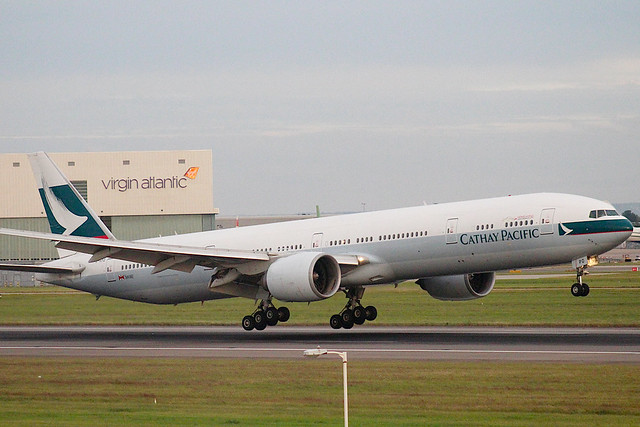
Cathay Pacific B773 at Hong Kong on May 11th 2026, engine vibrations
A Cathay Pacific Boeing 777-300, registration B-KPD performing flight CX-253 from Hong Kong (China) to London Heathrow,EN (UK), was climbing out of…
 Fleet type match
Easyjet A319 at London on May 14th 2026, lightning strike
An Easyjet Airbus A319-100, registration G-EZDH performing flight U2-8305 from London Gatwick,EN (UK) to Milan Malpensa (Italy), was climbing out of…
Subscribe today
Are you researching aviation incidents? Get access to AeroInside Insights, unlimited read access and receive the daily newsletter.
Pick your plan and subscribePartner

ELITE Simulation Solutions is a leading global provider of Flight Simulation Training Devices, IFR training software as well as flight controls and related services. Find out more.
SafetyScan Pro provides streamlined access to thousands of aviation accident reports. Tailored for your safety management efforts. Book your demo today
AeroInside Blog
Popular aircraft
Airbus A320Boeing 737-800
Boeing 737-800 MAX
Popular airlines
American AirlinesUnited
Delta
Air Canada
Lufthansa
British Airways