Fedex B752 at Chattanooga on Oct 4th 2023, hydraulic problem, unsafe gear, main gear up landing, runway overrun
Last Update: May 29, 2025 / 19:37:05 GMT/Zulu time
Incident Facts
Date of incident
Oct 4, 2023
Classification
Accident
Airline
Fedex
Flight number
FX-1376
Departure
Chattanooga, United States
Destination
Memphis, United States
Aircraft Registration
N977FD
Aircraft Type
Boeing 757-200
ICAO Type Designator
B752
Airport
Lovell Field, Chattanooga
Airport ICAO Code
KCHA
Chattanooga's fire department reported: "Public safety agencies rushed to the Chattanooga Regional Airport late Wed night after receiving reports that a FedEx757 was on its final approach with a landing gear failure. The call came in at 11:04 PM on 10/4/23. CFD, CPD and HCEMS quickly staged in position and waited."
On Oct 5th 2023 the NTSB announced: "NTSB investigating the Oct. 4 runway excursion involving a FedEx B757-236 due to a gear up landing in Chattanooga, Tennessee."
On Oct 5th 2023 the FAA reported: "AIRCRAFT EXPERIENCED A LANDING GEAR ANOMALY, RETURNED TO AIRPORT AND LANDED GEAR UP, CHATTANOOGA, TN."
On Oct 20th 2023 the NTSB released their preliminary report and the investigation docket stating:
On October 4, 2023, about 23:47 eastern daylight time, Federal Express (FedEx) flight 1376, a Boeing 757-236, experienced a failure with its left hydraulic system shortly after takeoff from Chattanooga Metropolitan Airport-Lovell Field (CHA), Chattanooga, Tennessee. The airplane turned back to CHA, and, while preparing to land, the landing gear failed to extend normally. The landing gear also failed to extend using the alternate extend system. The flight crew declared an emergency and the airplane sustained substantial damage during the emergency landing. The two flight crew members and the jump seat occupant aboard the airplane were not injured. The flight was operating under the provisions of Title 14 Code of Federal Regulations Part 121 as a non-scheduled domestic cargo flight from CHA to Memphis International Airport (MEM), Memphis, Tennessee.
The flight crew reported that the airplane had no maintenance issues before the flight and that the push-back, engine start, and taxi were all uneventful. The captain was the pilot flying, and the first officer was the pilot monitoring. Digital flight data recorder (DFDR) data showed that the airplane departed CHA about 22:24.
According to the flight crew, after rotation and confirmation of a positive rate of climb, the first officer (FO) raised the landing gear control lever to retract the landing gear. DFDR data showed that both the main gear and the nose gear retracted to their up and locked position. About 1 minute later, the flap handle was positioned in its up (flaps 0) position. The flight crew reported that immediately thereafter, a “TE FLAP DISAGREE” message was displayed on the engine indication and crew alerting system (EICAS), along with an associated master caution light, a “TRAILING EDGE” discrete light, and the aural alert caution beeper. Per the captain's direction, the FO began accomplishing the “TE FLAP DISAGREE” checklist in the Quick Reference Handbook (QRH).
The FO was able to retract the flaps to their up position via alternate means in accordance with the appropriate checklist contained in the QRH. While completing this checklist, the flight crew received an “L HYD SYS PRESS” EICAS message at 22:24:33 at an altitude of about 1978 ft above ground level (agl). The status page showed that the left hydraulic system fluid quantity was near zero and that the system was not pressurized. The captain directed the FO to run the QRH checklist for “L HYD SYS PRESS”. The flight crew decided to return to CHA.
Upon positioning the landing gear control lever to its down position to extend the gear for landing, the flight crew received a gear unsafe indication via illumination of the amber “GEAR” disagreement light and a “GEAR DISAGREE” message on the EICAS. Also, the lack of illumination of the three green landing gear indicator lights indicated that the gear was not down and locked.
The FO then conducted the “Alternate Gear Extension” procedure embedded in the L HYD SYS PRESS checklist, which was unsuccessful. After multiple attempts to lower the landing gear, the flight crew declared an emergency.
The flight crewmembers asked Chattanooga approach if they could conduct a low approach over the runway so that tower personnel could visually confirm the position of the landing gear.
The airplane descended to about 150 ft agl and flew the length of the runway, which was followed by a go-around. Approach control relayed confirmation that the landing gear was not in the down position. Subsequently, the flight crew completed the deferred items on the “GEAR UNSAFE” QRH checklist and the airplane was cleared to land on runway 20.
The flight crewmembers reported that during the initial touchdown, the airplane bounced slightly but they were able to maintain directional control and the runway’s centerline. The flight crew was unable to stop the airplane and it slid off the departure end of runway 20 and impacted localizer antennas before coming to rest about 830 ft beyond the end of the runway.
After the airplane came to a complete stop, the flight crew performed the “EVACUATION” checklist, and the jump seat occupant attempted to open the left-hand door (L1). The door rotated halfway open and then became bound, and the slide did not deploy. The jump seat occupant then attempted to open the right-hand door (R1), but it became lodged on the packing of the raft/slide. The jump seat occupant subsequently forced the door open, and the slide deployed. The flight crew and the jump seat occupant then egressed the airplane via the R1 door/slide.
Postaccident examination of the airplane revealed that the left main landing gear door actuator retract port hose was leaking hydraulic fluid. The hose was removed and retained by the NTSB for further investigation. The examination also found a discontinuity in the wiring of the landing gear alternate extension system. The section of that wire was retained for further examination.
On May 29th 2025 the NTSB released their final report concluding the probable causes of the accident were:
The failure of the alternate gear extension system, which prevented the landing gear from being lowered. The cause of the system failure was a broken wire, due to tensile overload, between the alternate gear extend switch and the alternate extension power pack (AEPP), preventing the AEPP from energizing and supplying hydraulic fluid to the door lock release actuators for the nose landing gear and main landing gear. Contributing to the accident was the loss of the left hydraulic system due to a ruptured left main gear door actuator hose from fatigue, which prevented normal landing gear operation.
The NTSB analysed:
This accident occurred when the flight crew of Federal Express flight 1376, a Boeing 757-236, was unable to extend the landing gear during their approach to Chattanooga Metropolitan Airport-Lovell Field (CHA), Chattanooga, Tennessee.
The main landing gear (MLG) and nose landing gear (NLG) are hydraulically retracted and extended under normal conditions by the left hydraulic system. To retract or extend the landing gear, a flight crewmember must move the landing gear control lever out of its detent and position it to its up or down position. Lever movement is transmitted through control cables to the landing gear selector valve. Operation of the valve supplies left hydraulic pressure through hydraulic lines to either retract or extend the landing gear and operate the landing gear doors.
Shortly after takeoff from CHA, the captain of flight 1376 called for gear up and the first officer (FO) raised the landing gear control lever to retract the landing gear. The flight crew indicated that both the MLG and the NLG retracted to their up and locked position. Digital flight data recorder (DFDR) data showed that 22 seconds after gear retraction the hydraulic fluid quantity and pressure in the left hydraulic system began to decrease. A left hydraulic system low quantity indication and master caution were recorded shortly thereafter.
After troubleshooting the hydraulic issue per the procedures in the Quick Reference Handbook (QRH), the flight crew made the decision to return to CHA. While preparing to land, the MLG and NLG did not extend as expected after the landing gear control lever was positioned to its down position. Cockpit voice recorder (CVR) data indicated that a triple chime was audible, and the captain said, “Gear disagree.” The first officer confirmed, “Gear disagree. The gear is not coming down.”
The captain contacted air traffic control (ATC) to break off their approach and reported that they had an unsafe gear indication. Following the failed attempt to lower the landing gear, the crew went methodically through the Hydraulic System Pressure checklist of their QRH. Following the procedures, the crew attempted to lower the landing gear using the alternate landing gear extension system. This system uses a dedicated hydraulic circuit within the left hydraulic system to release the uplocks on the landing gear doors and gear when activated. To extend the gear with this system, a flight crewmember would move the ALTN GEAR EXTEND switch (a guarded switch) to the down position. Because the checklist indicated that nose wheel steering would be inoperative following the alternate gear extension and the aircraft would not be able to clear the runway on its own, the crew declared an emergency with ATC. The crew performed the alternate gear extension procedure, and the landing gear did not come down. The crew completed the procedure several more times over the next 7 minutes, including re-completing the Hydraulic System Pressure (L only) checklist in full.
As the crew set the aircraft up for the final approach, they began following the Gear Disagree checklist. ATC cleared the flight to land. The captain briefed the FO that he was planning to aim close to the runway threshold and the FO verbally updated the captain on wind conditions and airspeeds. They agreed that a jumpseat occupant on board the airplane would open the left forward main entry door after they landed.
Upon landing on runway 20, the flight crew was unable to stop the airplane, and it slid off the departure end of the runway and impacted localizer antennas before coming to rest about 830 ft beyond the end of the runway.
After the airplane came to a complete stop, the flight crew performed the evacuation checklist in the QRH, and the jumpseat occupant attempted to open the left (L1) door. The door rotated halfway open but would not open fully, and the slide did not deploy. The jumpseat occupant then attempted to open the right (R1) door, but it lodged on the slide pack. The jumpseat occupant used force to open the R1 door, and the slide deployed normally. The flight crew and the jumpseat occupant exited the airplane via the R1 door and slide. Both flight crewmembers and the jumpseat occupant were uninjured. The event was classified as an accident because the airplane sustained substantial damage.
Postaccident inspections of the landing gear system found that hydraulic fluid was leaking from the left landing gear door actuator retract hydraulic hose. Inspections also found that the engine indication and crew alerting system (EICAS) indicated that the left hydraulic system had only 32% fluid quantity remaining after the MLG door retraction shortly after takeoff, which is considered fully depleted. After the hose was replaced as part of this investigation and hydraulic fluid was added to the system, the landing gear extended using the normal extension system. A review of the left hydraulic system found that a leak from this hose could result in the left hydraulic system losing the hydraulic pressure required to overcome the internal locks within the door actuator. When there is a loss of left hydraulic system pressure, the landing gear doors cannot be opened, and the landing gear cannot be lowered using the normal gear extension system.
Analysis of the failed hydraulic hose revealed that it had multiple broken wire strands along its length and a rupture in its polytetrafluoroethylene (PTFE) inner liner adjacent to the cluster of broken wire strands. The cause of the broken wire strands most likely originated from an overload event as evidenced by the necking down of the wire strands and a reduction in their area. There were no signs of fatigue on the broken wires.
Postaccident electrical system inspections of the alternate extension system found no electrical continuity between the alternate gear extend switch and the alternate extension power pack (AEPP). A visual examination of the alternate extension system wiring revealed a break (open) in a wire between the circuit breaker and the alternate gear extend switch. The failed wire was sent to the Boeing Equipment Quality Analysis (EQA) lab for further examination. Analysis of the wire’s fracture surfaces showed a reduction in area and circumferential cracking of the coating, consistent with tensile loading. No obvious defects or anomalies were observed on the fracture surfaces. The wire was inside a wire bundle, so the probability that maintenance personnel could have detected this fault is low. There is no inspection interval for the inside of the wire bundle, which would likely have identified the break in the wire. Since the accident, FedEx has implemented a 275 Flight Hour check on the alternate extension system, including performing a general visual inspection while the NLG and MLG doors are open while on the ground.
Findings from the NTSB’s investigation indicate different reasons for the jumpseat occupant’s difficulty opening the L1 and R1 doors to deploy the respective evacuation slides.
Postaccident examination of the R1 door found that the R1 bannis latch (which releases the slide pack when an armed door is opened) did not conform to the then-current configuration of the release cable assembly. Specifically, the assembly is supposed to have three links added with two spacers and hardware, as required by Federal Aviation Administration (FAA) Airworthiness Directive [AD] 86-09-09 by reference to Boeing Service Bulletin (SB) 757-25A0058, dated April 18, 1986. Instead, the R1 bannis latch on the accident airplane had only one link and lacked other required hardware, which caused the slide pack to jam before the jumpseat occupant was eventually able to force the door to open.
Postaccident examination of the L1 door found that a misrouted deployment strap caused the L1 door not to fully open, prohibiting the occupants from using that door for evacuation. After the CHA accident, FedEx inspected the L1 and R1 doors on the 97 other airplanes in its Boeing 757 fleet and found no other instances of a misrouted deployment strap as found on the L1 door. However, the inspection found 46 doors (about 24%) that were not compliant with either AD 86-09-09 or AD 2001-15-01 (applicable to Boeing 727, 737, and 757-200, -200CB, and -300 series airplanes because these models used the same bannis latch design).
The accident airplane was manufactured in 1988 and should have been delivered with bannis latches that complied with AD 86-09-09. It is currently unknown why noncompliant components were present at the time of the accident. The accident airplane was operated by multiple carriers before FedEx acquired it, and the NTSB does not have maintenance records for these other carriers. FedEx records indicate that the bannis latch was inspected on January 12, 2023. The work card indicated to check the cables for fraying. At that time, there should have been a chain in the latch assembly and not a cable.
As a result of this investigation, the NTSB issued four new safety recommendations to the FAA and three new recommendations to Boeing on March 27, 2025. The recommendations are open - acceptable at this time.
Crew Resource Management (CRM)
Hallmarks of good CRM include effective communication, strong leadership, assertiveness, adaptability to changing situations, open feedback loops, appropriate task allocation, situational awareness, stress management, and a culture of actively listening to all crewmembers' opinions and concerns, allowing for diverse perspectives to be considered.
The crew of FedEx flight 1376 demonstrated good CRM by remaining calm and professional throughout the accident sequence of events. They displayed effective workload management by distributing the tasks of handling the emergency amongst themselves to avoid overload and maintain optimal performance which, resulted in the captain flying and the FO working to resolve the issue with ATC.
The crew maintained clear and concise communication between all crewmembers to include a jumpseat occupant, and with ATC, actively soliciting feedback and input, and crosschecking with one another to ensure everyone was working with the same mental model.
Once the crew realized the landing gear was inoperable, they methodically worked through the QRH, confirming each step out loud, and demonstrated flexibility by adjusting their plans and strategies based on changing circumstances.
The crew used all available resources and included some non-standard attempts at troubleshooting, such as pulling circuit breakers, while under the direction of FedEx maintenance staff. NTSB staff concedes there is some concern that troubleshooting attempts not previously established on any checklist could yield results that would be unknown to the flight crew, and those attempts should be limited as they can introduce additional risk to an already hazardous situation.
Relevant NOTAM:
!CHA 10/003 CHA RWY 02/20 CLSD 2310050402-2310051600
Metars:
KCHA 050553Z AUTO 10003KT 10SM CLR 19/16 A3011 RMK AO2 SLP188 T01890156 10267 20183 55003=
KCHA 050453Z AUTO 00000KT 10SM CLR 19/16 A3010 RMK AO2 SLP184 T01940161 402940144=
KCHA 050353Z 20003KT 10SM FEW080 BKN250 22/16 A3011 RMK AO2 SLP187 LAST T02170156=
KCHA 050253Z 00000KT 10SM SCT075 BKN250 22/16 A3012 RMK AO2 SLP190 T02220156 51007=
KCHA 050153Z 00000KT 10SM FEW075 OVC250 23/16 A3011 RMK AO2 SLP189 T02330156=
KCHA 050053Z 00000KT 10SM SCT075 OVC250 25/15 A3010 RMK AO2 SLP187 T02500150=
KCHA 042353Z 14004KT 10SM OVC250 27/14 A3009 RMK AO2 SLP184 T02670144 10294 20267 53005=
Aircraft Registration Data
Incident Facts
Date of incident
Oct 4, 2023
Classification
Accident
Airline
Fedex
Flight number
FX-1376
Departure
Chattanooga, United States
Destination
Memphis, United States
Aircraft Registration
N977FD
Aircraft Type
Boeing 757-200
ICAO Type Designator
B752
Airport
Lovell Field, Chattanooga
Airport ICAO Code
KCHA
This article is published under license from Avherald.com. © of text by Avherald.com.
Article source
You can read 2 more free articles without a subscription.
Subscribe now and continue reading without any limits!
Read unlimited articles and receive our daily update briefing. Gain better insights into what is happening in commercial aviation safety.
Send tip
Support AeroInside by sending a small tip amount.
Related articles
 Fleet type match
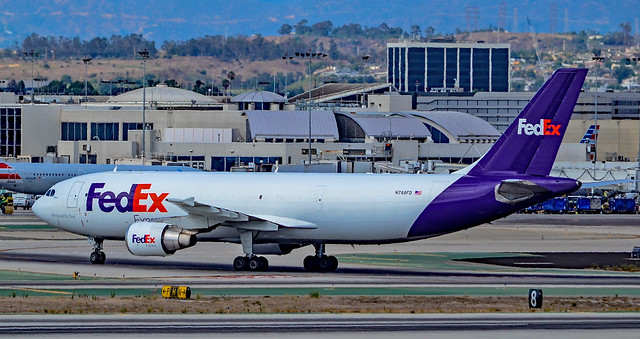
Fedex A306 at Norfolk on Feb 2nd 2026, engine shut down in flight
A Fedex Federal Express Airbus A300-600 freighter, registration N748FD performing flight FX-1338 from Norfolk,VA to Memphis,TN (USA), was climbing…
 Fleet type match
Fedex B763 at Newark on Mar 1st 2025, engine fire due to bird strike
A Fedex Federal Express Boeing 767-300, registration N178FE performing flight FX-3609 from Newark,NJ to Indianapolis,IN (USA) with 3 crew, was…
Fedex B763 at Memphis on Oct 18th 2023, engine fire
A Fedex Federal Express Boeing 767-300, registration N287FE performing flight FX-541 from Memphis,TN to Las Vegas,NV (USA), was climbing out of…
 Fleet type match
Fedex B763 at Istanbul on May 8th 2024, nose gear up landing
A Fedex Federal Express Boeing 767-300 freighter, registration N110FE performing flight FX-6238 from Paris Charles de Gaulle (France) to Istanbul…
Fedex B763 and Southwest B737 at Austin on Feb 4th 2023, loss of separation on runway resolved by go around
A Fedex Federal Express Boeing 767-300, registration N297FE performing flight FX-1432 from Memphis,TN to Austin,TX (USA), was on final for a CATIII…
Newest articles
ASL UK AT72 at East Midlands on Nov 14th 2025, tyre and runway damage on landing
An ASL Airlines UK Avions de Transport Regional ATR-72-212A freighter, registration G-OASB performing flight ABV-108 from Guernsey,CI to East…
Satena AT42 at Barranquilla on Aug 31st 2026, engine shut down in flight
A Satena Avions de Transport Regional ATR-42-600, registration HK-5130 performing flight 9R-8817 from Barranquilla to Medellin (Colombia), was…
Subscribe today
Are you researching aviation incidents? Get access to AeroInside Insights, unlimited read access and receive the daily newsletter.
Pick your plan and subscribePartner

ELITE Simulation Solutions is a leading global provider of Flight Simulation Training Devices, IFR training software as well as flight controls and related services. Find out more.
SafetyScan Pro provides streamlined access to thousands of aviation accident reports. Tailored for your safety management efforts. Book your demo today
AeroInside Blog
Popular aircraft
Airbus A320Boeing 737-800
Boeing 737-800 MAX
Popular airlines
American AirlinesUnited
Delta
Air Canada
Lufthansa
British Airways