Korean A333 at Cebu on Oct 23rd 2022, overran runway on landing
Last Update: March 14, 2025 / 16:38:08 GMT/Zulu time


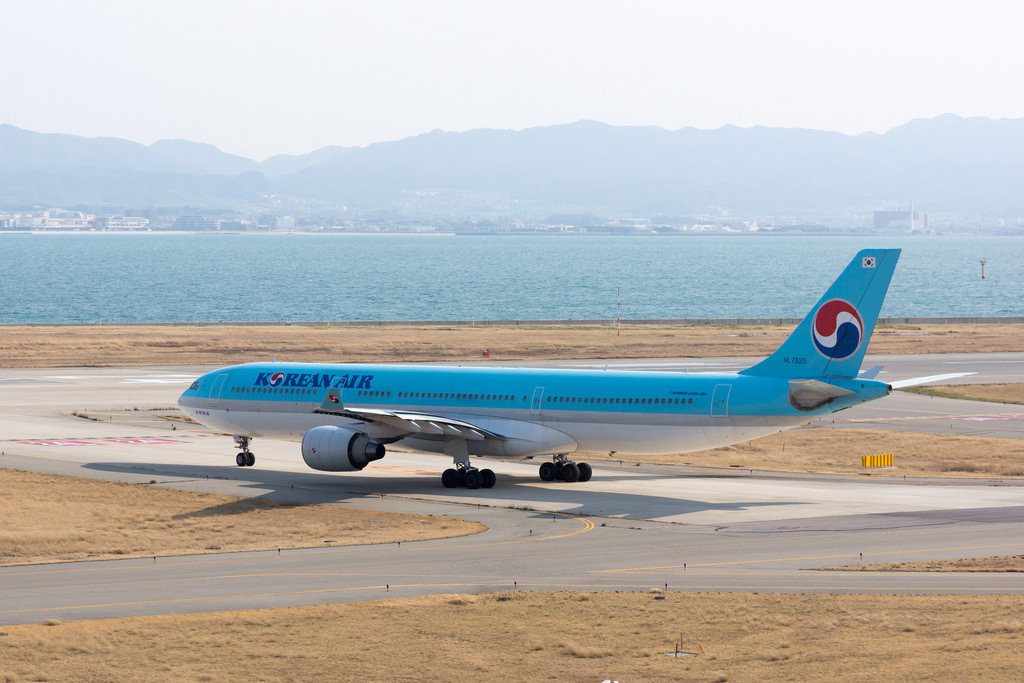
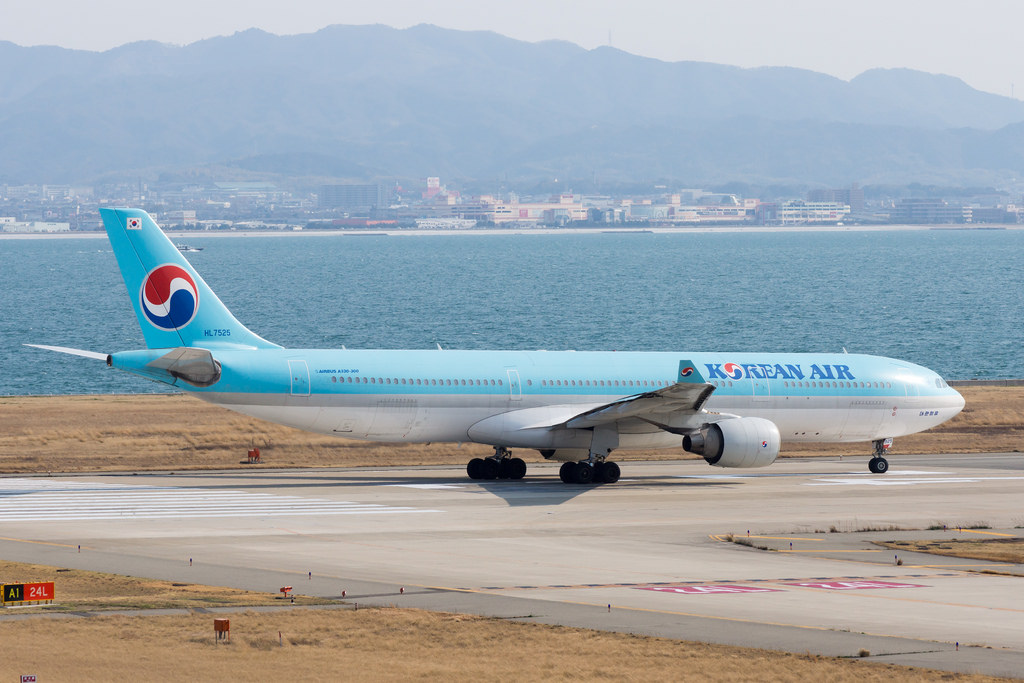


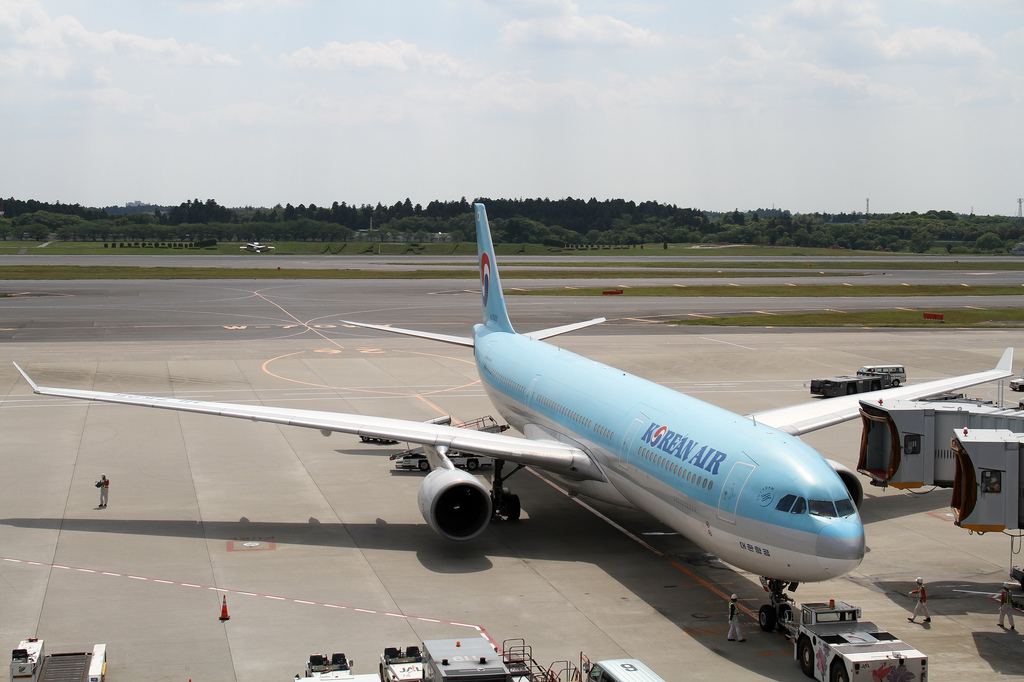


Incident Facts
Date of incident
Oct 23, 2022
Classification
Accident
Airline
Korean Airlines
Flight number
KE-631
Departure
Seoul, South Korea
Destination
Cebu City, Philippines
Aircraft Registration
HL7525
Aircraft Type
Airbus A330-300
ICAO Type Designator
A333
Airport ICAO Code
RPVM
Philippines Civil Aviation Authority (CAAP) have opened an investigation into the accident.
On Oct 24th 2022 Philippines Authorities as well as Korean Ministry of Land, Infrastructure and Transport report, according to first preliminary investigation results a hydraulic failure had caused a brakes failure.
On Oct 25th 2022 it became known that the captain of the flight provided testimony that they suffered a hard touchdown on their second approach due to wind shear forcing them down, during the following go around a warning light regarding brakes came on. The crew therefore declared emergency, prepared for the emergency landing and performed a third approach in gusting winds and turbulence, a warning light regarding brakes pressure came on at the time of touch down and they could not slow down the aircraft.
Passengers reported they were approaching the airport with visible lightning around the aerodrome, the approach was turbulent, after breaking through the clouds the city lights became visible when the crew initiated the first go around. The second approach was turbulent, the approach was continued and the aircraft's nose began to rise when the aircraft heavily contacted the runway with a loud bang, the crew initiated another go around. The crew provided instructions for an emergency landing including the brace position. On the third approach as soon as the aircraft broke through the clouds the flight attendants began shouting to assume the brace position, touch down was smooth but the aircraft overran the end of the runway. After coming to a stop the aircraft was evacuated via slides.
Also on Oct 25th 2022 Philippines' ATC services confirmed a distress call was made by the aircraft prior to landing.
The CAAP have released an interim statement dated Oct 22nd 2024 summarizing the sequence of events:
On or about 2310H local time (1510 UTC), October 23, 2022, an Airbus 330-322 type of aircraft with registry number HL7525 experienced runway overrun during landing roll at Runway (RWY) 22 of Mactan-Cebu International Airport, Mactan, Cebu, Philippines (RPVM).
The aircraft is being operated by Korean Air, under PCAR Part 9. The two (2) flight crew, nine (9) cabin crew and 162 passengers on-board did not sustain any injuries, while the aircraft was substantially damaged. Instrument Meteorological Conditions (IMC) prevailed at the time of the accident. The flight took-off from Incheon International Airport (RKSI), Incheon, Korea.
The Pilot-In-Command (PIC) was the pilot flying (PF) when the accident happened. There was a change of runway in use from RWY 04 to RWY 22 as the variable winds shifted direction favorable to RWY 22 during the first approach for landing. On the second (2nd) approach for landing, after descending below the minima, the crew encountered heavy rain and elected to go-around as they lost runway visibility.
A third (3 rd) approach was flown and a second (2nd) go-around was performed due to sudden increase of sink rate followed by an aural warning “Sink rate”. While initiating the go-around, the aircraft landing gears made contact with the ground. An Electronic Centralized Aircraft Monitor (ECAM) message was noted by the crew indicating LGCIU 1 and 2 fault. After reporting the go-around to the air traffic controller (ATC), the crew requested to hold over reporting point ALMAR and performed ECAM actions. While performing ECAM action on the landing gear control interface unit (LGCIU) 1 and 2 fault, they also noticed an ECAM message of brake servo control interface unit (BSCIU) 1 and 2 fault. Another ECAM actions were performed and then they decided to make another approach.
A fourth (4th) approach for landing was then initiated, and the crew performed a normal landing gear down procedure in accordance to ECAM Actions for LGCIU 1and 2 fault but all landing gears down lock indicator were not illuminating. The crew then performed the procedure on manual gravity extension. However, only two indicators (nose + left main landing gear) were illuminating, and the right main landing gear indicator was not illuminating. The crew requested from ATC to cancel the approach clearance and again hold over reporting point ALMAR to resolve the technical issue. After the crew carried out the QRH procedure for landing with abnormal landing gear, an indication of HYD B RSVR LO LVL message was displayed. The crew then performed another ECAM action. The flight then continues its approach to RPVM.
During landing on the fifth (5th) approach, the aircraft failed to stop and overran the end of the runway. After colliding with the localizer antenna and runway approach lighting system, the aircraft came to a complete stop at the grassy portion about 235 meters from the end of runway 22 at coordinates 10o17’41.8” N 123o57’59.9” E with a final heading of 245o.
The passengers evacuated utilizing L2 and R2 cabin door slide raft. The crew and passengers were ferried to the airport terminal by shuttle buses. Mactan Cebu International Airport Authority (MCIAA) Rescue and Firefighting Services immediately responded to help secure the aircraft. There was no fire ensued after the accident.
On Mar 14th 2025 the CAAP released their final report via South Korea's ARAIB concluding the probable causes of the accident were:
Primary Cause Factor
- The increase of VSI was attributed to the forward pitch control from the captain that resulted in the ground contact before the runway.
- The increase in vertical wind factor during the aircraft’s descent on the second approach.
- The right hand MLG hit a 15cm step of the cemented edge of RWY 22 resulting in multiple damage/faults to the said landing gear and consequently the loss of most of the deceleration means, specifically aircraft braking failure resulting in runway overrun.
Contributory Cause Factors:
- Loss of spoilers and reversers
- Aircraft brake system dormant failure
- The deficiency in Airbus’s Crew Operating Procedure and Alerting in relation to the A330 Blue Hydraulic Low-Level Fault.
The CAAP analysed:
Initial Approach RWY 04/First Approach RWY 22
The captain was the pilot flying (PF), while the first officer (FO) was the pilot monitoring (PM) during the event. During the initial approach at RWY 04, after receiving clearance from ATC for an RNAV RWY 04 approach, the runway was changed to RWY 22 as per ATC instructions before passing the Initial Approach Fix (TONYO) as the variable winds shifted direction favorable to RWY 22. The descent and approach at RWY 22 were uneventful apart from the intermittent moderate to heavy rains encountered during the course of the descent for the approach.
The aircraft was fully configured for landing and in a position to execute a safe landing.
After descending below minima, the captain lost visual cues due to a sudden downpour of rain. At about 1412 UTC, the captain aborted the landing and carried out a standard missed approach procedure as published. The flight crew decided to make a second attempt to land.
Second Approach RWY 22
At 14:20:16 UTC, when the aircraft was at 4,088 ft. pressure altitude (PA), the aircraft airspeed was recorded at 205 kts, Open Desc was active, and A/THR reduced thrust to idle. At 14:20:51 UTC, when the aircraft was passing 3,440 ft. PA, the airspeed was 198 kts, and the pilots configured the aircraft for landing and extended the landing gear. At 14:25:23 UTC, the autopilot was disengaged. At 14:26:20 UTC, the aircraft system annunciated 100 ft RA. At 14:26:21 UTC, a call out of “sink rate” from the FO was heard. It was followed by a “sink rate” from the Ground Proximity Warning System (GPWS) at 14:26:23 UTC. A callout of “Go-Around” from the FO was also heard, then a system callout of “40,” followed by a “sink rate” from GPWS. At 14:26:24 UTC, a response of “Go-Around” was heard from the captain. At 14:26:25 UTC, a system call out of “10” was heard, followed by “Flaps One Step” from the FO.
Go-Around and Ground Contact before RWY 22
At 14:26:25 UTC, RA was one foot, both N1 engines increased, and Mode SRS, GA TRACK, and A/THR MAN TOGA were all active. At 14:26:26 UTC, at an RA of -4 ft, there was a vertical acceleration reading on the main landing gear of 1.67G, where it decreased to 1.27G and increased again to 1.70G.
A noise similar to the landing gear having a ground contact was heard. At 1,500 ft RA (i.e., 32 sec after the touchdown), an Electronic Centralized Aircraft Monitor (ECAM) message was noted by the crew indicating LGCIU 1 and 2 fault. Meanwhile, other messages dedicated to maintenance also appeared at the Aircraft Communication Addressing and Reporting System (ACARS), such as:
- PROX SNSR (8GB) / LGCIU 1 (05GA1)
- PROX SNSR (29GA2) / LGCIU 2 (05GA2)
- TPIC (2GV)
- TACHOMETER WHEEL SPEED (13GG2) / BSCU (3GG)
- TIRE PRESS SNSR (10GV2)
During the on-site examination, tire marks indicated that the aircraft made ground contact before reaching the paved portion of RWY 22. It was also observed that the right-hand main landing gear (RH MLG) struck the uneven concrete edge adjacent to the unpaved area of RWY 22, with a step approximately 15 cm in height (Figure 18). This uneven surface is located in the transition zone between the paved portion of the runway strip and the graded part of the undeclared RESA.
Such existing surface was not in accordance with the published AANSO-CAAP Manual of Standards, 2nd Edition, dated February 2017, chapter 6.4.1.13, ICAO Annex 14 Volume 1, chapter 3.5.8, and ICAO Doc 9157 Aerodrome Design Manual Part 1, which states that “a RESA must be prepared or constructed so as to reduce the risk of damage to an aeroplane undershooting or overrunning the runway. The aerodrome operator has to consider improving the conditions of the threshold end of Runway 04/22 to meet the CAAP and ICAO requirements.
The site investigation further shows that the RH MLG lower articulation link was broken.
Moreover, as a consequential event of the step impact, the rupture of the RH MLG led to tearing off the 2M electrical harness. All the sensors (L/G position, brake temp, tire pressure, etc.) and tachometers (wheelspeeds) of the MLG are powered through two electrical routes: 1M and 2M. For LGCIUs, 1M supplies sensors are dedicated to LGCIU1, and 2M supplies sensors are dedicated to LGCIU2. The loss of the 2M electrical route resulted in losing half of the proximity sensors of the RH MLG (i.e., tachometers, bogie trail proximity sensors, pitch-trimmer proximity sensors, and tire pressure indication system (TPIS) sensors).
After the rear wheels of the RH MLG hit the step, the bogie beam had a sharp derotation that resulted in the LAL being ruptured. This subsequently allowed the bogie beam to continue its derotation freely and made contact with the lower torque link (front wheels not being stopped by the ground due to the aircraft trajectory).
...
During the interview, the captain stated that while on their second approach at RWY 22, the aircraft experienced a steep descent due to downdraft. The FO said that when he saw the vertical speed indicator (VSI) suddenly increase, he called out, “Sink rate, go-around.” The statements by the crew were confirmed by the CVR during the approach; at 14:26:20 UTC, a system callout of “100” was heard, followed by a callout of “sink rate” from the FO seconds later. It was followed by “sink rate” from GPWS at 14:26:23 UTC. At 14:26:24 UTC A callout of “Go-Around” from the captain was heard, then a system callout of “40” moments later. At 14:26:25 UTC, a system call out of “10” was heard, followed by “Flaps One Step” from the FO.
At 14:26:26 UTC, noise from the shocks of the MLG with the ground, followed by “positive climb” from the FO, was heard. At 14:28:24 UTC, ATC was heard saying, “Korean Air six three one, reason of missed approach.” At 14:28:29 UTC, the captain replied, “unstabilized.”.
At 14:29:37 UTC, the PIC, while talking with the OCC, was heard saying, “Yes, we made a first go-around because of unstabilized; the second go-around was initiated due to heavy rain.”
Further, at 14:40:55 UTC, the PIC was heard saying, “Did we hit inside the runway, in front?” and the FO replied, “Yes, maybe probably at the end area,” three seconds later.
...
Third Approach to RWY 22
During the third approach at 14:43:45 UTC, at RWY 22, the crew was heard in the CVR call out “gear down.” At 14:43:52 UTC, the crew was heard in the CVR that the landing gear is not coming down. At 14:44:05 UTC, the crew was heard in the CVR reading the landing gear gravity extension procedure. At 14:45:00 UTC, the crew was heard in the CVR saying landing gear down, but they noticed that one side of the landing gear did not come down a few seconds later. At 14:45:30 UTC, the crew was heard in the CVR requesting ATC to return holding at ALMAR.
...
Fourth Approach/ Landing and Runway Excursion at RWY 22
On the fourth (4th) approach at RWY 22, at 14:57:18 UTC, the captain then declared “MAYDAY” (3X) and informed the ATC of the landing gear problem. At 14:59:07 UTC, the PIC also requested ATC for emergency equipment. As the aircraft was descending for landing, at 15:00:07 UTC, “Hydraulic Blue Reservoir Low Level, Blue Engine One Pump OFF,” said the FO, and the PIC responded, “Pump Off.” This alert was triggered as a result of the application of the HYD B RSVR LO LVL procedure (i.e., the BLUE ENG1 pump switched OFF). This alert triggers when the engine pump pressure is ≤ 1,450 PSI.
The A330 braking system utilizes only two hydraulic systems, Green and Blue, out of the three available hydraulic systems, as sources. Normal braking uses the green hydraulic system as its brake source, while alternate braking and parking braking use the blue system as their source. Accumulator braking, which is used for parking and in emergency situations, is exclusively provided by the Blue hydraulic system. The green hydraulic system does not serve as a source for accumulator braking. Once the brake system is switched from Normal Brake to Alternate Brake based on specific onditions, the green hydraulic system could not be utilized as a braking source anymore. In the A330 hydraulic system, there is no separate function to reserve fluid other than the accumulator in case of hydraulic fluid loss.
As mentioned above, the hydraulic blue reservoir low-level alert is triggered when the fluid quantity is below 5 liters (1.32 US gallons) in the reservoir. It is inhibited from 80 kts airspeed from takeoff to an altitude of 1500 ft. and from 800 ft and at 80 kts upon landing. However, this alert does not consider the hydraulic quantity of the accumulators. The blue engine 1 pump low-pressure alert is triggered when the engine pump pressure is below 1,450 PSI. It is inhibited from 80 kts airspeed from takeoff to an altitude of 1500 ft. and from 800 ft and at 80 kts upon landing.
Aside from the conditions mentioned above for switching the brake system from normal brake to alternate brake, during site investigation, as a result of the second go-round after the ground contact, the RH MLG sustained heavy damages, in particular: the lower articulation link and pitch trimmer rod were fractured, brackets on the lower torque link were found missing, and the bogie pitch trimmer proximity sensor was found damaged. Moreover, 1M and 2M electrical harnesses were found ruptured/disconnected, which resulted in the loss of all four (4) RH MLG wheel tachometers. The two (2) blue hydraulic hoses were found with cuts or broken, which contributed to the blue hydraulic reservoir leak during the flight after the ground contact. This led to a change from normal braking to alternate braking without antiskid (blue system).
At 15:07:03 UTC, the PIC called out, “Manual.” At 15:07:38 UTC, both thrust resolver angles reduce from 45 degrees to zero. Normal acceleration increases to 1.13G, then to a maximum of 1.23G. One second later, normal acceleration was reduced. At 15:07:39 UTC, noise on the CVR similar to main landing gear touchdown was heard.
At 15:07:40 UTC, there was a reduction from 0 degrees to -9 degrees and -12 degrees on both thrust resolver angles. At 15:07:41 UTC, there was an increase in fluctuation in the normal acceleration and both brake pedal positions. At 15:07:43 UTC, at a ground speed of 123 knots, left and right alternate pressure increases from 23 psi to 544 psi and 224 psi, respectively. At 15:07:53 UTC, at a ground speed of 107 knots, left alternate pressure reached a maximum of 672 psi and right alternate pressure to 352 psi. Meanwhile, the longitudinal acceleration decreases as the alternate pressure started to decrease and became equal at 32 psi, three seconds later. At 15:08:02 UTC, at a ground speed of 99 knots, both brake pedals have reached and stayed at a maximum of 68 degrees until the end of the FDR recording.
In the CVR, at 15:08:05 UTC, the FO was heard saying, “I will shut it down in sequence,” followed by ”Number 1 Off”, three seconds later. However, at 15:08:10 UTC, the PIC was heard saying, “Do not shut it” (7x). At 15:08:23 UTC, the PIC was heard saying, “Speed is not reducing”, At 15:08:37 UTC, a sound similar to a runway excursion was recorded in the CVR. The ground speed recorded at the time of the runway excursion was 83 kts.
Based on the Airbus QRH with abnormal landing gear, if one main landing gear is abnormal at touchdown, all engine masters are off (in sequence). After main gear touchdown, shut down the engine on the failure side first, then the other engine before nacelle touchdown. In this event, engine 1 was temporarily shut down instead of engine 2 by one of the crew.
Related NOTAM:
B3327/22 NOTAMN
Q) RPHI/QMRLC/IV/NBO/A /000/999/1018N12359E005
A) RPVM B) 2210231627 C) 2210231900 EST
E) RWY 04/22 CLSD DUE DISABLED ACFT.
Possibly related NOTAM:
B2583/22 NOTAMR B1487/22
Q) RPHI/QISAS/I /NBO/A /000/999/1018N12359E005
A) RPVM B) 2209020758 C) 2211020800 EST
E) ILS RWY 04/22 U/S.
Metars:
RPVM 231600Z 21005KT 8000 -TSRA SCT018CB OVC090 25/24 Q1010 RMK A2983 CB OHD=
RPVM 231500Z 22009KT 8000 -TSRA SCT018CB OVC090 25/25 Q1010 RMK A2983 CB OHD/SW=
RPVM 231400Z VRB03KT 8000 -TSRA SCT018CB OVC090 27/25 Q1010 RMK A2983 CB OHD=
RPVM 231300Z 31005KT 9999 FEW018CB BKN300 28/25 Q1010 RMK A2983 CB E-S/SW-W WITH OCNL LTG=
RPVM 231200Z 32003KT 9999 FEW018CB BKN300 28/25 Q1010 RMK A2983 CB E-S/SW WITH OCNL LTG=
RPVM 231100Z 32005KT 300V010 9999 FEW018CB BKN300 29/26 Q1009 RMK A2980 CB NE/NW WITH OCNL LTG=
RPVM 231000Z 01005KT 9999 FEW018CB BKN300 29/26 Q1008 RMK A2977 CB NE/SW/NW WITH OCNL LTG=
RPVM 230900Z VRB02KT 9999 FEW018CB BKN300 30/26 Q1008 RMK A2977 CB NW=
Incident Facts
Date of incident
Oct 23, 2022
Classification
Accident
Airline
Korean Airlines
Flight number
KE-631
Departure
Seoul, South Korea
Destination
Cebu City, Philippines
Aircraft Registration
HL7525
Aircraft Type
Airbus A330-300
ICAO Type Designator
A333
Airport ICAO Code
RPVM
Videos
This article is published under license from Avherald.com. © of text by Avherald.com.
Article source
You can read 2 more free articles without a subscription.
Subscribe now and continue reading without any limits!
Read unlimited articles and receive our daily update briefing. Gain better insights into what is happening in commercial aviation safety.
Send tip
Support AeroInside by sending a small tip amount.
Related articles
 Fleet type match
Korean A333 near Seoul on Nov 29th 2017, cabin did not properly pressurize
A Korean Airlines Airbus A330-300, registration HL7525 performing flight KE-51 from Seoul (South Korea) to Honolulu,HI (USA) with 128 passengers, was…
 Fleet type match
Korean B789 near Jeju on Apr 16th 2025, cracked windshield
A Korean Airlines Boeing 787-9, registration HL7208 performing flight KE-651 from Seoul (South Korea) to Bangkok (Thailand) with 270 people on board,…
 Fleet type match
Korean B789 at Da Nang on Oct 20th 2024, bird strike
A Korean Airlines Boeing 787-9, registration HL8081 performing flight KE-461 from Seoul (South Korea) to Da Nang (Vietnam), landed on Da Nang's…
 Fleet type match
Korean A333 over China on Aug 4th 2024, severe turbulence injures 14 people
A Korean Airlines Airbus A330-300, registration HL7584 performing flight KE-197 from Seoul (South Korea) to Ulaanbaator (Mongolia) with 281 people on…
 Fleet type match
Korean B38M near Seoul on Jun 22nd 2024, loss of cabin pressure
A Korean Airlines Boeing 737-8 MAX, registration HL8352 performing flight KE-189 from Seoul (South Korea) to Taichung (Taiwan), was climbing through…
 Fleet type match
Korean A388 enroute on Aug 14th 2023, gear problem
A Korean Airlines Airbus A380-800, registration HL7621 performing flight KE-81 from Seoul (South Korea) to New York JFK,NY (USA), was enroute at…
Newest articles
Delta A321 at Atlanta on Aug 13th 2026, smell of smoke
A Delta Airlines Airbus A321-200, registration N363DN performing flight DL-1334 from Atlanta,GA to Fort Lauderdale,FL (USA) with 181 people on board,…
 Fleet type match
Jetstar A21N at Sydney on Aug 10th 2026, uncommanded climb on approach
A Jetstar Airways Airbus A321-200N, registration VH-OFS performing flight JQ-987 from Perth,WA to Sydney,NS (Australia), was on approach to Sydney's…
Subscribe today
Are you researching aviation incidents? Get access to AeroInside Insights, unlimited read access and receive the daily newsletter.
Pick your plan and subscribePartner

ELITE Simulation Solutions is a leading global provider of Flight Simulation Training Devices, IFR training software as well as flight controls and related services. Find out more.
SafetyScan Pro provides streamlined access to thousands of aviation accident reports. Tailored for your safety management efforts. Book your demo today
AeroInside Blog
Popular aircraft
Airbus A320Boeing 737-800
Boeing 737-800 MAX
Popular airlines
American AirlinesUnited
Delta
Air Canada
Lufthansa
British Airways