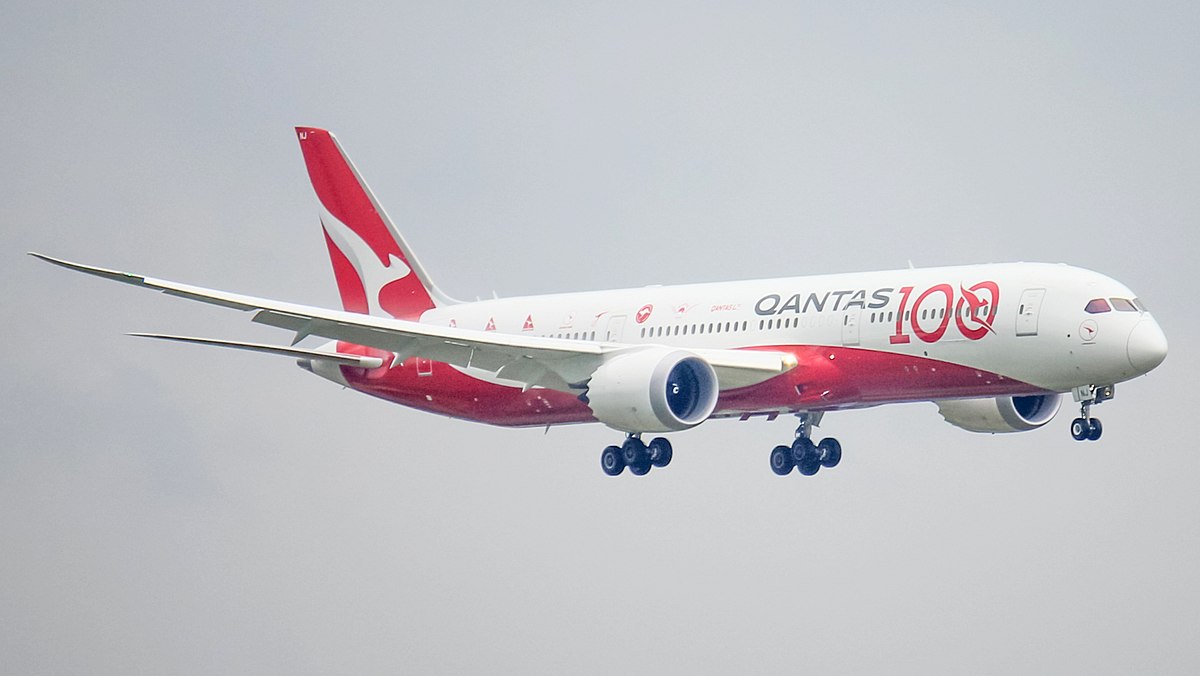
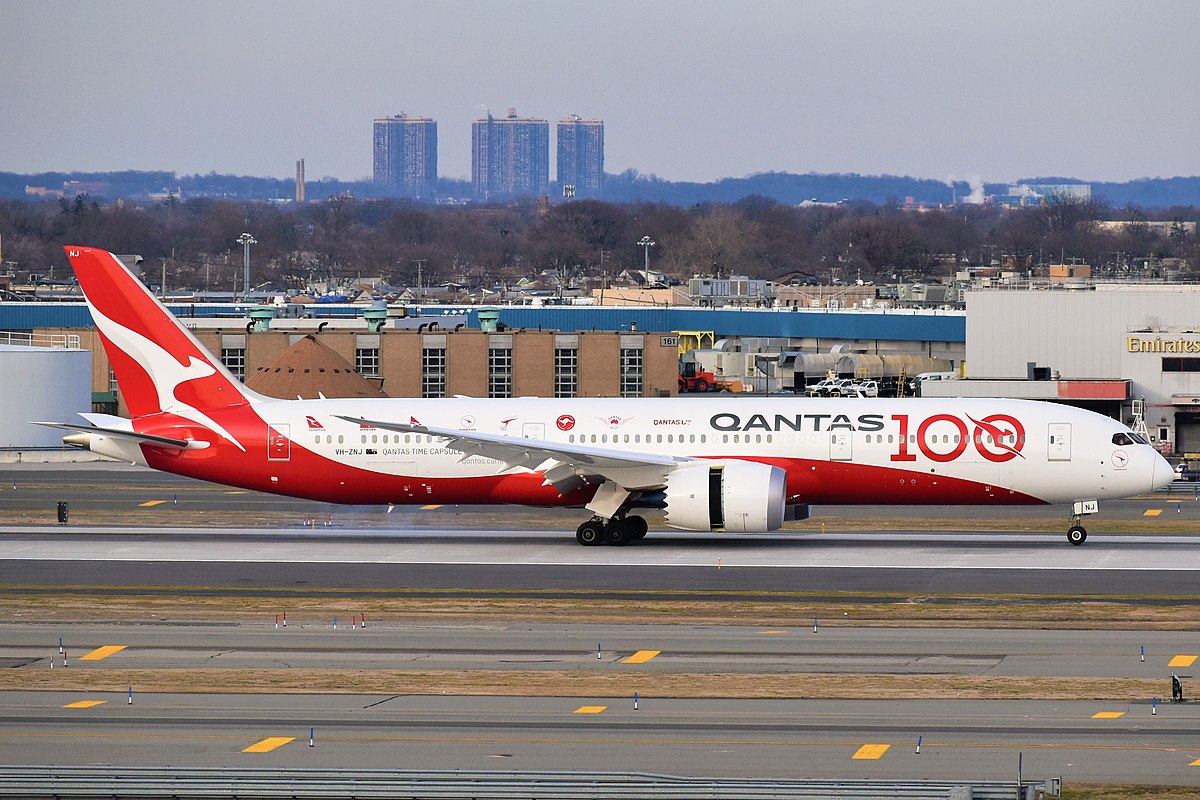
Qantas B789 at Melbourne and Los Angeles on Sep 22nd 2021, flew across Pacific with fan cowl static port covers on
Last Update: May 17, 2022 / 07:49:23 GMT/Zulu time
Incident Facts
Date of incident
Sep 22, 2021
Classification
Report
Airline
Qantas
Flight number
QF-93
Departure
Melbourne, Australia
Destination
Los Angeles, United States
Aircraft Registration
VH-ZNJ
Aircraft Type
Boeing 787-9 Dreamliner
ICAO Type Designator
B789
On May 17th 2022 the ATSB released their final report concluding the probable causes of the incident were:
Contributing factors
- Tape covering the 4 engine fan cowl static ports was not removed by engineering, as per the manufacturer’s procedures, nor identified by flight crew or dispatch during pre-departure checks. This resulted in the aircraft departing with reduced redundancy to the engine electronic control system.
- Qantas procedures did not identify all of the aircraft’s static ports and the procedure for restoring the aircraft back to service did not reference Boeing procedures. This allowed different interpretations of which ports would be covered.
Other factors that increased risk
- Boeing's static port cover procedure involving the taping down of the ‘streamer’ tail, although intended to prevent it being torn from the fuselage in strong winds, likely reduced the visibility of the fan cowl static port covers.
The ATSB summarized the sequence of events:
On the evening of 21 September 2021, a Boeing Company 787-9, registered VH-ZNJ and operated by Qantas Airways was prepared for a freight flight from Melbourne, Victoria, to Los Angeles, United States. This involved removing covers from the pitot probes and static ports, among other tasks, associated with restoring the aircraft to flight status following an aircraft ‘park’ procedure.
At about 0825 on 22 September 2021, a pre-flight exterior inspection was conducted by one of the flight crew, with no anomalies detected. The aircraft was also subject to a pre-departure exterior inspection by ground service dispatch personnel, before departing Melbourne at about 0900. The aircraft landed at Los Angeles about 14.5 hours later, following an uneventful flight. During the post-flight inspection, engineering identified that all 4 engine fan cowl static ports were covered with tape.
The ATSB found that tape covering the 4 fan cowl static ports was not removed by engineering, as per the manufacturer’s procedures, nor identified by flight crew or dispatch during pre-departure checks. This resulted in the aircraft departing with reduced redundancy to the engine electronic control system. Despite that, the flight crew reported the flight was uneventful, and a review of the flight data confirmed there was no adverse effect to aircraft or its engine systems.
The ATSB reported each engine has two fan cowl static ports located at about the 4 and 8 o'clock positions and described the static port coverage procedures:
The Boeing procedure for covering all the static ports described placing one end of a metre-long piece of barricade tape6 over the port (Figure 3). Adhesive tape sealed the top and sides of this end to the fuselage or cowl. Adhesive tape was then placed over the barricade tape at the bottom of the port, leaving an opening for moisture to drain. Finally, adhesive tape was to be applied to the barricade tape, about half length, and at the bottom end.
Boeing advised that, taping down the end of the barricade tape was intended to prevent it being torn from the fuselage by strong winds. The use of 1-metre-long red barricade tape, along with the yellow adhesive tape, was to enhance the visibility of the static port covers.
The ATSB analysed:
In this occurrence, multiple factors led to VH-ZNJ departing with the fan cowl static ports covered. Specifically:
- Typical covers and lock-out devices incorporate a ‘streamer’ that hangs down and flap in the breeze. In contrast, the Boeing static port cover procedure, while including a 1 metre long tail, required this tail be taped down.
- The fan cowl port covers were below eye level, making them more difficult to identify without specifically bending down to view under the engine.
- While the Qantas documentation for parking the aircraft linked to the Boeing procedures, the restore instructions did not. This was a missed opportunity to assist engineers to readily access the current procedures and determine which ports were covered.
- The Qantas maintenance procedures required the static ports to be covered but did not specify the locations, allowing potentially different interpretations of the procedure between LAMEs/engineers. In addition, the emphasis of the warnings was more in line with the fuselage (ADRS) static ports, rather than possible issues associated with the fan cowl or vertical fin covers not being removed. Further, as it was likely that different engineers would ‘park’ and ‘restore’ the aircraft, listing the static port locations with a separate endorsement for each, would have eased identification of which ports were covered.
- The SO identified a pitot cover on the ground, at the beginning of their exterior inspection, and reported to continuing the inspection while trying to locate an engineer. It could not be determined if this distraction contributed to their non-normal exterior inspection.
- The dispatcher did not conduct their exterior inspections as per the documented procedures, which reduced the effectiveness of this risk control.
Research has demonstrated that people are more likely to detect targets when they are expected and less likely to detect targets that are not expected (Wickens and McCarley 2008). In addition, bias can occur when prior knowledge, combined with an expected outcome, influences decision making. LAME 2 did not expect the fan cowl ports to be covered and, as such, did not specifically check them. In addition, the flight and dispatch crew inspections are carried out after engineering have released the aircraft for flight and typically no issues are identified. Further, the SO stated their expectation that engineering had completed an inspection. This likely led to their exterior inspections being conducted with no expectation of finding any anomalies.
Further, while not contributing to this occurrence, the dispatcher reported that, had they identified the tape covering the fan cowl ports, they may not have questioned this due to an assumption it was required.
Aircraft Registration Data
Incident Facts
Date of incident
Sep 22, 2021
Classification
Report
Airline
Qantas
Flight number
QF-93
Departure
Melbourne, Australia
Destination
Los Angeles, United States
Aircraft Registration
VH-ZNJ
Aircraft Type
Boeing 787-9 Dreamliner
ICAO Type Designator
B789
This article is published under license from Avherald.com. © of text by Avherald.com.
Article source
You can read 2 more free articles without a subscription.
Subscribe now and continue reading without any limits!
Read unlimited articles and receive our daily update briefing. Gain better insights into what is happening in commercial aviation safety.
Send tip
Support AeroInside by sending a small tip amount.
Related articles
Qantas B738 at Queenstown on Sep 5th 2026, engine compressor stalls
A Qantas Boeing 737-800, registration VH-VZQ performing flight QF-122 from Queenstown (New Zealand) to Sydney,NS (Australia), was climbing out of…
 Fleet type match
Qantas A388 at Sydney and Dallas on Jan 7th 2026, maintenance light forgotten in left wing
A Qantas Airbus A380-800, registration VH-OQK performing flight QF-7 from Sydney,NS (Australia) to Dallas Ft. Worth,TX (USA) with 485 passengers and…
 Fleet type match
Qantas B738 at Sydney on Nov 8th 2024, engine failure on departure sets grass alight
A Qantas Boeing 737-800, registration VH-VYH performing flight QF-520 from Sydney,NS to Brisbane,QL (Australia) with 175 passengers, 6 crew and dry…
 Fleet type match
Qantas B738 near Rockhampton on Apr 18th 2026, cargo smoke indication
A Qantas Boeing 737-800, registration VH-VXT performing flight QF-705 from Cairns,QL to Melbourne,VI (Australia), was enroute at FL370 about 240nm…
 Fleet type match
Qantas B738 enroute on Apr 10th 2026, fumes on board
A Qantas Boeing 737-800, registration VH-VZC performing flight QF-857 from Canberra,AC to Perth,WA (Australia), was enroute at FL380 about 500nm west…
Newest articles
 Fleet type match
United B764 at Amsterdam on Oct 14th 2026, pressurization issue
A United Boeing 767-400, registration N67052 performing flight UA-71 from Amsterdam (Netherlands) to Newark,NJ (USA), was climbing out of Amsterdam's…
 Fleet type match
LATAM Peru A320 at Lima on Oct 19th 2026, engine fire
A LATAM Peru Airbus A320-200, registration CC-BFS performing flight LA-2302 from Lima to Piura (Peru), was lining up runway 16R when the left hand…
Subscribe today
Are you researching aviation incidents? Get access to AeroInside Insights, unlimited read access and receive the daily newsletter.
Pick your plan and subscribePartner

ELITE Simulation Solutions is a leading global provider of Flight Simulation Training Devices, IFR training software as well as flight controls and related services. Find out more.
SafetyScan Pro provides streamlined access to thousands of aviation accident reports. Tailored for your safety management efforts. Book your demo today
AeroInside Blog
Popular aircraft
Airbus A320Boeing 737-800
Boeing 737-800 MAX
Popular airlines
American AirlinesUnited
Delta
Air Canada
Lufthansa
British Airways